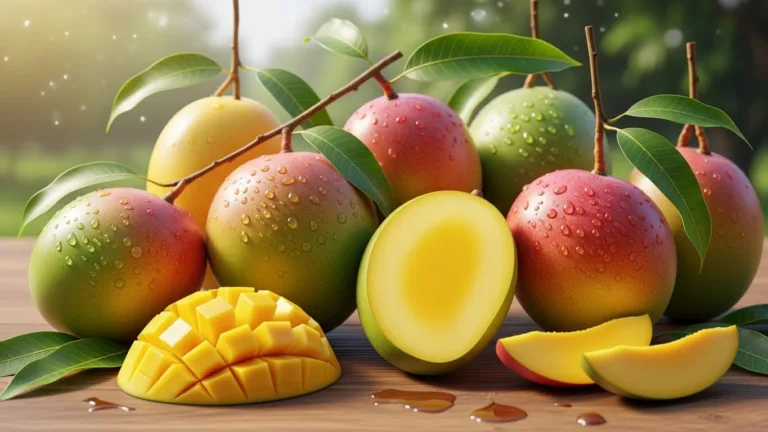
Picture this: you’re at the grocery store with your family, and you spot those colorful, oval-shaped fruits in the produce section. They’re mangoes, and while you might think they’re just another tasty snack, these tropical treasures are actually some of the most fascinating fruits in the entire world! From their ancient origins to their surprising health benefits, mangoes have stories to tell that’ll make you see them in a whole new light.
What if I told you that the mango you enjoyed in your smoothie this morning comes from a fruit that’s been loved by humans for over 5,000 years? Or that mango trees can live longer than your great-great-great-grandparents? These aren’t just random fun tidbits, they’re facts that show just how special mangoes really are.
In this article, we’re going to explore some incredible facts about mangoes that you probably never learned in school. We’ll discover where they come from, why they’re so good for you, how they grow, and even some weird and wonderful things that make mangoes totally unique. By the time you finish reading, you’ll have a newfound respect for this “king of fruits” and maybe even some cool knowledge to share at your next family dinner!
The Ancient History of Mangoes Will Blow Your Mind
Let’s start with a fact that sounds almost impossible: mangoes have been cultivated by humans for somewhere between 4,000 to 5,000 years! That means people were growing and eating mangoes long before the Roman Empire existed, before the Great Wall of China was built, and way before anyone invented the internet (obviously!).
Mangoes originally came from South Asia, particularly the areas we now know as India, Myanmar, and Bangladesh. Ancient texts from India mention mangoes constantly, showing that people back then were just as obsessed with this fruit as we are today. In fact, Hindu mythology includes stories about mango trees, and Buddhist monks are said to have meditated in mango groves because the trees provided such peaceful, shady spots.
Here’s what makes this even cooler: some mango trees alive today are over 300 years old and still producing fruit! Imagine eating a mango from a tree that was already grown when Benjamin Franklin was alive. That’s the kind of longevity we’re talking about. At Multanfarms.com, we honor this ancient tradition by bringing you mangoes that carry the legacy of thousands of years of cultivation and care.
Mangoes Are Nutritional Powerhouses in Disguise
Now let’s talk about why mangoes aren’t just delicious, they’re actually super healthy for you! One medium-sized mango contains about 100% of your daily vitamin C needs. That’s right, a single mango gives you all the vitamin C you need for an entire day! Vitamin C is like your body’s defense system, helping you fight off colds and keeping your immune system strong.
But wait, there’s more! Mangoes are also loaded with vitamin A, which is essential for good vision and healthy skin. If you’ve ever heard someone say “eat your carrots so you can see better,” well, mangoes work the same way! They contain beta-carotene, which your body converts into vitamin A. Think of it as nature’s way of helping you keep your eyes in top shape.
Mangoes also contain over 20 different vitamins and minerals. They’ve got folate (important for cell growth), vitamin B6 (helps your brain function), and potassium (keeps your heart healthy). Plus, they’re packed with fiber, which helps your digestive system work smoothly. It’s like getting a multivitamin that actually tastes amazing! Unlike those chalky vitamin pills you might have to take, mangoes make getting your nutrients something to look forward to.
The Science Behind How Mangoes Grow Is Surprisingly Cool
Ever wondered where mangoes actually come from? They grow on trees, but not just any trees, we’re talking about some seriously impressive trees! A fully grown mango tree can reach heights of 30 to 45 feet tall, and some can even grow up to 100 feet. That’s taller than a seven-story building!
Here’s a fascinating fact about the mango growing process: mango trees bloom with thousands of tiny flowers, but only about 1% of those flowers will actually turn into mangoes. It’s like nature’s own selection process, making sure only the strongest and healthiest fruits make it to your plate. The flowers are usually yellowish or pinkish and grow in big clusters that look kind of like upside-down pyramids.
Mango trees need very specific conditions to thrive. They love warm weather and can’t handle freezing temperatures at all. That’s why you’ll find mango farms in places like Florida, California, Mexico, and throughout tropical regions around the world. The trees also need a dry period before they flower, which is why mango season typically happens once a year. It takes about three to six months from the time a flower is pollinated until the mango is ripe and ready to eat. Talk about patience!
Different Types of Mangoes Mean Different Experiences
Here’s a fact that might surprise you: there are over 1,000 different varieties of mangoes in the world! That’s like having a thousand different flavors of ice cream to choose from. Each variety has its own unique taste, texture, color, and size. Some are super sweet, while others have a tangy kick. Some are small enough to hold in one hand, while others can weigh up to five pounds!
In the United States, you’ll most commonly find varieties like Tommy Atkins, Ataulfo, Kent, and Keitt in grocery stores. The Tommy Atkins is probably the one you’ve seen most often, it has red and green skin and is pretty widely available. The Ataulfo (sometimes called honey or champagne mango) is smaller, golden yellow, and incredibly sweet. It’s like the candy of the mango world!
Different countries have their own favorite varieties too. In India, the Alphonso mango is considered the gold standard and is sometimes called the “king of mangoes.” In the Philippines, the Carabao mango is so prized that it’s actually protected by the government! People in these countries are super passionate about their mangoes, kind of like how people in your town might debate which pizza place is the best. When you choose mangoes from Multanfarms.com, you’re getting access to some of the finest varieties, carefully selected for their exceptional taste and quality.
Mangoes Have Some Surprising Relatives and Connections
Ready for a weird fact? Mangoes are actually related to cashews and pistachios! They all belong to the same plant family called Anacardiaceae. But here’s where it gets even weirder: they’re also related to poison ivy! Don’t freak out though, the fruit inside is perfectly safe to eat.
This family connection explains why some people get a rash or itchy reaction when they touch mango skin or the sap from mango trees. The skin contains a chemical called urushiol, which is the same irritating substance found in poison ivy. It’s usually not a big deal, but if you have really sensitive skin, you might want to wear gloves when peeling mangoes or ask someone else to do it for you.
Another interesting connection is between mangoes and culture. In many countries, mangoes aren’t just food, they’re a symbol of love, prosperity, and good luck. In India, mango leaves are hung during weddings and festivals. The mango motif shows up in traditional art and clothing. In some cultures, giving someone mangoes is like giving them a special gift that says “I care about you.” It’s pretty cool how a fruit can mean so much more than just something tasty to eat!
The Economic Impact of Mangoes Around the World
Let’s talk numbers for a second because the mango industry is actually huge! Worldwide, people grow about 55 million tons of mangoes every year. That’s heavier than 55 million cars! India produces the most mangoes, accounting for about 40% of the world’s supply. That means nearly half of all mangoes come from one country!
Millions of people around the world depend on mango farming for their livelihood. In countries like India, Pakistan, Mexico, and Thailand, mango orchards provide jobs for farmers, packers, transporters, and sellers. It’s like a whole ecosystem built around one fruit. When you buy mangoes, especially from responsible sources like Multanfarms.com, you’re supporting families and communities that depend on this trade.
The global mango market is worth billions of dollars. Fresh mangoes are shipped all over the world, and they’re also processed into products like mango juice, dried mango slices, mango pulp, and even mango ice cream. It’s amazing to think that this one fruit creates so many opportunities and connects people across continents. Next time you eat a mango, remember that it probably traveled thousands of miles to get to you!
Simple Ways to Enjoy Mangoes and Fun Facts to Know
Now that you know all these amazing facts about mangoes, you’re probably wondering about the best ways to enjoy them. The simplest method is just cutting one open and eating it fresh, that’s when you get the full flavor experience! But here are some other cool ways people eat mangoes around the world.
In Mexico and Central America, people love putting chili powder, lime juice, and salt on their mango slices. It sounds weird if you’ve never tried it, but the combination of sweet, spicy, salty, and sour is absolutely delicious! In India, people make mango lassi, which is like a smoothie made with yogurt, mango, and sometimes cardamom. In Thailand, sticky rice with mango is a popular dessert that tastes like heaven.
Here’s a pro tip for picking the perfect mango: don’t judge it by color alone! Different varieties are different colors when ripe. Instead, gently squeeze the mango. If it gives slightly, like a ripe peach, it’s ready to eat. You can also smell the stem end, a ripe mango will have a sweet, fruity smell. If you buy mangoes that are still firm, just leave them on your counter for a few days and they’ll ripen up perfectly.
Why Mangoes Deserve Their “King of Fruits” Title
After learning all these facts, it’s pretty clear why mangoes are often called the “king of fruits,” right? They’ve got an ancient history that spans thousands of years. They’re packed with nutrients that keep you healthy. They come in over a thousand varieties, each with its own special characteristics. They support millions of people’s livelihoods around the world. And honestly, they just taste incredible!
Mangoes represent something special: they’re a connection between past and present, between different cultures, and between nature and nutrition. Every time you eat a mango, you’re participating in a tradition that goes back millennia. You’re enjoying a fruit that explorers carried across oceans because it was too good not to share. You’re getting vitamins and minerals that your body needs, all wrapped up in a package that makes healthy eating feel like a treat.
So here’s something to think about: the next time you’re at the store or checking out Multanfarms.com for quality mangoes, will you see them differently? Will you remember the ancient trees, the thousands of varieties, the journey from flower to fruit? Maybe you’ll even try a new variety you’ve never had before. After all, with over a thousand types out there, there’s always a new mango adventure waiting for you!