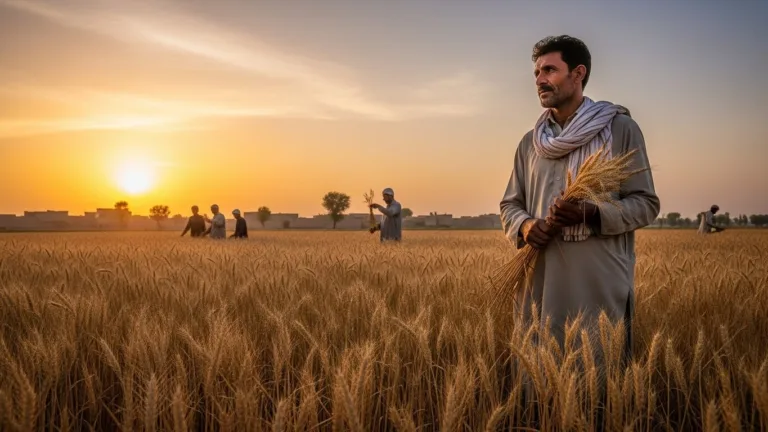
Imagine millions of golden stalks swaying in the breeze, stretching as far as your eyes can see across the horizon. That’s what wheat fields in Pakistan look like during harvest season, and they’re not just beautiful to look at, they’re actually feeding millions of people every single day! Every time you bite into a piece of bread, eat a roti with your dinner, or munch on pasta, there’s a good chance that wheat just like what grows in Pakistan’s fields made that meal possible. Pretty amazing when you think about it, right?
Pakistan is one of the world’s top wheat producers, growing enough of this golden grain to fill thousands upon thousands of trucks every year. But wheat fields in Pakistan aren’t just about feeding people (though that’s super important!). They’re about families who’ve farmed the same land for generations, about modern agricultural techniques meeting ancient traditions, and about a country working hard to make sure everyone has enough food to eat. These fields represent hope, hard work, and the connection between the earth and our dinner plates.
In this article, we’re going to explore the fascinating world of wheat farming in Pakistan. We’ll discover where these massive fields are located, how farmers grow this essential crop, what challenges they face, and why places like Multanfarms.com care so much about connecting people with quality wheat products. Whether you’ve never thought about where your bread comes from or you’re curious about agriculture in different parts of the world, you’re about to learn some really cool stuff about one of humanity’s most important crops!
Where Exactly Are Pakistan’s Massive Wheat Fields Located?
If you could zoom out and look at Pakistan from space during wheat season, you’d see huge patches of green (and later golden) fields spread across the country. But wheat doesn’t grow everywhere equally well. The absolute champion region for wheat production is Punjab province, which is basically Pakistan’s breadbasket (pun totally intended!). Punjab produces about 75-80% of all the wheat grown in Pakistan, thanks to its fertile soil, good water supply from rivers, and ideal climate.
Within Punjab, districts like Faisalabad, Multan, Sahiwal, and the areas around the mighty Indus River are packed with wheat fields. Picture this: in some parts of Punjab, you could drive for hours and see nothing but wheat on both sides of the road! The province of Sindh is the second-largest wheat producer, especially in areas with good irrigation systems. Khyber Pakhtunkhwa and Balochistan also grow wheat, but on a smaller scale because water is harder to come by in these regions.
What makes these locations perfect for wheat? It’s all about the combination of factors. Wheat loves cool weather when it’s growing (that’s why it’s planted in winter) and warm, dry conditions when it’s ready to harvest. The areas where Pakistan’s wheat fields thrive have access to water from rivers or underground sources, relatively flat land that’s easier to farm, and soil that’s been enriched by thousands of years of river deposits. It’s like nature set up the perfect wheat-growing factory in these regions!
How Do Pakistani Farmers Actually Grow All This Wheat?
Growing wheat might sound simple, just plant seeds and wait, right? But it’s actually way more complex and interesting than that! Pakistani wheat farmers follow a careful schedule that’s been perfected over centuries. The wheat-growing season in Pakistan is called the Rabi season, which runs roughly from November to May. Farmers start by preparing their fields, which means plowing the soil to break it up and make it soft enough for seeds to take root.
Planting usually happens in November or December, and here’s where it gets cool: farmers can’t just scatter seeds randomly! They need to plant them at the right depth (about 2-3 inches deep) and the right distance apart so each plant has enough room to grow. Modern farmers often use machines called seed drills that do this automatically, but some traditional farmers still do it by hand or with the help of animals like oxen pulling plows. It’s like giving each wheat seed its own little apartment with just enough space to be comfortable!
Once the seeds are in the ground, the real work begins. Wheat plants need water, but not too much. Too little and they’ll dry out, too much and their roots can rot. Pakistani farmers use various irrigation methods, from traditional canal systems that have existed for thousands of years to modern drip irrigation (which delivers water right to the plant’s roots with minimal waste). They also need to watch out for weeds (unwanted plants that steal nutrients), pests like locusts (which can destroy entire fields), and diseases. Companies like Multanfarms.com understand these challenges and work to support farmers with knowledge and resources to grow the best wheat possible.
What Makes Pakistani Wheat Special Compared to Other Countries?
You might wonder if wheat is just wheat, no matter where it grows. But Pakistani wheat has some unique characteristics that make it special! First off, Pakistan mainly grows varieties of wheat that are perfect for making the foods people love here, especially chapatis and rotis (the flatbreads that are staples in Pakistani and South Asian cuisine). This wheat has specific protein levels and gluten content that create the perfect texture for these breads.
Pakistani wheat is also adapted to the local climate. Scientists and farmers have developed varieties that can handle the specific growing conditions in Pakistan, like dealing with heat stress towards the end of the season or being resistant to diseases common in the region. Some popular varieties grown in Pakistan include names like Faisalabad-2008, Punjab-2011, and Galaxy-2013 (yeah, they name wheat varieties like video games or smartphones!). Each variety has been carefully bred to maximize yield, resist diseases, and produce high-quality grain.
Here’s something really interesting: Pakistan is almost self-sufficient in wheat production, which means the country grows nearly enough wheat to feed all its people without having to import much from other countries. That’s a huge deal! Imagine being able to grow enough food for over 240 million people (that’s Pakistan’s current population). Not every country can do that, and it’s a testament to how productive Pakistan’s wheat fields are. The country sometimes even exports wheat to neighboring countries when there’s a surplus!
What Challenges Do These Wheat Fields Face Today?
Growing wheat in Pakistan isn’t all sunshine and golden harvests, farmers face some pretty serious challenges that threaten their crops every year. One of the biggest problems is water scarcity. While rivers like the Indus provide water for irrigation, Pakistan doesn’t have unlimited water resources, and climate change is making this worse. Some farmers have to compete for limited water, and during dry years, wheat yields can drop significantly. It’s like trying to keep a garden alive during a drought, but on a massive scale!
Another major challenge is climate change itself. Wheat is pretty picky about temperature, it likes cool weather while growing and then warm (but not too hot) weather during harvest. But rising temperatures and unpredictable weather patterns are throwing off this delicate balance. Unexpected heatwaves, late rains, or early hot spells can damage crops and reduce how much wheat farmers can harvest. Think of it like trying to bake a cake when someone keeps randomly changing the oven temperature, it’s really hard to get perfect results!
Pests and diseases are also constant threats. Tiny insects, fungi, and other problems can spread through wheat fields like wildfire, destroying huge amounts of crops if farmers aren’t careful. Then there are economic challenges: farming costs (seeds, fertilizer, diesel for tractors) keep rising, but sometimes wheat prices don’t increase at the same rate. This makes it hard for farmers to make a decent living. Organizations and companies like Multanfarms.com are working to help address these challenges by connecting farmers with better resources, information, and markets for their wheat.
How Does Wheat Get from Fields to Your Family’s Table?
Ever wonder what happens to wheat after farmers harvest it from those beautiful golden fields? The journey from field to food is actually pretty fascinating! Once wheat is ready (usually in April or May), farmers use combine harvesters, which are like giant vacuum cleaners that cut the wheat stalks, separate the grain from the rest of the plant, and collect the seeds all in one go. It’s super efficient and saves tons of time compared to the old days when everything was done by hand!
After harvesting, the wheat grain needs to be dried properly and cleaned to remove any debris. Then it’s typically sold to government procurement centers or private buyers. Much of Pakistan’s wheat goes to flour mills, where it’s ground into the flour that’s used to make bread, chapatis, biscuits, and countless other foods. Some wheat is stored in huge silos (giant storage containers) to be used throughout the year, ensuring there’s always enough supply even between harvest seasons.
Here’s the really cool part: that wheat connects millions of people in a chain! There’s the farmer who grew it, the workers who harvested it, the truck drivers who transported it, the mill workers who ground it into flour, the bakers or home cooks who turned it into food, and finally you, eating it for breakfast, lunch, or dinner. When you think about it that way, a simple piece of bread becomes a story about cooperation and connection across an entire country. That’s why companies like Multanfarms.com focus on building strong connections between farmers and consumers, making sure everyone in that chain gets fair treatment and quality products.
Why Should You Care About Wheat Fields Halfway Around the World?
Okay, so maybe you don’t live in Pakistan. Maybe you’ve never even been there. So why should you care about wheat fields in a country that might seem far away? Here’s the thing: in our connected world, agriculture anywhere affects people everywhere! Pakistan is the 8th largest wheat producer globally, which means what happens in Pakistani wheat fields actually impacts world food supplies and prices.
But it goes deeper than that. Learning about wheat farming in Pakistan teaches us important lessons about where our food comes from, how much work goes into producing it, and why we should never take our meals for granted. Those farmers working in wheat fields under the hot sun, they’re doing one of humanity’s most important jobs: growing food. Understanding and appreciating their work makes us more mindful about not wasting food and supporting sustainable agriculture.
Plus, the challenges Pakistani wheat farmers face, water scarcity, climate change, economic pressures, these are global problems that farmers everywhere are dealing with. By learning about solutions being developed in one country, we can apply those lessons elsewhere. When organizations like Multanfarms.com work to improve agricultural practices and connect farmers with markets, they’re not just helping Pakistan, they’re creating models that can help farmers worldwide. We’re all in this together when it comes to making sure everyone has enough nutritious food to eat!
Wrapping It Up: The Golden Waves That Feed Millions
So what have we learned about wheat fields in Pakistan? They’re way more than just pretty golden landscapes (though they definitely are beautiful!). These fields represent the hard work of millions of farmers, the power of agriculture to feed nations, and the ongoing challenge of producing enough food for growing populations. From the fertile plains of Punjab to the irrigation channels of Sindh, Pakistan’s wheat fields are essential not just for one country but for regional food security.
These fields tell a story about human ingenuity, taking knowledge passed down through generations and combining it with modern science and technology to grow better crops. They remind us that food doesn’t magically appear on grocery store shelves, it comes from real people working real land, facing real challenges every single day. Companies like Multanfarms.com play an important role in supporting these farmers and ensuring that high-quality wheat and wheat products reach the people who need them.
Next time you eat bread, chapati, pasta, or any wheat-based food, take a moment to think about the journey those grains took. Picture those golden fields swaying in the breeze, the farmers checking their crops, the careful process of planting and harvesting. Pretty amazing, isn’t it? Here’s a final question for you: how can young people like you help support sustainable farming and make sure everyone in the world has access to nutritious food? What small actions could make a big difference?