Picture this: It’s a scorching hot summer day, and you bite into a juicy, golden mango. The sweet juice drips down your chin, and in that moment, life feels absolutely perfect. But have you ever stopped to think about the incredible tree that produced that delicious fruit? Mango trees aren’t just ordinary plants that happen to grow tasty treats. They’re actually fascinating living giants with secrets that might blow your mind!
Mango trees have been around for thousands of years, and they’ve witnessed the rise and fall of empires, traveled across oceans, and even inspired poetry and art. These trees are so special that some countries have declared them their national symbols! From their mysterious origins to their superhero-like abilities to survive in tough conditions, mango trees are way cooler than you might think.
Get ready to discover some seriously amazing facts about mango trees that’ll make you appreciate your next mango smoothie even more. We’re going to explore everything from how old these trees can get to why they’re considered sacred in some cultures. Trust me, by the end of this article, you’ll be looking at mango trees with a whole new sense of wonder!
Mango Trees Are Ancient Superstars
Did you know that mango trees have been growing on Earth for more than 4,000 years? That’s right, people were enjoying mangoes way before pyramids were built in Egypt! The mango tree originated in South Asia, particularly in the regions that are now India, Pakistan, and Myanmar. Ancient Sanskrit writings mention mangoes, and Buddhist monks are believed to have carried mango seeds with them as they traveled, spreading these amazing trees across Asia.
Here’s something even cooler: a single mango tree can live for over 300 years! Imagine a tree that was planted before your great-great-great-great-great-grandparents were born, and it’s still producing fruit today. In India, there are some mango trees that are said to be over 400 years old and still going strong. That’s like the tree version of a superhero that just keeps going and going!
The scientific name for the mango tree is Mangifera indica, which basically means “mango-bearing tree from India.” But don’t let the fancy name fool you. These trees have traveled far from their homeland and now grow in tropical and subtropical regions all over the world, from Mexico to the Philippines to parts of Africa.
Mango Trees Are Incredible Fruit Factories
You might think a mango tree produces just a few dozen mangoes each season, but get ready to have your mind blown. A mature, healthy mango tree can produce anywhere from 200 to 600 mangoes in a single year! Some exceptionally productive trees have been known to produce over 1,000 mangoes. That’s enough fruit to feed a small neighborhood!
But here’s the catch: mango trees don’t start producing fruit immediately. They’re kind of like teenagers who need time to mature before they’re ready for big responsibilities. A mango tree grown from seed typically takes about 5 to 8 years before it produces its first fruit. That’s a long time to wait! This is why many commercial growers at places like MultanFarms.com use grafted trees, which are basically trees with a shortcut to maturity. Grafted mango trees can start producing fruit in just 3 to 4 years.
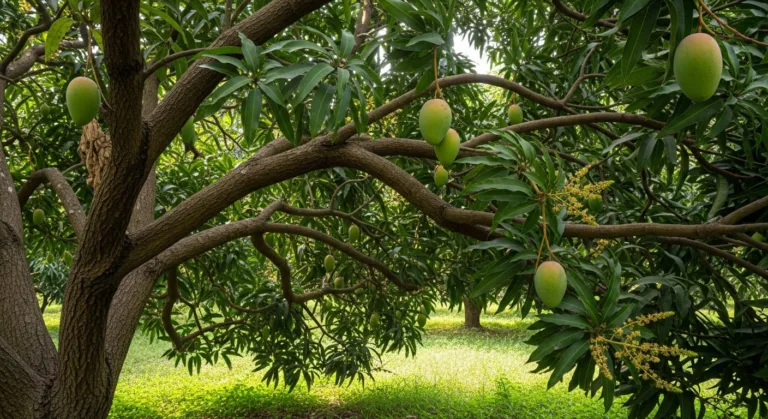
Once a mango tree starts fruiting, it follows a pretty interesting schedule. Most mango trees produce one big crop per year, usually during the spring and summer months. The trees flower first, producing thousands of tiny flowers grouped in clusters called panicles. Each panicle can have between 200 to 3,000 flowers! However, only about 1-2% of these flowers will actually become mangoes. It’s like nature’s version of a competitive selection process.
These Trees Have Superpowers You Wouldn’t Believe
Mango trees are basically the superheroes of the plant world, and here’s why. First off, they can grow absolutely massive! A fully grown mango tree can reach heights of 100 feet, that’s as tall as a 10-story building! Their canopy can spread out 35 feet or more, providing shade that could cover several cars parked side by side. In countries with intense heat, people often gather under mango trees because the shade is incredibly cooling.
Here’s another superpower: mango trees have incredibly deep root systems. The main taproot can grow down 20 feet or more into the soil! This is like having a built-in straw that reaches deep underground water sources. Because of these deep roots, mango trees can survive during droughts when other plants are struggling. They’re basically the camels of the tree world, able to access water that other plants can’t reach.
Mango leaves have a pretty amazing feature too. When the leaves are young, they’re often reddish or purplish in color before turning the familiar green. But here’s the cool part: these leaves contain natural compounds that can repel certain insects. Some cultures use mango leaves in traditional medicine and even as natural insect repellent. Plus, the leaves give off a pleasant, fresh scent when crushed.
Mango Trees Are Cultural Icons
In many South Asian countries, mango trees aren’t just agricultural plants, they’re considered sacred and culturally significant. In Hindu tradition, mango leaves are used to decorate doorways during festivals and weddings because they’re believed to bring good luck and prosperity. It’s kind of like how some people hang horseshoes for good luck, except way more fragrant and beautiful!
The mango tree is the national tree of Bangladesh, and the mango fruit is the national fruit of India, Pakistan, and the Philippines. That’s like being chosen as the most valuable player by multiple teams! This shows just how important these trees are to millions of people around the world. In fact, India alone grows over 1,000 different varieties of mangoes. Imagine having 1,000 different flavors of your favorite ice cream!
Artists and poets throughout history have been inspired by mango trees. In Mughal miniature paintings from centuries ago, you’ll often see beautiful depictions of mango orchards. The Mughal emperor Akbar supposedly planted an orchard of 100,000 mango trees in the 16th century! Ancient love poems compared the beauty of beloved people to the beauty of mango blossoms. These trees have been rock stars for thousands of years.
The Science Behind Their Amazing Growth
Want to know something really fascinating? Mango trees are what scientists call “evergreen” trees, which means they don’t lose all their leaves at once like maple or oak trees do. Instead, they shed old leaves gradually throughout the year while constantly growing new ones. It’s like they’re always wearing a green outfit but slowly updating their wardrobe piece by piece.
The flowers of a mango tree are tiny, usually only about a quarter-inch across, but they pack a powerful punch. They produce a strong, sweet fragrance that attracts bees, flies, and other pollinating insects from far away. Without these pollinators, we wouldn’t have mangoes! Bees are especially important because they visit hundreds of flowers, transferring pollen and helping the tree produce fruit. It’s a perfect example of teamwork in nature.
Here’s a mind-blowing fact about mango tree growth: these trees can grow up to 4 feet in a single year when they’re young and conditions are perfect! That’s faster than many kids grow during their growth spurts. The trees need plenty of sunlight, warm temperatures (they love heat between 70-95°F), and well-drained soil. They’re not fans of cold weather at all. Temperatures below 40°F can seriously damage a mango tree, and frost can kill young trees entirely.
Mango Trees and Modern Agriculture
Today’s mango farming has become pretty high-tech. Farmers use techniques like pruning, which is basically giving the tree a strategic haircut to help it produce more fruit. By cutting certain branches, farmers can control the tree’s shape and size, making it easier to harvest mangoes and encouraging the tree to put more energy into fruit production rather than just growing taller.
Modern mango orchards also use irrigation systems that deliver water directly to the tree roots. This is super efficient because it doesn’t waste water and ensures the trees get exactly what they need. Some advanced farms even use sensors that measure soil moisture and automatically water the trees when needed. It’s like having a robot babysitter for your mango trees! Platforms like MultanFarms.com help connect these modern farming techniques with consumers who want to know where their food comes from.
Grafting has revolutionized mango cultivation. This is a technique where farmers take a cutting from a tree that produces excellent fruit and attach it to the rootstock of a stronger, more disease-resistant tree. The result? You get a tree that combines the best qualities of both parents. It’s kind of like creating a super-mango tree with all the best traits!
Conclusion
Mango trees are so much more than just fruit producers. They’re ancient living beings that have supported civilizations, inspired cultures, and adapted to survive for thousands of years. From their incredible fruit production to their deep roots that can tap into underground water, from their cultural significance to their ability to live for centuries, these trees are genuinely remarkable.
The next time you enjoy a mango, whether it’s sliced fresh, blended in a smoothie, or dried as a snack, take a moment to think about the amazing tree it came from. Think about the intricate process of pollination, the months of growth, and the thousands of years of history behind that single piece of fruit. Pretty incredible, right? So here’s a question for you: If you could plant a mango tree today that might still be producing fruit 300 years from now for your great-great-great-great-grandchildren, would you do it? What kind of legacy would you want to leave behind?