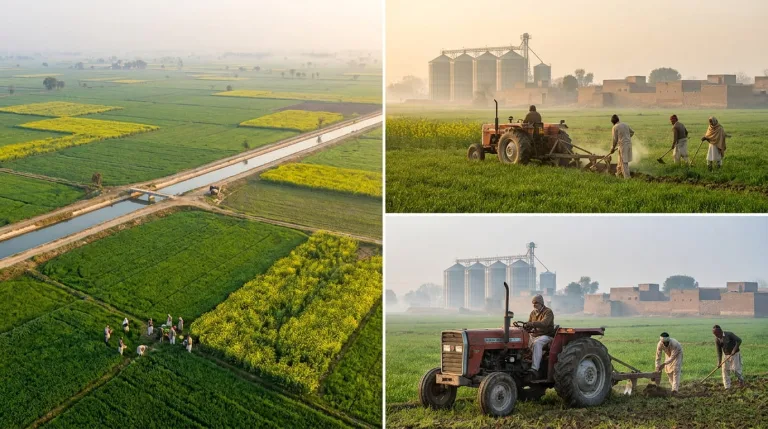
Have you ever looked out of a car window in December and seen endless green fields stretching all the way to the horizon? If you’ve driven through Punjab in winter, you’ve probably seen exactly that. Those fields are full of some of the most important crops in the whole country, and they play a big role in what ends up on your dinner plate every single day.
Punjab is often called the “breadbasket of Pakistan,” and for a very good reason. This province produces a huge share of the food that feeds millions of people across the country. And a lot of that food comes from one very special growing season, the winter season. So let’s dig in and find out what’s actually growing out there in those fields!
What Is the Rabi Season?
Farmers in Punjab don’t just grow crops all year round without a plan. They follow two main growing seasons. The summer season is called Kharif, and the winter season is called Rabi. “Rabi” actually comes from an Arabic word meaning “spring,” because these crops are planted in autumn and harvested in spring.
The Rabi season usually starts around October or November, when the weather cools down. The crops then grow slowly through the cold winter months and are ready to harvest around March or April. This cool, dry weather is perfect for certain crops that simply can’t survive the scorching Punjab summer.
Wheat: The King of Winter Crops
If there’s one crop that rules the Rabi season, it’s wheat. In fact, wheat is so important in Punjab that you could say the whole province revolves around it in winter. Pakistan is one of the top wheat-producing countries in the world, and Punjab grows the lion’s share of it.
Wheat is used to make roti, naan, bread, and dozens of other foods that most Pakistani families eat every single day. Think about your last meal. Chances are, there was some form of wheat on the table. Farmers plant wheat seeds in rows across vast fields, and by the time April arrives, those fields turn a stunning golden yellow, ready for harvest. The process of harvesting wheat is called combine harvesting, and it’s done with big machines that cut and collect the grain all at once.
Mustard: The Golden Fields of Punjab
Have you ever seen a field that looks like it’s on fire with bright yellow flowers? That’s mustard, one of the most beautiful and useful winter crops in Punjab. Mustard plants love the cold weather and grow quickly after planting in November.
The seeds of the mustard plant are pressed to make mustard oil, which is widely used in Pakistani cooking. Mustard oil has a strong, nutty flavor that adds something special to food. But the plant isn’t just useful for its seeds. The leaves of the mustard plant are also eaten as a vegetable, and you might know them as sarson ka saag, that famous Punjabi dish often eaten with makki ki roti. So mustard is basically giving us two gifts from one plant!
Chickpeas and Lentils: The Protein Powerhouses
Winter in Punjab isn’t just about grains. It’s also prime time for growing legumes, which are plants that produce seeds in pods. The most important winter legumes in Punjab are chickpeas (chana) and lentils (masoor dal).
Chickpeas are incredibly versatile. They can be boiled and eaten as chaat, ground into besan flour for pakoras and halwa, or cooked in a curry. Lentils are a staple in almost every Pakistani household and are one of the best plant-based sources of protein you can find. Growing these crops in winter is also great for the soil, because legumes naturally add important nutrients back into the ground. Think of it like the soil getting a vitamin boost while the crops grow!
Winter Vegetables: Nature’s Cold-Season Treats
Winter crops aren’t just about grains and legumes. Punjab’s winter season also brings a fantastic variety of fresh vegetables that taste their absolute best in the cold months. You might have noticed that certain vegetables seem tastier in winter, and that’s because they are!
Some of the most popular winter vegetables grown in Punjab include:
- Spinach (palak), which is full of iron and vitamins
- Carrot (gajar), sweeter and crunchier in cold weather
- Radish (mooli), often eaten raw with salt or cooked in parathas
- Cauliflower (gobhi), a favourite in curries and achaar
- Peas (matar), which add sweetness and nutrition to dozens of dishes
- Turnip (shalgam), underrated but delicious when cooked right
These vegetables grow in cooler temperatures because heat would cause them to bolt, which means they’d flower too quickly and become bitter or tough. The mild Punjab winter gives them exactly the conditions they need to grow slowly and develop great flavor.
Why Winter Crops Are a Big Deal
Now you might be wondering, why does any of this matter to someone like you? Well, here’s the thing. The crops grown in Punjab’s Rabi season directly affect food prices, food availability, and the livelihoods of millions of farming families across Pakistan.
When wheat yields are high, flour stays affordable for everyone. When mustard is harvested well, cooking oil prices stay stable. When chickpeas and lentils grow in abundance, families can afford protein-rich food. Agriculture isn’t just something that happens in faraway fields. It’s connected to every single meal you eat and every rupee your family spends at the grocery store.
Punjab’s farmers work incredibly hard through cold mornings and long days to make sure these crops grow well. Many of them use traditional methods passed down through generations, combined with modern techniques to get better yields every year.
Punjab’s Winter Harvest Connects Us All
The next time you eat a roti, pour mustard oil into a pan, or enjoy a warm bowl of dal, take a moment to think about where it all came from. It very likely started as a tiny seed planted in a Punjab field sometime in October or November, nurtured through weeks of cold weather, and harvested with care by a farmer who woke up before sunrise to tend to it.
Winter crops in Punjab are more than just plants growing in the ground. They’re the foundation of Pakistan’s food supply and a living example of how nature and human effort work together to feed a nation. Want to learn more about the incredible agricultural heritage of Punjab? Visit Multanfarms.com and explore articles about traditional farming, natural products, and the rich agricultural story of this remarkable region!