Multan has been feeding Pakistan for generations. Between its mango orchards, cotton fields, and wheat belts, this region has quietly built a reputation as one of the most productive farming zones in the country. So it is no surprise that more and more people, from local farmers to city investors, are searching for agricultural land for sale in Multan.
But buying farmland here is not as simple as picking a plot that looks green and signing a deal. Soil quality, water access, and paperwork can make or break your investment. If you are thinking about buying land in this region, here is what actually matters before you hand over your money.
Why Multan Keeps Pulling In Land Buyers
Multan sits in a belt where the Chenab River and an extensive canal network keep the soil consistently fertile. This is the same land that produces the famous Chaunsa mango, along with cotton, wheat, sugarcane, and citrus crops year after year. The climate is hot and dry for much of the year, but that heat is exactly what gives Multan’s mangoes their sweetness and its cotton its quality.
For buyers, this means the land here is not just farmland on paper, it is land with a proven track record. A plot that has supported three or four generations of mango or wheat farming is usually a safer bet than untested ground elsewhere.
The Soil and Water Factors That Decide a Plot’s Value
Two pieces of land in the same district can have completely different value, and the difference almost always comes down to soil and water. Canal-irrigated land gets a steady, low-cost water supply through the government canal system, which keeps farming costs predictable. Land that depends on a tubewell instead pulls water from underground, which works fine but adds ongoing electricity or diesel costs.
Soil texture matters just as much. Loamy soil, the kind that holds moisture without turning into mud, is ideal for most crops grown around Multan. Land affected by salinity, where salt builds up in the topsoil, can quietly reduce yields even if the plot looks fine on the surface. A simple soil test before buying can save years of disappointment later.
What Actually Drives the Price of Farmland Here
A lot of first-time buyers assume price is just about size, but several other factors carry just as much weight:
- Distance from a paved road or main highway
- Access to canal water versus relying only on a tubewell
- Soil quality and any history of waterlogging or salinity
- Proximity to a mandi, or wholesale produce market, for selling crops
- Whether the land has a clean, documented ownership history
Two ten-acre plots can sell for very different prices once you factor in these details. It is worth visiting the land in person, ideally during both a dry season and after rainfall, before agreeing on a price.
The Paperwork You Cannot Skip
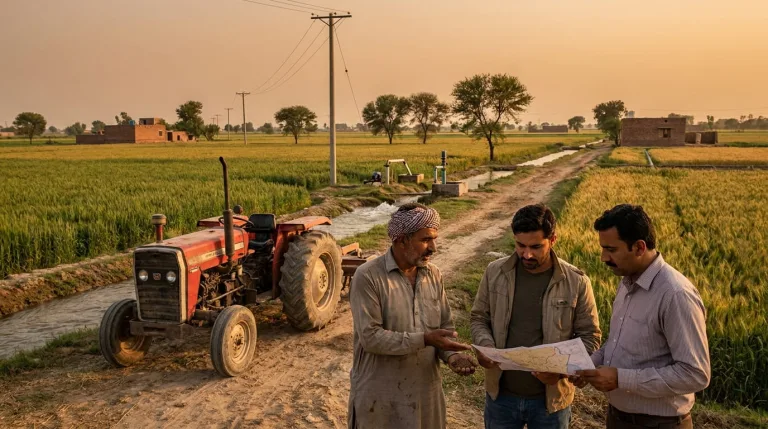
This is the part where many buyers get into trouble. In Punjab, land ownership is tracked through documents like the Fard, which is the official record of rights showing who legally owns the land, and the Intiqal, which is the mutation record proving a transfer of ownership actually went through.
Before any money changes hands, it is worth confirming the seller’s name matches the current Fard, checking for any pending court disputes, and verifying there are no outstanding loans tied to the land. A local lawyer or a trusted property consultant familiar with Multan’s revenue offices can usually confirm all of this within a few days. Skipping this step to save time is one of the most common regrets among new land buyers.
Canal-Irrigated vs Tubewell Land: Which Should You Choose?
If your main goal is steady, lower-cost farming, canal-irrigated land usually wins. The water comes on a government schedule, and while you cannot control timing, the cost stays low and predictable over the years.
Tubewell land gives you more control since you decide when to water your crops, which can help with certain high-value crops like vegetables or orchards. The tradeoff is the ongoing cost of running the pump, plus the risk of the water table dropping over time. Many experienced buyers in Multan actually look for land that has both options available, giving them flexibility either way.
Mistakes Buyers Often Make
A few mistakes show up again and again with new land buyers in this region:
- Buying based on photos alone without visiting the actual plot
- Assuming all canal-irrigated land gets the same water schedule
- Skipping a soil test because the land “looks fine”
- Rushing the paperwork to close the deal faster
Each of these can turn what looked like a good deal into a costly problem within a year or two. Taking an extra week to verify documents and walk the land yourself is almost always worth it.
Final Thoughts
Agricultural land in Multan can be a genuinely strong investment, but only when you look past the price tag and into the details that actually determine a plot’s long-term value. Soil, water access, and clean paperwork matter far more than acreage alone.
If you are exploring agricultural land for sale in Multan, take your time, ask the right questions, and verify everything before you commit. What kind of land are you hoping to find, something ready for mango orchards, or open ground for seasonal crops?
Visit Multanfarms.com to explore more guides on farming, land, and everything else rooted in Multan’s agricultural heritage.