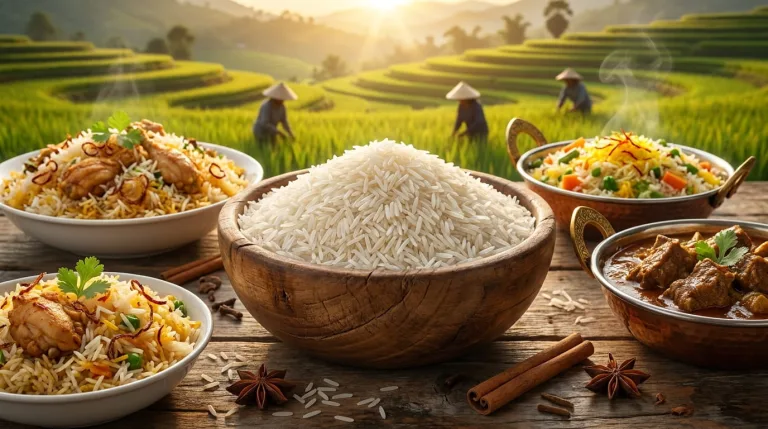
Walk into any Pakistani kitchen when dinner is being made, and chances are you’ll smell it before you see it. That unmistakable nutty fragrance rising from a steaming pot belongs to basmati chawal, and if you’ve grown up eating it, you already know there’s nothing quite like it on your plate.
Basmati rice isn’t just food, it’s a cultural institution. From biryani at weddings to daal chawal on a Tuesday evening, this grain shows up at every table, every occasion, and every season. But have you ever stopped to wonder why basmati is so special? What makes it different from the dozens of other rice varieties out there?
Let’s dig into the world of basmati chawal, where it comes from, why it smells so good, and what makes it genuinely one of the most prized grains on earth.
Where Does Basmati Chawal Actually Come From?
Basmati is a Sanskrit word that means “fragrant” or “full of fragrance,” and the name couldn’t be more fitting. This variety of rice has been grown in the foothills of the Himalayas for thousands of years, with Pakistan and India being the two largest producers in the world.
In Pakistan, basmati is primarily cultivated in Punjab, which has the ideal combination of fertile soil, clean water from the Himalayas, and a climate that allows the grain to develop its signature aroma slowly. The long growing season in Punjab is what gives Pakistani basmati its distinctively long grain and complex fragrance. It’s genuinely a product of its environment.
Here’s a useful comparison: just like Darjeeling tea can only truly come from Darjeeling, authentic Pakistani basmati gets its character from the land it’s grown in. You can plant the same seed somewhere else, but it won’t taste or smell the same. That’s the magic of terroir.
What Makes Basmati Different From Regular Rice?
If you’ve ever cooked plain white rice from a generic pack and compared it to basmati, you already know there’s a visible difference before it even hits the pot. Basmati grains are noticeably longer and thinner than regular rice, and here’s something remarkable: when basmati cooks, the grains actually elongate further instead of becoming round and clumped. They can nearly double in length while staying separate and fluffy.
The secret behind that iconic aroma is a chemical compound called 2-acetyl-1-pyrroline, which simply means the thing that makes basmati smell like popcorn, roses, and something deeply comforting all at once. Regular rice has very little of this compound. Basmati has it in abundance, and aged basmati has even more.
Yes, aged basmati is a real thing, and it’s more prized. When basmati is stored and aged properly for one to two years after harvest, the moisture content drops, the aroma intensifies, and the cooked grains become fluffier and more separate. Think of it like a fine cheese that gets better with time, which is exactly why older basmati commands a higher price.
White Basmati vs. Brown Basmati: What’s the Difference?
Not all basmati chawal looks the same at the store, and that’s because white basmati and brown basmati are actually the same grain at different stages of processing.
Brown basmati still has its outer bran layer intact, which gives it a nutty, earthier flavor and a chewier texture. It takes longer to cook, usually around 35 to 40 minutes, and because the bran is still there, it’s higher in fiber, vitamins, and minerals. Think of it like the difference between whole wheat bread and white bread.
White basmati has had the bran layer milled away, leaving behind the starchy white grain most people are familiar with. It cooks faster, in about 15 to 18 minutes, has a lighter flavor, and produces that signature fluffy, non-sticky texture when made correctly. For most traditional Pakistani dishes like biryani, pulao, and khichdi, white basmati is the preferred choice.
How to Cook Basmati Chawal Perfectly
Here’s where most people go wrong. Cooking basmati is simple, but it requires a few key steps that many people skip, and those skipped steps are exactly why your rice sometimes turns out sticky or mushy.
The first rule is to wash and soak your basmati before cooking. Rinse the grains under cold water two to three times until the water runs clear. This removes excess surface starch, which is what causes clumping. Then soak the rice in clean water for 20 to 30 minutes. Soaking lets the grain absorb water so it cooks evenly and elongates properly.
The second rule is the water ratio. For most basmati, a 1:1.5 ratio of rice to water works well, meaning one cup of rice to one and a half cups of water. If you’ve soaked the rice first, you can bring it down to 1:1.25. Too much water is the most common mistake home cooks make.
The third rule is to never lift the lid while the rice is steaming. Once the water starts boiling and you lower the flame to minimum, cover the pot and leave it alone for 15 minutes. The trapped steam is what cooks the rice all the way through. Lifting the lid releases that steam and you end up with unevenly cooked grains.
Basmati in Pakistani Cuisine: More Than Just a Side Dish
Basmati chawal isn’t just a side dish in Pakistan. It’s the main event. The most celebrated use of basmati is in biryani, where layers of marinated meat and rice are slow-cooked together in a sealed pot using a technique called dum cooking. The steam stays trapped inside, infusing every grain with spices, meat, and caramelized onion. A good biryani is a labor of love, and it only works with proper basmati.
Then there’s pulao, which is more subtle than biryani but no less delicious. The rice is cooked directly in a spiced broth with whole spices like cardamom, cloves, and star anise. The result is aromatic, golden, and savory, making pulao the everyday hero of Pakistani cooking.
Even a simple plate of daal chawal depends on the quality of the basmati. When the rice is fluffy and fragrant, even the humblest meal feels satisfying and complete.
Why Basmati Chawal Is Good for You Too
Basmati isn’t just delicious. It also has a lower glycemic index compared to many other white rice varieties, which means it raises blood sugar more slowly and keeps you feeling fuller for longer. It’s also naturally gluten-free, easy to digest, and low in fat. When eaten as part of a balanced diet with proteins, vegetables, and healthy fats, basmati chawal is a genuinely wholesome staple, not just a comfort food.
The next time you sit down to a plate of steaming basmati, take a moment to appreciate what went into that grain. Centuries of agricultural tradition, the unique soil of Punjab, and a fragrance that no other rice in the world can replicate. Basmati chawal isn’t just rice. It’s heritage in every bite.
At Multanfarms.com, we bring you the best of Pakistan’s agricultural legacy, including premium natural food products sourced from the heart of Punjab. Explore our range and taste the difference that genuine quality makes. Visit Multanfarms.com