Have you ever cracked open an egg for breakfast and wondered where it actually came from? Most of the eggs we eat in Pakistan, whether fried, boiled, or baked into a cake, come from a specific type of farming operation called an egg layer farm. It’s a fascinating system that’s a lot more organized and scientific than most people realize.
An egg layer farm is a poultry setup where hens are raised specifically to produce eggs for human consumption, rather than for meat. These farms are a critical part of Pakistan’s food supply chain, and they require careful planning, daily management, and a solid understanding of hen biology to run successfully.
In this article, we’ll walk you through how egg layer farms work, what makes a good layer hen, and why this type of farming is one of the most reliable and profitable ventures in Pakistani agriculture today.
What Exactly Is an Egg Layer Farm?
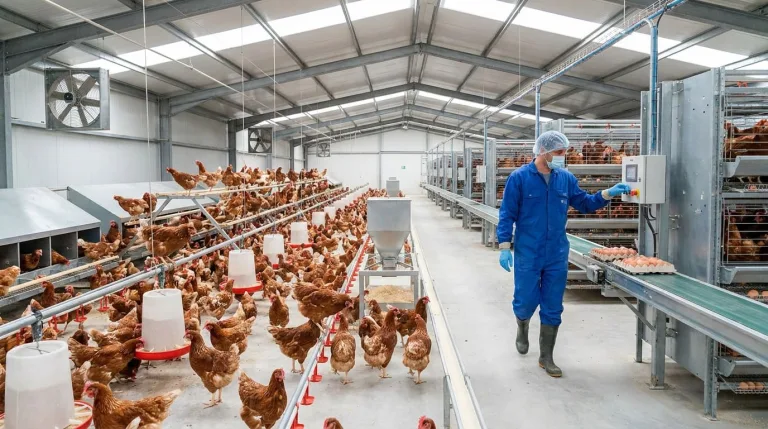
Think of an egg layer farm as a carefully managed home for thousands of hens, all working together to produce one of the most nutritious foods on the planet. Unlike a broiler farm, which raises chickens for meat, a layer farm is all about consistent, daily egg production.
The hens on these farms are specially bred birds called layer breeds, selected over generations for their ability to lay large numbers of eggs. Some of the most popular layer breeds used in Pakistan include Hy-Line Brown, Lohmann Brown, and H&N Brown Nick. These aren’t your typical desi backyard hens; they’re high-performance birds engineered through selective breeding to deliver up to 300 eggs per year per bird.
Layer farms can range from small setups with a few thousand birds to large commercial operations housing hundreds of thousands of hens. The scale depends on the farmer’s investment, land, and market access.
The Life Cycle of a Layer Hen
Understanding the life cycle of a layer hen helps you appreciate how much planning goes into running one of these farms. The journey starts with day-old chicks, which are typically purchased from a hatchery.
The first phase is the pullet phase, which runs from hatching until the hen is about 18 weeks old. During this time, the birds are fed a carefully balanced diet to support healthy growth and development. They aren’t laying eggs yet, as this is all about building a strong, healthy body that can handle the demands of sustained egg production.
Around weeks 18 to 20, hens enter the production phase and begin laying eggs. This is the most important and profitable period for the farmer. A well-managed hen can maintain strong egg production for 12 to 14 months, after which her productivity naturally starts to decline and the flock is typically replaced.
How Egg Layer Farms Are Set Up
The physical setup of an egg layer farm makes a huge difference in productivity and bird health. Most modern farms in Pakistan use one of two housing systems: battery cages or open shed systems.
Battery cage systems keep hens in individual or small group cages stacked in rows inside a climate-controlled building. This setup makes it easy to collect eggs, manage feed, and control disease. Open shed systems, on the other hand, give birds more room to move around and are increasingly popular as consumer demand for free-range eggs grows.
Regardless of the system, every egg layer farm needs a reliable supply of fresh water, good ventilation to control temperature, efficient egg collection systems, and strict biosecurity protocols to keep diseases out. Disease management is not optional, as a single outbreak of Avian Influenza or Newcastle Disease can wipe out an entire flock in days.
What Do Layer Hens Eat?
Nutrition is one of the biggest factors that determines how many eggs a hen lays and how good those eggs are. Layer hens need a specific balance of protein, calcium, phosphorus, and vitamins to stay healthy and productive.
Layer feed is commercially formulated to meet these nutritional needs and is typically available in pellet or mash form. Calcium is especially important because the hen uses it to form the eggshell, and without enough of it, hens can lay soft-shelled or misshapen eggs. Farmers often supplement feed with limestone or oyster shell grit to keep calcium levels high.
Water intake is just as critical as feed. A layer hen drinks roughly twice as much water as it consumes in feed, and any disruption to the water supply can cause an almost immediate drop in egg production. Good farmers treat their water supply with the same seriousness as their entire feed program.
Egg Collection, Grading, and Marketing
Once the eggs are laid, the work doesn’t stop. On a well-run egg layer farm, eggs are collected at least twice a day to minimize breakage and keep them clean. After collection, eggs go through a grading process where they’re sorted by size, checked for cracks, and cleaned before reaching the market.
Egg grading in Pakistan typically follows categories based on weight: jumbo, large, medium, and small. Larger eggs command a higher market price, which is another reason layer nutrition matters so much. A hen that’s well-fed and properly managed consistently produces larger, heavier eggs.
Marketing is the final piece of the puzzle. Layer farmers in Pakistan sell through wholesale egg dealers, direct to retailers, or increasingly through direct-to-consumer channels. Platforms like Multanfarms.com connect buyers with quality eggs sourced from well-managed farms, making it easier for consumers to trust what they’re bringing home.
Why Egg Layer Farming Matters in Pakistan
Pakistan is one of the largest egg-producing countries in Asia, and the layer farming industry supports millions of livelihoods, from the farmers themselves to feed suppliers, transporters, and retailers. Eggs remain one of the most affordable, protein-rich foods available to Pakistani households across all income levels.
For farmers, egg layer farming offers the advantage of a consistent daily income. Unlike crop farming, which is seasonal and weather-dependent, a well-managed layer farm produces eggs every single day of the year. That predictability makes it an attractive business model, especially for small and medium-scale farmers looking for a reliable revenue stream.
The Bigger Picture
Egg layer farming is equal parts science, discipline, and practical management. From choosing the right breed to mastering hen nutrition, disease control, and marketing, every decision a farmer makes ripples through to the quality and quantity of eggs on your table. The next time you pick up a tray of eggs, you’ll have a much better sense of the work and care that went into producing each one.
If you want to learn more about high-quality eggs and natural farm products from Pakistan’s heartland, visit Multanfarms.com and explore what responsible, quality-focused farming looks like.