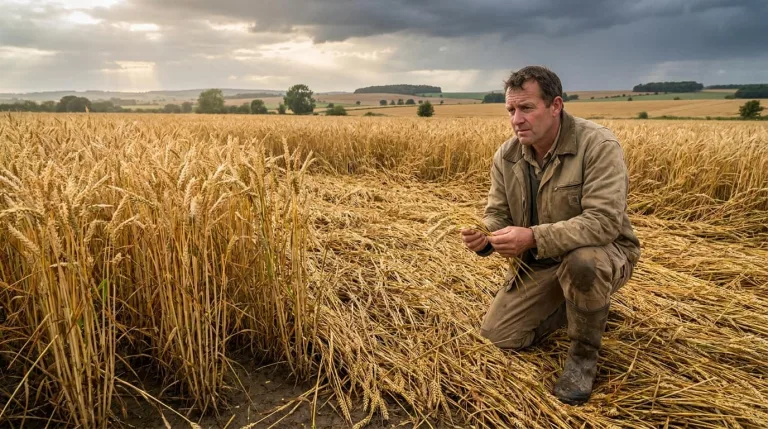
Have you ever seen a wheat field where the plants are standing tall one day but lying flat on the ground after a storm? At first, it might look like the wheat is simply taking a nap. But for farmers, this is actually a serious problem called lodging.
Lodging in wheat happens when wheat plants bend over or fall to the ground before they are harvested. It can happen because of strong winds, heavy rain, weak stems, or even when the plants grow too tall. While it may seem like a small issue, lodging can reduce the amount of wheat farmers harvest and make collecting the crop much more difficult.
In this article, you’ll learn what lodging in wheat is, why it happens, how it affects crops, and what farmers do to prevent it. By the end, you’ll understand why keeping wheat plants standing tall is so important.
What Does Lodging in Wheat Mean?
Lodging is when wheat plants lose their upright position and fall over. Instead of growing straight toward the sky, the stems bend or break, causing the plants to lie on the ground.
Think about a tall tower made of building blocks. If the base becomes weak or someone pushes it too hard, the tower falls over. Wheat plants can behave the same way when they face strong weather or other problems.
There are two main types of lodging:
- Stem lodging, when the stem bends or breaks above the ground.
- Root lodging, when the roots loosen and the entire plant tilts over.
Both types make it harder for the wheat to grow properly and be harvested.
Why Does Wheat Lodge?
Several factors can cause wheat plants to fall over. Sometimes it’s because of nature, while other times farming practices play a role.
Here are some of the most common causes:
- Strong winds, which push tall plants until they bend.
- Heavy rainfall, which softens the soil and makes plants easier to topple.
- Too much fertilizer, especially nitrogen, which can make plants grow taller but not stronger.
- Weak stems, which cannot support the weight of the wheat heads.
- Heavy grain heads, which make the top of the plant too heavy.
Imagine carrying a backpack that’s much heavier than you can handle. You would probably lean forward or even fall. Wheat plants can face the same problem when their grain heads become too heavy for their stems.
Why Is Lodging Such a Big Problem?
When wheat falls over, it creates several challenges for farmers.
First, the plants don’t receive sunlight evenly. Leaves covered by other plants cannot make enough food through photosynthesis, which slows growth.
Second, harvesting becomes much harder. Harvest machines work best when wheat is standing upright. If the crop is lying on the ground, the machine may miss some of the grain.
Third, fallen wheat can stay damp after rain. This creates the perfect environment for fungi and diseases to grow, damaging the crop even more.
Think about trying to pick up hundreds of pencils scattered across the floor instead of collecting them neatly from a desk. Harvesting lodged wheat feels a lot like that.
How Does Lodging Affect Wheat Production?
Lodging can reduce both the quantity and quality of wheat.
Farmers may harvest fewer grains because some wheat is left behind or damaged. The grain that is collected may also be smaller or lower in quality.
Here are some of the effects:
- Lower crop yields.
- Poor grain quality.
- More difficult harvesting.
- Higher farming costs.
- Greater risk of diseases and mold.
Did you know? Even a healthy wheat field can lose a noticeable portion of its harvest if lodging happens just before harvest time.
How Do Farmers Prevent Lodging?
Farmers use several smart methods to help wheat stay upright throughout the growing season.
One important step is choosing strong wheat varieties with thicker stems. These plants are naturally better at standing against wind and rain.
Farmers also use fertilizer carefully. Giving wheat the right amount of nutrients helps it grow strong without becoming too tall.
Other methods include:
- Planting wheat at the right spacing.
- Avoiding excessive nitrogen fertilizer.
- Improving soil drainage so roots stay healthy.
- Using plant growth regulators in some farming systems to strengthen stems.
- Harvesting the crop at the right time before bad weather arrives.
It’s similar to building a strong house. A solid foundation, strong walls, and good planning help the house stay standing during storms.
Can Weather Make Lodging Worse?
Yes, weather is one of the biggest reasons lodging happens.
A wheat field may look perfectly healthy for months. Then a single storm with strong winds and heavy rain can flatten large areas of the crop within hours.
Climate changes have also made weather less predictable in many places. Sudden storms and heavy rainfall can increase the chances of lodging.
This is why farmers closely watch weather forecasts during the growing season. If bad weather is expected near harvest time, they may try to harvest as soon as possible.
Why Is Understanding Lodging Important?
You might not be a farmer today, but understanding lodging helps you see how much work goes into growing the food we eat every day.
Every loaf of bread, bowl of cereal, or plate of pasta begins with healthy wheat plants growing in fields. When lodging happens, farmers face extra work, higher costs, and smaller harvests.
Learning about problems like lodging also shows how science, weather, and farming all work together. Small changes in nature can have a big impact on the food supply around the world.
Conclusion
So, what is lodging in wheat? It’s the bending or falling over of wheat plants before harvest, often caused by strong winds, heavy rain, weak stems, or heavy grain heads. Although it may seem harmless at first, lodging can reduce crop yields, lower grain quality, and make harvesting much more difficult.
Farmers work hard to prevent lodging by choosing stronger wheat varieties, using fertilizers wisely, improving field conditions, and harvesting at the right time. These simple but effective practices help keep wheat standing tall until it’s ready to be collected.
The next time you see a golden wheat field waving in the wind, take a closer look. Those tall, upright plants represent months of careful planning and hard work. What other challenges do you think farmers overcome before food reaches your table?