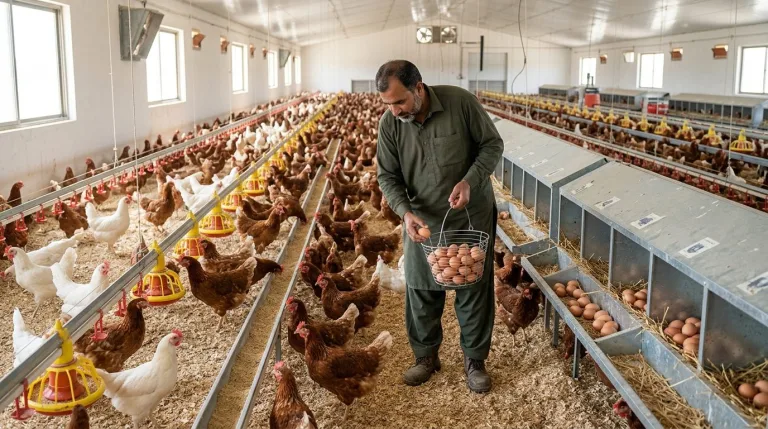
Every time you crack an egg into a frying pan, there’s a good chance it came from a bird bred for one purpose and one purpose only: laying eggs. That bird is called a layer chicken, and it’s one of the most important animals in the poultry farming world. Without layer hens working around the clock, the egg supply that feeds millions of Pakistani families would simply fall apart.
So what exactly makes a layer chicken different from any other chicken you might see at a farm or market? The answer comes down to biology, breeding, and a very specific job description. In this article, you’ll learn what layer chickens are, how they’re raised, which breeds are most popular in Pakistan, and why this type of poultry farming can be a genuinely solid business opportunity.
Layer Chicken vs. Broiler Chicken: What’s the Difference?
Before diving deep, it helps to understand that not all chickens are raised for the same purpose. You’ve probably heard of broiler chickens, which are raised specifically for their meat. They grow fast, gain weight quickly, and are sold at market weight within just 6 to 7 weeks.
A layer chicken, on the other hand, is raised primarily to produce eggs, not to be eaten. These hens are leaner, live much longer, and their bodies are designed to convert feed into eggs rather than muscle mass. Think of it like two different job titles at the same company: one worker builds things (the broiler), and the other delivers consistent output over a long period (the layer).
The difference you’ll notice most is lifespan and productivity. A broiler chicken lives for about 6 to 7 weeks before going to market. A layer hen, by contrast, starts producing eggs at around 18 to 20 weeks of age and can keep laying for up to 72 to 80 weeks in a commercial setting.
How Many Eggs Does a Layer Chicken Actually Lay?
This is the question most farmers care about, and the numbers are genuinely impressive. A high-quality commercial layer hen can produce around 300 to 320 eggs per year, which works out to roughly one egg almost every single day. That’s a remarkable biological achievement when you stop to think about it.
Wild chickens, by comparison, might lay only 10 to 15 eggs per year and only during breeding season. Selective breeding over decades has transformed the modern layer hen into an egg-producing machine, without changing the fact that it’s still just a chicken. It’s a bit like how breeders developed Border Collies specifically to herd sheep, turning a natural instinct into a highly refined skill.
For farmers in Pakistan, this consistent output is what makes layer poultry farming so attractive. A small flock of 500 hens producing 280 to 300 eggs per day represents steady, predictable daily income, regardless of swings on the meat side of the market.
Popular Layer Chicken Breeds in Pakistan
Choosing the right breed is one of the first decisions a layer farmer has to make, and it matters far more than many beginners realize. In Pakistan, commercial layer farming is almost entirely dominated by hybrid breeds developed specifically for high egg output.
Lohmann Brown is arguably the most popular layer breed in Pakistan. These hens are known for their calm temperament, strong feed-to-egg conversion ratio, and consistent performance across different climate conditions. They lay brown eggs, which are preferred in many Pakistani markets.
Hy-Line Brown is another widely used breed, similar in performance to the Lohmann but with a slightly different genetic background. Both breeds typically start laying at around 18 to 19 weeks and maintain a strong production rate through most of their laying cycle.
White Leghorn is a classic layer breed used globally for decades. It produces white eggs and is known for being highly efficient, eating less feed per egg than most other breeds. However, Leghorns are more nervous and reactive by temperament, which means housing and handling require a bit more care.
What Does a Layer Chicken Need to Stay Productive?
Egg production doesn’t happen on its own. A layer hen’s output is directly tied to the quality of care she receives, and even small lapses in management can cause noticeable drops in production. The three pillars of layer management are feed, light, and housing.
Feed is the foundation. Layer hens require a diet rich in calcium to produce strong eggshells, along with protein, energy, and trace minerals. A good commercial layer feed is formulated to provide all of this in the right balance. Think of it like an athlete’s nutrition plan: the performance you get reflects exactly what went into the preparation.
Light is something many first-time farmers overlook, but it’s critical. Hens need around 16 to 17 hours of light per day to maintain peak egg production. In commercial farms, artificial lighting extends the day, especially during winter when natural daylight hours are shorter. Without sufficient light, egg production drops noticeably within days.
Housing protects hens from temperature extremes, predators, and disease. Layer farms in Pakistan commonly use either cage systems or open-floor systems. Cage systems allow for easier egg collection and better disease control, while open-floor systems give hens more freedom of movement.
Layer Farming as a Business in Pakistan
The layer poultry business is one of the most established and reliable segments of Pakistan’s agriculture sector. Eggs are consumed daily across every income level, making demand consistent throughout the year. Unlike seasonal crops or Eid-dependent livestock sales, egg income flows in every single day.
Starting a small layer farm of 1,000 birds requires initial investment in chicks, housing, feed, and equipment, but the recurring income from daily egg sales makes cost recovery realistic within a reasonable time frame. Many successful farmers in Punjab and KPK started with just a few hundred birds and gradually scaled their operations from there.
The key to success in layer farming isn’t just having the right birds. It’s about consistent management, quality feed, proper disease prevention, and understanding your local egg market well enough to price and distribute competitively.
So, What Is a Layer Chicken, Really?
At its core, a layer chicken is a highly specialized bird bred to do one thing exceptionally well: produce eggs consistently over a long productive life. It’s not just any chicken that happens to lay eggs. It’s the result of decades of careful breeding, scientific nutrition planning, and thoughtful farm management.
Whether you’re curious about where your breakfast eggs actually come from, or you’re seriously considering entering the poultry business, understanding what a layer chicken is and how it works is absolutely the right place to start. The egg on your plate has a much more interesting story behind it than most people ever realize.
For more practical guides on layer poultry farming, breed selection, feed management, and starting your own egg business, visit Multanfarms.com.