Every year, something remarkable happens across the fields and orchards of Pakistan. The air turns softer, the mornings smell like freshly turned earth, and farmers across the country know it’s time to get to work. Spring in Pakistan isn’t just a season, it’s a turning point that shapes what ends up on your table, in your kitchen, and in your daily life.
If you’ve ever bitten into a sweet mango or watched wheat fields sway in a warm breeze, you’ve already experienced the results of Pakistan’s spring season. Understanding when spring arrives and what it does to the land helps you appreciate everything that grows around you, whether you’re a farmer, a food lover, or simply someone curious about where your food comes from.
When Do Spring Months in Pakistan Actually Begin?
Spring in Pakistan typically runs from February through April. Unlike countries where spring is marked by a fixed calendar date, Pakistan’s spring is a gradual shift that plays out differently depending on where you are in the country.
In the Punjab plains, including cities like Multan, Lahore, and Faisalabad, spring arrives around late February. Temperatures climb from winter lows of 8 to 12 degrees Celsius into a comfortable range of 20 to 28 degrees Celsius by March. In northern regions like Gilgit-Baltistan and Khyber Pakhtunkhwa, spring comes a few weeks later because the mountains hold onto winter longer.
How Temperature and Rainfall Shape Pakistan’s Spring
One of the most important features of spring in Pakistan is the combination of warmth and seasonal rainfall. February and March bring what farmers call rabi season rainfall, a series of light to moderate showers that soak into the soil just in time for crops to absorb them.
This rainfall, combined with rising temperatures, creates near-perfect conditions for plant growth. The soil is warm, there’s moisture in the air, and everything in the ground is ready to push upward. Farmers across Punjab and Sindh rely heavily on these spring rains to reduce irrigation costs and give crops a natural boost.
Wind patterns also shift during spring. The dry, cold winds from the northwest that define Pakistan’s winter begin to be replaced by warmer, more humid air from the south, triggering blooming wildflowers and budding fruit trees across the country.
What Crops Grow During Spring Months in Pakistan?
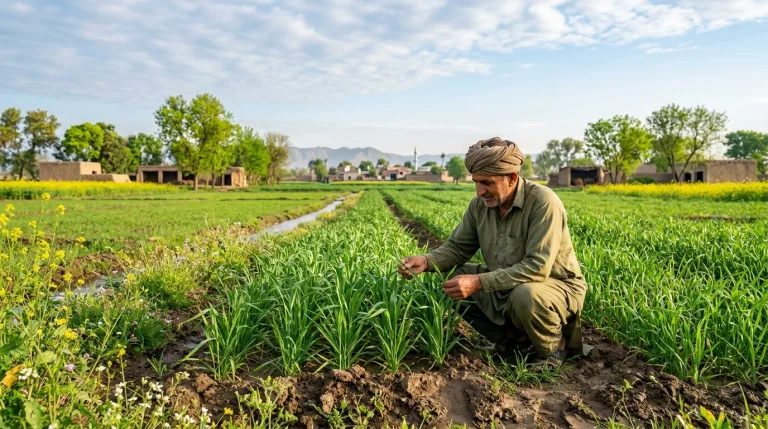
Spring in Pakistan is harvest time for rabi crops, the crops planted in October and November of the previous year. Wheat is the biggest one. Pakistan is consistently among the world’s top wheat producers, and the entire national wheat harvest happens during March and April.
Other major spring harvests include:
- Mustard, harvested in February and March, prized for cooking oil and animal feed
- Gram (chickpeas), a protein-rich staple that ripens in early spring
- Barley, used for animal feed and some traditional foods
- Lentils, harvested in March across parts of Punjab and Sindh
At the same time rabi crops are coming in, farmers are already preparing ground for kharif crops, the summer crops planted in May and June. Spring is the bridge between two major agricultural cycles, making it one of the most demanding and productive periods of the farming year.
How Spring Transforms Pakistan’s Orchards
While the fields are busy with grain crops, Pakistan’s orchards come alive during spring in a way that’s easy to underestimate. Mango trees, some of the most significant trees in the Multan region, begin their flowering phase in February and March.
The small white blossoms that cover mango trees during spring will eventually become the mangoes that Pakistan is celebrated for across the world. In Balochistan, apple and apricot trees burst into bloom during March, creating landscapes that genuinely stop you in your tracks.
The health of these spring blooms directly determines the quality and volume of the summer fruit harvest, so farmers watch the weather closely throughout this period.
Spring and Livestock Farming
Spring is equally important for livestock farmers across the country. As fresh green grass and vegetation return after winter, goats, cattle, and sheep have access to better natural grazing, leading to improved milk production and healthier animals going into the warmer months.
For poultry farmers, spring is a productive period because egg production typically increases as days grow longer and birds respond to more hours of natural light. Layer chicken farmers across Punjab often record their strongest production numbers during February and March.
The availability of fresh fodder crops in spring also lowers feed costs for dairy cattle and goat farmers, making it one of the more economically favorable seasons for livestock operations.
Why Spring in Pakistan Also Brings Farming Challenges
Spring isn’t without its difficulties. Late frost events in February can damage fruit blossoms before they have a chance to develop, wiping out large portions of a season’s fruit harvest in a single cold night. Farmers in northern Punjab and KPK are particularly exposed to these unexpected temperature drops.
As temperatures rise through March and April, pest pressure builds quickly. Aphids, whiteflies, and other insects become more active and can devastate crops if not managed promptly. Wheat is especially vulnerable to rust diseases in spring, a fungal problem that spreads rapidly in warm, moist conditions.
Unseasonal heavy rains in March can also cause wheat lodging, where tall plants get flattened by rain and wind, making them difficult to harvest and reducing grain quality.
How Spring Shapes Pakistan’s Food Culture
Spring doesn’t just affect what grows. It shapes what people eat and how communities come together. Basant, the kite-flying festival historically associated with spring in Punjab, has deep roots in the celebration of mustard flowering, the bright yellow fields that blanket parts of the province every February.
Spring vegetables like spinach, methi (fenugreek), and fresh peas hit their peak during this season, showing up in markets and home kitchens with a freshness that preserved or out-of-season produce simply can’t match. For anyone who cooks with seasonal ingredients, spring is genuinely one of the most rewarding times of year in Pakistan.
Conclusion
The spring months in Pakistan, running from February through April, are among the most productive and significant weeks in the country’s agricultural calendar. From wheat harvests that feed the nation to mango blossoms that promise summer sweetness, spring connects the land, the farmer, and the food on your plate in ways that are easy to overlook.
Whether you’re farming a few acres in rural Punjab or simply making choices about what to buy at your local market, Pakistan’s spring season shapes those decisions more than most people realize. Explore the full range of natural agricultural products rooted in Multan’s rich farming heritage at Multanfarms.com.