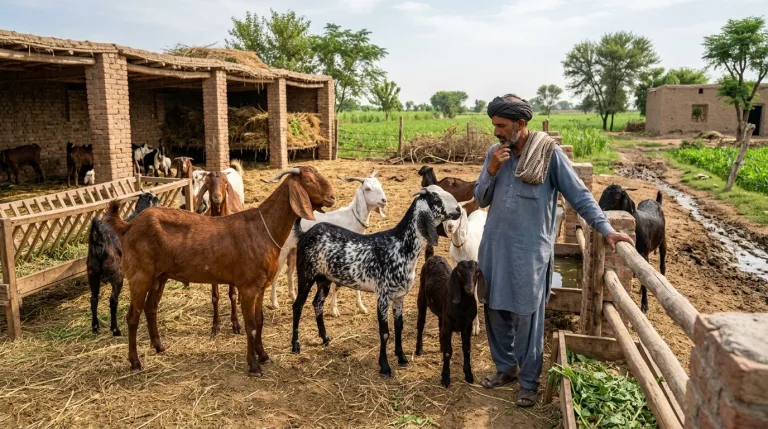
Pakistan is one of the largest goat-keeping countries in the world, and that’s not a small claim. With over 80 million goats spread across plains, hills, and deserts, this country has developed some of the most distinctive and productive goat breeds anywhere on the planet. Whether you’re a smallholder in South Punjab, a commercial farmer looking to scale up, or simply curious about what makes Pakistani goats so remarkable, understanding the key breeds is where everything starts.
Each Pakistan goat breed has its own personality, strengths, and purpose. Some are built for milk, others for meat, and a few have become so visually striking that people raise them purely for show. Let’s walk through the breeds that matter most, where they come from, and what they offer to farmers across the country.
Why Pakistan’s Goat Breeds Are in a Class of Their Own
Pakistan’s landscape covers everything from the fertile plains of Punjab to the rugged mountains of Khyber Pakhtunkhwa and the arid stretches of Balochistan. That geographic diversity created a wide range of goat breeds, each shaped by the climate, feed availability, and farming needs of its home region. Think of it like how different dog breeds were developed for specific jobs, herding, guarding, hunting. Pakistani goat breeds evolved the same way, naturally adapting to their environments over centuries.
This genetic diversity makes Pakistan’s goat population genuinely valuable on a global scale. Breeds like the Beetal and Kamori attract attention from researchers and farmers internationally, not just for their productivity but for their heat tolerance and resilience in difficult conditions. For local farmers, that resilience translates directly into healthier animals and lower veterinary costs.
Beetal: The Powerhouse of Punjab
If there’s one breed that represents Pakistan’s goat farming at its best, it’s the Beetal goat. Native to the Gujrat and Sialkot districts of Punjab, the Beetal is a large, muscular breed with long, pendulous ears that curve outward, a Roman nose, and a sleek coat ranging from brown to black to white with patches.
Beetal goats are dual-purpose, meaning they produce both quality meat and substantial milk. A good Beetal doe can yield between 1.5 to 3 liters of milk per day during her lactation period, which is exceptional for a desi breed. Beetal bucks are also highly sought after for breeding, and during Eid ul Azha, well-bred Beetal males command some of the highest prices in livestock markets across Punjab.
If you’re farming in central or northern Punjab and want a breed that performs consistently across both milk and meat production, the Beetal is the most reliable starting point.
Dera Din Panah: South Punjab’s Underrated Gem
Less talked about nationally but deeply trusted in South Punjab, the Dera Din Panah breed comes from the Muzaffargarh district and surrounding areas close to Multan. This medium to large-sized breed is well adapted to the hot, dry climate of the region, which makes it a natural fit for farmers in the Seraiki belt who want a low-maintenance animal that thrives on local forage and crop residues.
Dera Din Panah goats are primarily raised for milk, and they hold their own well against other dairy breeds in the region. Their temperament is generally calm, which makes them easier to manage in smaller farm setups. For anyone farming in or around Multan, this breed deserves serious consideration before defaulting to more commercially marketed options.
Kamori: The Most Visually Striking Breed in Pakistan
If the Beetal is known for performance, the Kamori goat is known for presence. Originating from the Dadu and Nawabshah districts of Sindh, the Kamori has a coat unlike any other Pakistani breed, deep chocolate brown to dark coffee, broken up by small white or light-colored spots scattered across the body. Combined with long drooping ears and a lean, elegant frame, a good Kamori looks like it belongs on display.
But the Kamori isn’t just ornamental. It’s also a capable milk producer, known to yield around 1 to 2 liters per day in well-managed conditions. Its distinctiveness makes it popular both as a breeding animal and as a premium livestock investment. During Eid season, high-quality Kamori bucks regularly fetch prices that surprise first-time buyers at livestock fairs.
Nachi: The Goat That Dances
There is no other way to describe the Nachi goat except to say it walks like it’s performing. Native to the Jhang, Toba Tek Singh, and Sahiwal districts of Punjab, the Nachi has a distinctive prancing gait where both legs on the same side move forward together, creating a swaying, rhythmic motion. This trait is so unusual and so admired that Nachi goats are regularly featured in livestock festivals and cultural competitions.
Beyond the spectacle, Nachi goats are a medium-sized breed that farmers raise for both meat and milk. They’re hardy animals, well adapted to the central Punjab environment, and they breed reliably. Their primary appeal, though, remains their movement. A well-bred Nachi with a clean gait is a source of genuine pride for Pakistani livestock keepers in a way that goes beyond simple productivity.
Teddy: The Practical Choice for Small Farms
Not every farmer needs a large, commercially intensive breed. The Teddy goat fills a completely different role in Pakistan’s livestock landscape. Small to medium in size, compact, and prolific, the Teddy is one of the most commonly kept backyard breeds across rural Punjab. Its biggest advantage is its breeding rate, Teddy does frequently produce twins and triplets, which means a small initial flock can grow quickly.
Teddy goats are primarily raised for meat, and their smaller frame makes them economical to feed and house. They’re a good entry point for new farmers who want to start with manageable animals before scaling up to larger breeds. If you’re working with limited space or a limited budget, the Teddy is a practical, forgiving breed that rewards basic, consistent care.
How to Choose the Right Breed for Your Setup
The right Pakistan goat breed depends almost entirely on three things: your climate, your purpose, and your budget. Milk-focused farmers in South Punjab tend to do well with Beetal or Dera Din Panah. Commercial meat producers often look at Beetal crosses or Teddy flocks for fast turnover. Farmers who want both income and prestige frequently invest in Kamori or Nachi animals that attract buyers willing to pay a premium.
Whatever direction you go, start with animals sourced from a reputable, traceable background. Breed quality varies enormously, and buying from a trusted source is the single most important decision you can make before anything else.
Pakistan’s Goat Heritage Is Worth Understanding
The goat breeds of Pakistan aren’t just livestock. They’re part of a farming tradition built over generations, shaped by the land, the climate, and the practical needs of millions of rural families. Understanding these breeds helps you make smarter decisions, whether you’re buying your first pair of goats or expanding an established herd.
For more information on Pakistani livestock, traditional farming practices, and agricultural products from the heart of South Punjab, visit Multanfarms.com and explore a resource built for farmers who take their craft seriously.