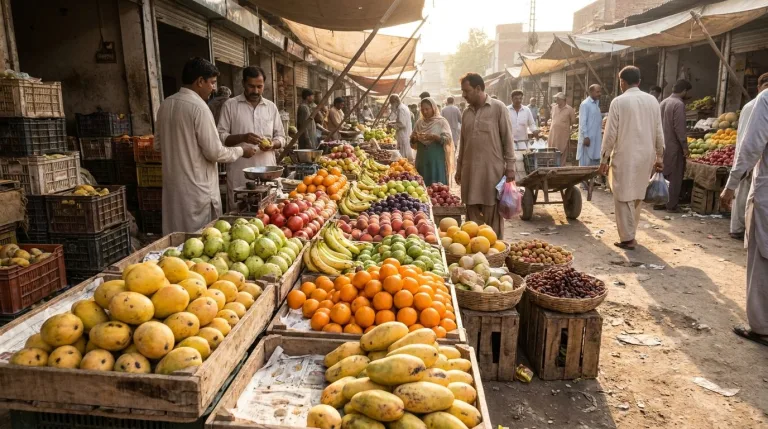
Pakistan is a country of extraordinary contrasts. From the snow-capped peaks of Gilgit-Baltistan to the sun-scorched plains of Sindh and the fertile riverbanks of Punjab, each region has its own climate, its own soil, and its own signature fruit. If you’ve ever tasted a ripe Chaunsa mango on a July afternoon or bitten into a cold, crisp guava dusted with salt and chili, you already know what we’re talking about.
The diversity of Pakistani fruit isn’t just impressive, it’s economically vital. Pakistan ranks among the world’s top producers of mangoes, dates, and kinnow, exporting millions of tonnes every year to markets across the Middle East, Europe, and beyond. Yet for most Pakistanis, the real magic isn’t in export figures. It’s in the seasonal rhythms that define everyday life: the mango boxes that arrive in summer, the heaps of kinnow that fill the streets in winter, and the baskets of apricots that come down from the northern mountains.
In this article, we’ll take you on a tour through Pakistan’s most famous and beloved fruits, where they grow, why they’re special, and what makes each one worth celebrating.
The King of Fruits: Pakistan’s World-Famous Mango
No conversation about famous fruit in Pakistan is complete without starting with the mango. Pakistan is one of the world’s largest mango producers, and the country is home to hundreds of varieties, many of which are grown in the lush orchards of Multan, Rahim Yar Khan, and the broader South Punjab belt. The most celebrated among them are Chaunsa, Sindhri, Anwar Ratol, and Langra.
Chaunsa is particularly prized for its rich golden color, silky texture, and intensely sweet flavor with barely any fiber. Sindhri, grown mainly in Sindh, has a distinctive shape and a smooth, creamy pulp that makes it popular for fresh eating and juicing alike. Anwar Ratol is small in size but legendary in aroma, and a single box of it can perfume an entire room.
Mango season in Pakistan typically runs from May through September, and for many families it’s the most anticipated time of the year. Orchards in Multan alone produce thousands of tonnes that eventually reach dinner tables across the country and export markets in the Gulf, the UK, and beyond.
Kinnow: The Citrus Crown of Punjab
If summer belongs to the mango, then winter belongs to the kinnow. This hybrid citrus fruit, developed from a cross between two mandarin varieties, has become the signature winter fruit of Punjab. The districts of Sargodha, Toba Tek Singh, and Sahiwal are the heartland of kinnow production, and at peak season the roadside stalls are stacked high with nets of bright orange fruit.
Kinnow is rich in vitamin C and a beloved fixture on the Pakistani breakfast table. Its juice is tangy, refreshing, and packed with natural sugars that make it an energizing start to a cold morning. Pakistan exports kinnow extensively to Russia, Afghanistan, Iran, and parts of the Middle East, making it one of the country’s most commercially significant horticultural crops.
Fresh-squeezed kinnow juice is widely considered one of the best fruit drinks Pakistan has to offer, and anyone who has tried it on a January morning would be hard-pressed to disagree.
Guava: The People’s Fruit
Few fruits are as universally loved across Pakistan as the guava (amrood). Available almost year-round and priced affordably, guava is the everyday fruit of millions of households. The guava orchards of Hafizabad in Punjab and Karachi’s suburban belt are particularly well-known, and the fruit is sold on every roadside cart from Peshawar to Hyderabad.
What makes Pakistani guava special is its versatility. It’s eaten fresh with salt and chili, blended into juice, turned into jam, and even pickled. The variety known as Gola Guava from Hafizabad is especially celebrated for its large size, creamy white flesh, and mild sweetness. It’s the kind of fruit you buy a whole kilo of without thinking twice.
Guava is also one of the most nutritionally dense fruits available at an accessible price point. It’s loaded with vitamin C, dietary fiber, and antioxidants, making it a staple that combines everyday affordability with real health value.
Pomegranate from Balochistan: A Jewel of the Land
The pomegranate (anar) is another fruit that Pakistan does exceptionally well, and it comes almost entirely from the rugged landscapes of Balochistan. The Kandahari variety, named for its cross-border heritage, is known for its deep ruby-red arils, bright acidity, and complex sweetness. Pishin and Kalat are the main pomegranate-growing districts.
Pomegranate season runs from August through November, and the fruit has a prominent place in traditional cuisine and gift culture. A basket of quality anar is a common housewarming or Eid gift, and pomegranate seeds regularly find their way into raitas, chaats, and fresh salads. The juice is considered a health tonic and is particularly popular during the winter months.
Apricots from Gilgit-Baltistan: The Mountain Treasure
The northern region of Gilgit-Baltistan is famous for its apricots (khubani), and for very good reason. The orchards that cling to the steep valleys of Hunza, Gilgit, and Skardu produce fruit of extraordinary quality, dried naturally in the mountain sun and eaten fresh during the brief summer harvest.
Dried apricots from Hunza have built a strong reputation for their rich, tangy-sweet flavor and chewy texture. They’re a staple of the local diet and are widely sold at dry fruit shops across Pakistan throughout the year. Fresh apricots are available only during a short window in June and July, which makes them a seasonal delicacy eagerly anticipated by those who know their quality.
Dates: Pakistan’s Desert Gold
Dates (khajoor) are produced in significant quantities in Sindh and parts of Balochistan. The Aseel variety from Khairpur, Sindh, is considered one of the finest soft dates in the world, prized for its caramel-like sweetness and smooth, almost melting texture.
Dates hold a deep cultural significance in Pakistan, particularly during Ramadan, when they’re traditionally the first food eaten to break the fast. Pakistan exports dates to dozens of countries, and Khairpur dates in particular have won recognition at international agri-food exhibitions. The harvest, which typically runs between July and September, supports the livelihoods of thousands of farming families across Sindh.
A Country That Grows Something Special in Every Season
Pakistan’s fruit landscape is one of the country’s greatest natural gifts. From the mango orchards of Multan and the kinnow groves of Sargodha to the pomegranate fields of Balochistan and the apricot valleys of Hunza, each famous fruit in Pakistan tells a story about the land, the climate, and the communities that have cultivated it for generations. These fruits aren’t just food, they are heritage.
Whether you’re buying a box of Chaunsa from a local vendor or reaching for dried Hunza apricots as an afternoon snack, you’re connecting to centuries of agricultural tradition. At Multanfarms.com, we celebrate that tradition every day by bringing you the finest Pakistani agricultural products, rooted in authenticity. Explore our full range at Multanfarms.com.