Pakistan is one of those countries where farming isn’t just a job, it’s a way of life. From the wheat fields of Punjab to the cotton farms of Sindh, agriculture stretches across every corner of the country and quietly powers everything from the food on your table to the clothes on your back. Over 37% of Pakistan’s total land area is under cultivation, making it one of Asia’s most agriculturally active nations.
That’s remarkable when you think about it. A single country feeding over 230 million people, supplying global markets with cotton and rice, and growing some of the world’s finest mangoes, all at the same time. Pakistan’s farming sector contributes roughly 19% to the national GDP and employs around 40% of the country’s workforce. In other words, nearly half the working population in Pakistan has something to do with a farm.
So what exactly is happening out on those farms? What crops are growing, what animals are being raised, and what makes certain regions of Pakistan especially productive? Let’s take a closer look.
The Regions That Feed Pakistan
Pakistan’s geography is surprisingly diverse, and each major region has developed its own farming identity based on the climate, soil type, and water availability.
Punjab is the country’s agricultural heartland and is often called the bread basket of Pakistan. It produces the bulk of the nation’s wheat, rice, sugarcane, maize, and cotton. The soil here is exceptionally fertile, fed by the Indus River system and its tributaries. South Punjab, especially around Multan, Bahawalpur, and Rahim Yar Khan, is famous for its mangoes, citrus fruits, and date palms.
Sindh contributes heavily to rice, cotton, and sugarcane production. The lower Indus plains in Sindh have been farmed for thousands of years, and many of the country’s major sugar mills and rice processing facilities are located here.
Khyber Pakhtunkhwa (KPK) is known for its fruit orchards, particularly peaches, apples, plums, and apricots grown in the cooler hill districts. Tobacco is another major crop in this region.
Balochistan, despite being largely arid and dry, is one of the world’s largest producers of apples, pomegranates, and grapes. Farmers here have refined water conservation techniques over centuries to make the most of limited rainfall.
The Crops That Keep Pakistan Running
Walk through any Pakistani bazaar and you’ll see the direct results of what farmers across the country are growing. Here are the most important crops and why they matter.
Wheat is the staple food of Pakistan, and the country produces over 25 million tonnes of it every year. Every roti, naan, and paratha you eat traces back to a wheat farm, most likely somewhere in Punjab.
Rice, especially the aromatic Basmati variety grown in Punjab, is a major export earner for Pakistan. Pakistani Basmati is considered among the finest in the world and is exported to Europe, the Middle East, and beyond. Did you know that Pakistan ranks among the top five Basmati rice exporters globally?
Cotton is often called “white gold” in Pakistani farming circles. It supports the country’s massive textile industry, which is one of Pakistan’s biggest foreign exchange earners. Sindh and southern Punjab are the primary cotton-growing belts.
Mangoes deserve a special mention. Pakistan is one of the top five mango-producing countries in the world, and varieties grown in Multan and Bahawalpur, such as Chaunsa, Sindhri, and Anwar Ratol, are celebrated for their sweetness and aroma in markets across the globe.
Livestock Farming: The Other Half of the Picture
It would be unfair to discuss farms in Pakistan without giving credit to livestock farming, which contributes nearly 60% of the total agricultural value added in the country. Pakistan has one of the largest cattle and buffalo populations in the world.
Buffaloes are the primary source of milk in Pakistan, and the country ranks among the top five milk-producing nations globally. Goats are raised for both meat and milk, with millions of households across rural Pakistan keeping small herds. Sheep farming is common in Balochistan and KPK, where the wool feeds a thriving tradition of handmade carpets and shawls.
Poultry farming has also grown dramatically over the last two decades. From large commercial poultry operations in Punjab to smaller backyard layer hen setups in rural areas, eggs and chicken have become one of the most accessible and affordable sources of protein for Pakistani households.
Traditional Farming Meets Modern Methods
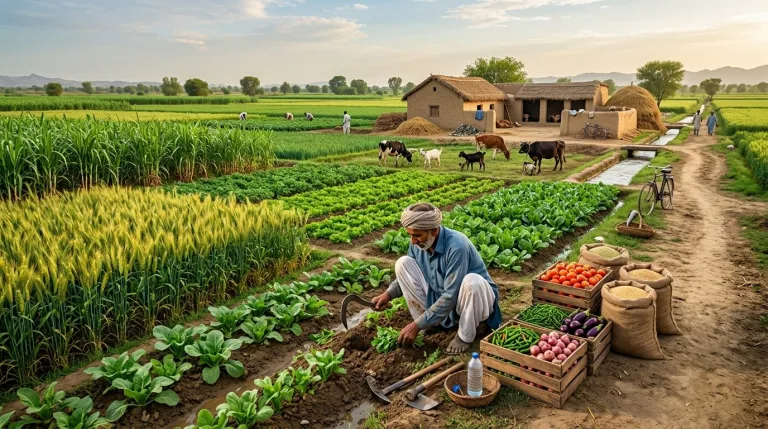
One of the most interesting things about farms in Pakistan is the mix of old and new. Many farmers, especially in remote areas, still rely on traditional methods passed down through generations, using ox-drawn ploughs, natural composts, and flood irrigation. These methods have served Pakistani agriculture for centuries, and there’s real wisdom embedded in them.
At the same time, there’s a growing push toward modern agriculture. Drip irrigation systems, high-yield seed varieties, mechanised harvesting, and soil testing are becoming more common, particularly on larger commercial farms. Government programs and agricultural universities are actively working to bring better techniques and resources to smallholder farmers, who form the backbone of the rural economy.
The challenges are real. Water scarcity, unpredictable monsoons, rising input costs, and limited cold-storage infrastructure all put pressure on farmers year after year. But Pakistani farmers have shown remarkable resilience over generations, adapting their practices to whatever conditions they face.
Why Multan Sits at the Heart of Pakistani Farming
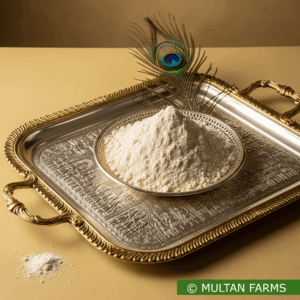
If there’s one city that captures the full spirit of farming in Pakistan, it’s Multan. Located in the heart of South Punjab, Multan has been an agricultural hub for centuries. The region’s famous mangoes are recognised globally for their exceptional quality, and the fertile land here also gives us traditional products like Multani mitti, the natural Fuller’s earth that has been used in skincare and home remedies for generations.
Multan’s farms produce wheat, vegetables, citrus, and date palms at scale. The agricultural roots run so deep here that farming isn’t just an economic activity, it’s woven into the city’s cultural identity. When people across Pakistan think of fresh, authentic farm produce, Multan almost always comes to mind.
Pakistan’s Farms: Feeding a Nation, Shaping a Future
Farming in Pakistan is at a crossroads. The country has enormous potential, fertile land, a young agricultural workforce, and diverse climatic zones that allow for a wide variety of crops and livestock. But realising that potential fully will require continued investment in irrigation, rural infrastructure, farmer education, and better market access.
The good news is that awareness is growing. Consumers are increasingly interested in where their food comes from, how it’s grown, and whether it’s natural and authentic. That curiosity is an opportunity for farmers across Pakistan, especially those committed to quality, tradition, and honest produce. Because at the end of the day, every mango you enjoy, every roti you eat, and every glass of fresh milk you drink, it all begins on a Pakistani farm.
Explore the finest farm-fresh products from the heart of Multan at Multanfarms.com.