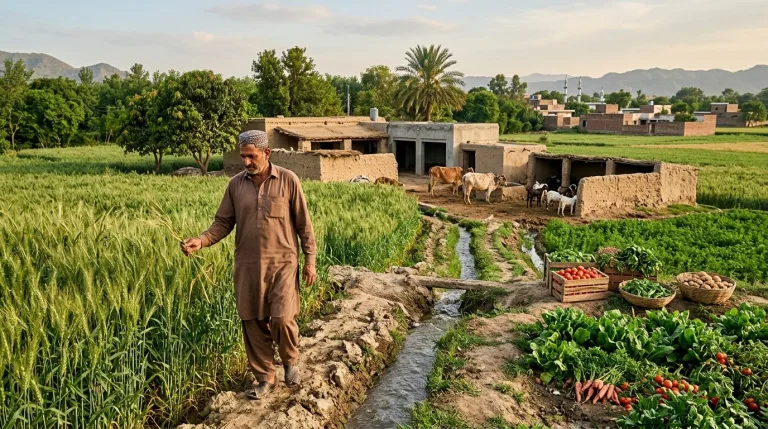
Picture the roti on your breakfast plate, the chai made with fresh milk, or the juicy mango you’ve been craving since last summer. All of it starts on a farm somewhere in Pakistan. This country feeds over 230 million people, and most of that food comes directly from Pakistani soil, Pakistani hands, and centuries of agricultural knowledge passed down through generations.
Pakistan is one of the world’s leading agricultural nations. Farming contributes roughly 22 to 25 percent of the country’s GDP, and it employs nearly half the working population. When people talk about the backbone of Pakistan, they’re talking about its farms.
In this article, we’ll take a closer look at what a farm in Pakistan really looks like, which regions grow what, why Pakistani agriculture matters beyond just food, and how tradition and modern science are slowly coming together on the same plot of land.
A Land Built for Farming
Pakistan sits in one of the most agriculturally blessed regions in the world. The Indus River and its tributaries feed one of the largest canal irrigation systems in the world, stretching across Punjab and Sindh. This network of canals has turned vast stretches of land into some of the most productive farmland on earth.
Climate plays a huge role too. Pakistan has four distinct seasons, landscapes ranging from mountain valleys to coastal plains, and soil types that support everything from staple grains to exotic fruits. That’s why Pakistan can grow wheat in the cold Rabi season and mangoes in the scorching Kharif heat, often on the same piece of land just months apart.
The word “Rabi” refers to the winter crop season (October to March), while “Kharif” refers to the summer crop season (April to September). These two cycles keep Pakistani farms productive almost year-round.
The Major Farming Regions of Pakistan
Not every corner of Pakistan grows the same things. The country’s geography is too varied for that.
Punjab is the agricultural powerhouse. Known as the “breadbasket of Pakistan,” it produces the largest share of wheat, rice, cotton, sugarcane, and maize in the country. South Punjab, centered around cities like Multan and Bahawalpur, is famous for mangoes, citrus fruits, and dates.
Sindh is another major contributor, especially for rice, sugarcane, and cotton. The lower Indus plains have deep, fertile alluvial soil that’s ideal for large-scale grain and vegetable farming.
Khyber Pakhtunkhwa (KPK) is known for its fruit orchards, including apples, peaches, plums, and walnuts. The cooler mountain climate creates ideal conditions for temperate fruits that don’t grow anywhere else in Pakistan.
Balochistan, despite being the largest province by area, grows some of Pakistan’s finest fruits including pomegranates, apples, grapes, and apricots, particularly in the Quetta valley region.
What Actually Grows on a Farm in Pakistan?
Pakistani farms are remarkably diverse. Walk through any village in Punjab and you’ll see wheat fields standing alongside cotton, mustard, and sugarcane. In the orchard belts near Multan, rows of mango trees stretch as far as the eye can see.
Wheat is the most widely grown crop in Pakistan and is the foundation of the Pakistani diet. It’s used to make roti, naan, paratha, and a dozen other staples. Pakistan is consistently among the top ten wheat-producing countries in the world.
Cotton is the country’s most valuable cash crop and drives a huge chunk of the textile industry. Pakistan’s textile exports, which rely almost entirely on domestic cotton, are one of the biggest sources of foreign exchange.
Mangoes hold a special place in Pakistani agriculture. Pakistan is the fourth largest mango producer in the world, and the varieties grown in South Punjab, including Chaunsa, Sindhri, and Anwar Ratol, are considered some of the finest anywhere.
Beyond these, Pakistani farms also produce rice, sugarcane, maize, vegetables, lentils, chickpeas, onions, potatoes, tomatoes, and a wide range of spices, a list far longer than most people realize.
Livestock: The Hidden Half of Pakistani Farming
When most people think of a farm in Pakistan, they picture fields of wheat or rows of mango trees. But livestock farming is equally important and often underappreciated.
Pakistan has one of the largest livestock populations in the world. The country is home to tens of millions of cattle, buffaloes, goats, sheep, and poultry. This livestock isn’t just for meat. It powers dairy production, provides wool and hides, and is integral to the rural economy.
Desi cows and buffaloes provide the milk that goes into Pakistan’s beloved dahi, lassi, makhan, and desi ghee. Goat farming is widespread across both rural and semi-urban areas, with breeds like Beetal popular across Punjab and Sindh. Layer hen farming has grown rapidly over the past two decades, making eggs one of the most affordable and widely consumed protein sources in the country.
Traditional Farming Meets Modern Agriculture
Pakistan’s farming community has deep roots in traditional practices. Crop rotation, natural composting, and seasonal planting schedules have been followed for generations. In many villages, farmers still consult the lunar calendar before deciding when to sow or harvest.
At the same time, modern agriculture is making its presence felt. Hybrid seed varieties have improved crop yields dramatically. Drip irrigation, where water is delivered directly to the roots of plants with minimal waste, is slowly replacing flood irrigation in some regions. Pesticide management, soil testing, and mechanized harvesting are becoming more accessible to small farmers.
The challenge is bridging the gap between those two worlds. Small landholders, who make up the majority of Pakistani farmers, often lack access to credit, modern equipment, or reliable market information. Closing that gap remains one of the most important priorities for Pakistan’s agricultural future.
Why Multan Is at the Heart of Pakistan’s Farm Story
No conversation about a farm in Pakistan is complete without Multan. Located in South Punjab, Multan is not just a city. It’s an agricultural identity.
The mango orchards of Multan and its surrounding districts produce varieties that are exported to markets across the Middle East, Europe, and North America. The region is also known for its Kinnow citrus, dates, guava, and a rich tradition of growing and preserving food in ways that have barely changed across centuries.
Multanfarms.com is deeply rooted in this tradition, bringing you products, information, and stories that come straight from this land. Whether it’s fresh seasonal produce, traditional foods, or farming knowledge tested by generations of growers, Multan’s farms have something real to offer.
Conclusion: Pakistan’s Farms Are Worth Knowing
A farm in Pakistan is more than a piece of land. It’s where culture, history, hard work, and nature come together to produce the food that sustains a nation. From the wheat fields of Punjab to the apple orchards of KPK, from the mango groves of Multan to the cotton fields of Sindh, Pakistani agriculture is as diverse as the country itself.
The next time you sit down to a meal, take a moment to think about where it came from. Chances are, it started on a Pakistani farm. If you want to learn more about what Pakistan’s soil produces and the people who work it, explore Multanfarms.com for authentic stories, traditional products, and farming knowledge worth sharing.