When people talk about agriculture in South Asia, India often gets all the attention. It’s the bigger country, it has more land, and it appears in global food production rankings with numbers that are hard to argue with. But here’s what most discussions overlook: Pakistan produces far more food per capita than many developing nations, runs one of the most complex irrigation systems on the planet, and holds its own in several key crops when compared directly to its eastern neighbor. So, how does the comparison actually play out?
Let’s break it down properly.
Two Neighbors, Very Different Scales
The first thing to understand is that India is roughly four times the size of Pakistan in total land area, and its population is about six times larger. With 1.4 billion people to feed, India has built a massive agricultural machine over the decades. Pakistan, with around 240 million people and a geographical area of approximately 881,913 square kilometers, is considerably smaller but still a major agricultural economy in its own right. Size alone doesn’t tell the whole story.
The Indus Basin: Pakistan’s Agricultural Backbone
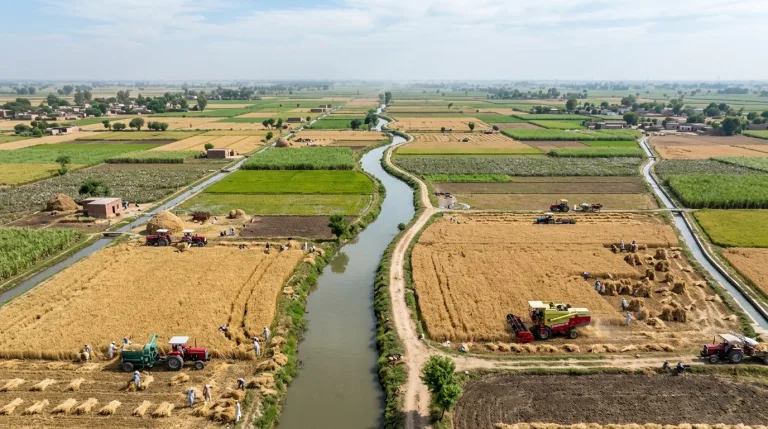
One of Pakistan’s greatest farming achievements is the Indus Basin Irrigation System, the largest contiguous canal-based irrigation network in the world. It covers over 16 million hectares and supplies water to farmland across Punjab, Sindh, and Khyber Pakhtunkhwa. India has vast irrigation infrastructure spread across the Ganges, Brahmaputra, and other river systems, but the scale and connectivity of Pakistan’s canal network is genuinely remarkable. Without it, Pakistan’s crop output would look very different, and so would the country’s food security story.
Wheat and Cotton: Where Pakistan Competes Hard
Pakistan’s major crops include wheat, cotton, sugarcane, rice, maize, and oilseeds. Wheat is the most critical staple, and Pakistan consistently ranks among the top ten global producers, harvesting around 26 to 28 million tonnes in good years. India produces significantly more wheat, around 110 million tonnes annually, simply because of the difference in cultivated land area. That said, wheat productivity per hectare in Pakistan’s central Punjab belt is highly competitive by any global standard.
Cotton is where Pakistan truly distinguishes itself. Pakistan is one of the top five cotton-producing countries in the world and a major exporter of cotton yarn, fabric, and finished textiles. India also produces a large volume of cotton and often ranks among the top two globally, but Pakistan’s cotton has historically been prized for its medium to long staple quality, making it well-suited for fine textile manufacturing. The entire textile export sector of Pakistan, which is the country’s single largest source of foreign exchange, is built on this agricultural foundation.
Rice: A Quality vs. Quantity Story
Here’s where the comparison gets genuinely interesting. India produces far more rice overall, with annual output close to 130 million tonnes. Pakistan produces around 9 million tonnes. On raw numbers, there’s no contest. But when the comparison narrows to Basmati rice, the picture changes considerably.
Pakistan’s Basmati, especially from the rice-growing regions of Punjab, is regarded among the finest in the world. Long-grained, aromatic, and with a flavor profile that stands apart from ordinary rice varieties, Pakistani Basmati competes directly with Indian Basmati across the Middle East, Europe, and North America. In fact, Pakistan and India have had prolonged trade disputes over the Geographical Indication (GI) status of Basmati rice, which signals just how commercially significant and contested this crop actually is.
Where Pakistan Leads: Mangoes, Kinnow, and Dates
Pakistan produces some of the most celebrated mangoes in the world. The Chaunsa variety, which originates from Multan in South Punjab, is widely recognized for its exceptional sweetness, low fiber content, and rich aroma. India produces a higher total volume of mangoes annually, but Pakistan’s Chaunsa, Sindhri, and Langra varieties have built a devoted following in international markets, particularly in the Gulf and the United Kingdom. In terms of quality and variety-specific reputation, Pakistani mangoes are genuinely in a class of their own.
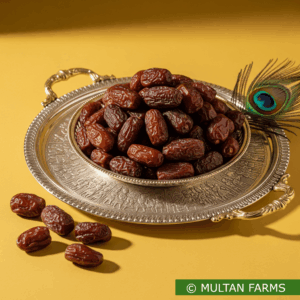
Pakistan is also the world’s leading producer of Kinnow, a high-yielding mandarin hybrid grown almost exclusively in the canal-irrigated belt of Pakistani Punjab. This is a commodity with no serious global rival in terms of production concentration. Add to that Pakistan’s status as one of the top producers and exporters of dates, particularly from Khairpur in Sindh, and it becomes clear that Pakistan’s agricultural strengths are more diverse than a simple wheat-and-cotton narrative suggests.
Shared Challenges on Both Sides of the Border
Despite their differences in scale, Pakistan and India face strikingly similar agricultural challenges. Water scarcity is becoming critical, with groundwater depletion an acute problem in Pakistani Punjab and India’s northwestern states alike. Shifting monsoon patterns tied to climate change are threatening crop yields and sowing schedules that farmers have relied on for generations.
Both countries also deal with small landholdings that limit mechanization, uneven access to quality seeds and fertilizers, and significant post-harvest losses due to inadequate cold chain infrastructure. Pakistan loses an estimated 15 to 20 percent of its agricultural produce between harvest and market every year. India faces comparable losses across several commodity sectors. Addressing these shared inefficiencies could unlock billions of dollars in food value that currently goes to waste on both sides of the border.
The Bigger Picture
Comparing Pakistan’s crop production to India’s is less about rivalry and more about understanding where each country’s strengths lie. Pakistan leads in cotton quality, Basmati prestige, Kinnow production, and premium mango varieties. India leads in total volume across wheat, rice, pulses, and horticulture. Together, the two countries account for a major share of South Asia’s food supply, and the agricultural choices being made on their farms today will define the region’s food security for generations ahead.
If you want to experience the best of what Pakistani farming produces, from Multani mangoes to premium seasonal produce, visit Multanfarms.com and explore where quality farming meets a proud tradition.