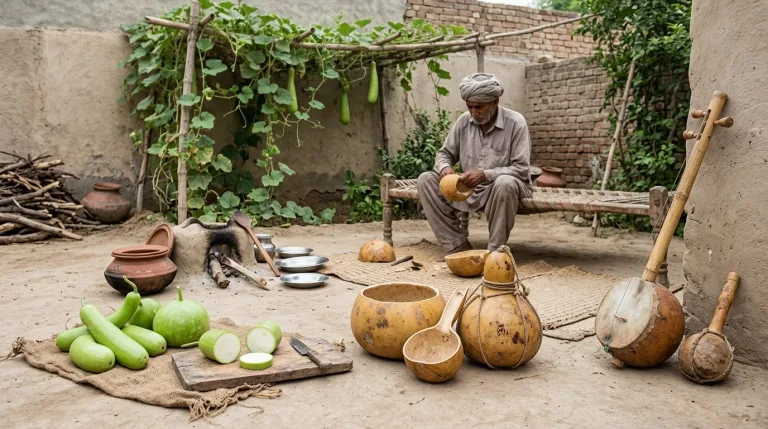
Picture this: you’re walking through a farm market and spot a strange, lumpy vegetable that looks like a green bowling pin. Your friend picks up another one that’s round like a ball, and a third is long and twisty like a snake. They’re all different shapes, but they belong to the same family. Surprised?
Meet the gourd, one of the oldest plants humans have ever grown. People have used gourds for thousands of years, and they’re still a big part of kitchens and farms today. In Pakistan, you’ve probably eaten a few without even thinking about it.
In this article, you’ll learn what gourds are, the popular types grown on farms like those around Multan, how they’re used, and why they’re so good for your body. Ready to dig in?
So, What Exactly Is a Gourd?
A gourd is a fruit that grows on a vine and belongs to the cucurbit family. That’s a fancy word for the plant family that includes pumpkins, cucumbers, melons, and squash. If you’ve eaten any of those, you’re already related to the gourd world!
Here’s a fun twist. Even though we cook many gourds like vegetables, they’re technically fruits because they grow from a flower and hold seeds inside. It’s the same reason a tomato is a fruit, too.
Gourds also love warm weather. That’s one reason they grow so well in South Asia, where the sun shines bright for much of the year.
Meet the Gourd Family: Popular Types You Should Know
Not all gourds look or taste the same. Here are some you might spot at a Pakistani market or on your dinner plate:
- Bottle gourd (lauki or ghiya): Long, pale green, and shaped a bit like a bottle. It’s mild and a little sweet when cooked.
- Bitter gourd (karela): Bumpy, dark green, and famous for its strong, bitter taste. Some people love it, and some run away from it!
- Ridge gourd (tori): It has sharp ridges running along its sides, kind of like a green cactus without the spikes.
- Round gourd (tinda): Small and round like a baby apple. It’s a favorite in curries.
- Sponge gourd: When it’s young, you can eat it. When it dries out, it turns into a natural scrubber for washing dishes or even your back in the bath.
Each one has its own personality, just like the kids in your class. Some are sweet, some are strong, and some are surprising.
Gourds on the Farm: How Do They Grow?
Growing gourds is a bit like raising a climbing superhero. The vines stretch out fast, sometimes several meters long, and they love to climb. Farmers often build wooden or bamboo frames so the vines can crawl upward. That way, the gourds hang in the air like green lanterns.
Why does this help? Hanging gourds stay cleaner, grow straighter, and don’t rot from sitting on wet soil. It’s like keeping your sneakers off a muddy floor.
Gourds usually need three things to do well:
- Warm weather, since cold air can hurt the plants
- Plenty of water, but not so much that the roots get soggy
- Sunlight, because they need it to make energy, just like other plants
In the farmlands of South Punjab, this mix of sunshine and fertile soil makes gourds a common crop for local families and markets.
Why Are Gourds So Good for You?
Here’s a “did you know” for your next lunch break: many gourds are made mostly of water. Bottle gourd, for example, is packed with it, which makes it great for staying cool and hydrated on a hot day.
Gourds also give you:
- Fiber, which helps your stomach digest food smoothly
- Vitamins like vitamin C, which helps your body fight off colds
- Minerals like potassium, which keeps your muscles and heart working well
Bitter gourd gets extra attention because many families believe it’s great for staying healthy. It might not win a taste contest, but think of it like a strict coach. It’s not always fun, but it’s good for you!
More Than Just Food: Gourds as Tools and Treasures
Here’s where gourds get really cool. Long before plastic bottles existed, people dried gourds and turned them into containers. A dried gourd can hold water, grain, or seeds, and it’s light and tough.
Gourds have been used in all sorts of creative ways:
- Musical instruments: The round body of some dried gourds makes a perfect sound box. Traditional instruments like the tumba and parts of the been (snake charmer’s flute) use gourds to create their sound.
- Bowls and spoons: Cut a dried gourd in half and you’ve got a bowl.
- Birdhouses: Birds love moving into hollow, dried gourds.
- Decorations: Artists paint and carve them into beautiful pieces.
So the next time you see a gourd, remember it could be dinner, a drum, or a home for a little bird!
Easy Ways Gourds Show Up in Your Meals
You don’t have to be a chef to enjoy gourds. Families across Pakistan cook them in lots of tasty ways:
- Lauki ka halwa, a sweet dessert made from grated bottle gourd
- Tinda masala, a spicy curry with soft, round gourds
- Karela stuffed with spices, a classic dish with a crunchy, bold flavor
- Lauki chana dal, a comforting meal that goes perfectly with warm roti
If you’ve ever eaten at a family gathering, there’s a good chance a gourd dish was on the table.
Wrapping It Up
Gourds are far more than odd-shaped vegetables. They’re ancient plants that feed us, keep us healthy, and even give us tools and music. From the long bottle gourd to the bumpy bitter gourd, each one has a story and a purpose.
Next time you see one at a farm stand or on your plate, give it a second look. It’s been helping people for thousands of years! So here’s a question to think about: if you could turn a gourd into anything, would it be a drum, a bowl, or a birdhouse?