Imagine this: a farmer in Punjab, Pakistan earns Rs. 252,000 per acre from his fish ponds, while his neighbor growing wheat and cotton on the same amount of land makes only about Rs. 58,000. That’s more than four times the profit, and all from raising fish! Sounds unbelievable, right?
The fisheries business is one of the fastest-growing industries in the world, and it’s way more exciting than most people think. It’s not just about a guy sitting by a river with a fishing rod. We’re talking about massive ocean trawlers, high-tech fish farms, shrimp exports worth millions of dollars, and thousands of families earning their living from water. Whether it’s the deep blue sea or a man-made pond in your backyard, fish mean serious business.
In this article, we’ll explore what the fisheries business actually is, how it works, why it’s booming, and how countries like Pakistan are turning their rivers, coastlines, and even empty land into gold mines of fish production. Let’s dive in!
What Exactly Is the Fisheries Business?
When we say “fisheries business,” we’re talking about everything involved in catching, raising, processing, and selling fish and other seafood. It’s a huge umbrella that covers many different activities.
Think of it like the food industry, but specifically for aquatic animals. Just like farming involves growing crops and raising cattle, the fisheries business involves “growing” fish, whether that’s catching them from the wild or raising them in controlled environments.
Here are the main types of fisheries business:
- Marine fisheries: Catching fish from the ocean using boats and nets
- Inland fisheries: Fishing in rivers, lakes, and reservoirs
- Aquaculture (fish farming): Raising fish in ponds, tanks, or cages, kind of like underwater farming
- Seafood processing: Cleaning, freezing, and packaging fish for sale
- Exporting: Selling fish products to other countries
Why Is the Fisheries Business Such a Big Deal?
Here’s a fun fact: fish is the primary source of protein for over 3 billion people worldwide. That’s almost half the planet! So the demand for fish isn’t going anywhere, it’s actually growing every single year.
For countries like Pakistan, the fisheries business is a major economic player. Pakistan has a coastline stretching about 1,046 kilometers along the Arabian Sea, plus countless rivers, lakes, and reservoirs inland. More than 23,000 fishing vessels operate in Pakistani waters, and hundreds of thousands of families depend on fishing for their daily income.
And here’s something really impressive: Pakistan’s seafood exports recently hit a historic milestone of $500 million! Between July and December 2025 alone, the country exported over 122,000 metric tonnes of seafood worth $253 million. That’s a lot of fish traveling around the world!
Fish Farming: The Smartest Way to Start a Fisheries Business
If you’re thinking, “But I don’t live near the ocean,” don’t worry! You don’t need an ocean to start a fisheries business. That’s where aquaculture, or fish farming, comes in.
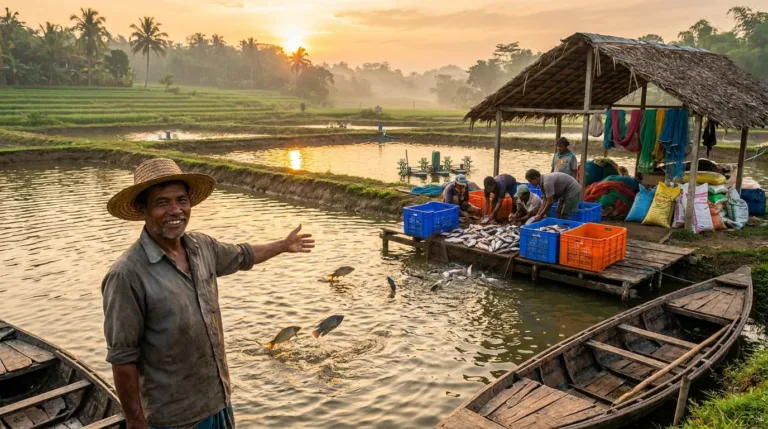
Fish farming is basically like regular farming, except instead of planting seeds in soil, you’re raising fish in ponds or tanks. And it’s growing incredibly fast. In Pakistan alone, more than 12,000 fish farms have been established, employing about 50,000 people. Most of these farms are in Punjab and Sindh, where water is available from rivers and canals.
Here’s what makes fish farming so attractive as a business:
- Higher profits per acre compared to traditional crop farming
- Faster returns, since many fish species grow to market size in 6 to 12 months
- Growing demand, because more people want affordable protein
- Multiple species options, from carp and tilapia to trout and shrimp
In Punjab, districts like Multan, Muzaffargarh, Sheikhupura, and Gujranwala have become hotspots for fish farming. The warm climate and access to canal water make these areas perfect for raising fish like rohu, catla, and grass carp.
From Ocean to Plate: How Marine Fisheries Work
On the other side of the fisheries business, you have marine fishing, which happens out in the open sea. Pakistan’s biggest fish harbor is in Karachi, where more than 4,000 fishing boats dock. It handles about 75% of the country’s entire fishing fleet!
Marine fisheries catch everything from shrimp and lobster to tuna and pomfret. The shrimp fishery is especially important because most of it gets exported to North America and Europe, bringing in valuable foreign currency.
Here’s how it typically works: fishermen head out in the evening, set their nets, and return the next morning to collect their catch. The fish is then rushed to processing plants where it’s cleaned, frozen, and packaged for export. It’s like a relay race against time, because fresh fish doesn’t wait for anyone!
The income for fishermen can vary a lot. On a good month with a big catch, a fisherman might earn around Rs. 15,000 or more. But there’s no fixed salary, it all depends on what the sea gives them that day.
The New Frontier: Shrimp Farming on Empty Land
Here’s something that sounds almost magical: Pakistan’s Punjab province recently launched a massive project to convert salty, unproductive land into shrimp farms. Yes, land that couldn’t grow crops is now being used to raise shrimp for export!
This is called the “blue economy” approach, where countries use their water resources (or even salty land) to create economic value. It’s like turning a problem into a solution. Land that was considered useless is now becoming a source of income and jobs.
Pakistan is also working on building more seafood processing facilities within the country. Currently, a lot of raw fish gets shipped to China for processing before being sold to Europe. The goal now is to do that processing at home, which means more jobs and more profit staying in Pakistan.
How to Get Started in the Fisheries Business
If the fisheries business sounds interesting to you (or maybe to your family), here’s a simplified roadmap of how people typically get started:
- Choose your type: Decide between fish farming (pond-based) or fishing (catching from natural waters). Fish farming is usually easier to start for beginners.
- Pick your species: In Pakistan, popular choices include rohu, catla, tilapia, and trout. Each species has different requirements for water temperature and feeding.
- Find the right location: You need access to clean water. Areas near canals, rivers, or even underground water sources work well.
- Start small: Many successful fish farmers started with just one or two ponds and expanded as they learned the business.
- Learn the basics: Understanding feeding schedules, water quality, and fish health is crucial. Think of it like taking care of a pet, but on a bigger scale.
- Connect with markets: Know where you’ll sell your fish before you start. Local markets, restaurants, and online platforms like Multan Farms can help connect producers with buyers.
Challenges in the Fisheries Business
Like any business, fisheries come with their own set of challenges:
- Weather and seasons: Fish production can be affected by extreme heat, cold, or flooding
- Disease: Fish can get sick just like any other animal, and diseases can spread quickly in ponds
- Market prices: Fish prices go up and down depending on supply and demand
- Initial investment: Setting up ponds, buying fish seed, and purchasing feed requires money upfront
- Knowledge gap: Many farmers don’t have access to modern techniques that could boost their production
Despite these challenges, the fisheries business remains one of the most profitable agricultural activities in Pakistan. With new technologies like In-Pond Raceway Systems (IPRS) that can produce 75 to 150 kg of fish per cubic meter, the future looks incredibly promising.
Why the Fisheries Business Matters to All of Us
Whether you end up working in fisheries or not, this industry affects your life every single day. The fish on your dinner plate, the shrimp in your biryani, the fish oil supplements in your medicine cabinet, they all come from the fisheries business.
As the world’s population keeps growing, we’ll need more and more protein to feed everyone. Fish farming is one of the most efficient ways to produce protein, using less land and water than raising cattle or poultry. It’s not just a business opportunity, it’s part of the solution to feeding our planet.
So next time you see a fish pond on the side of the road or hear about seafood exports on the news, you’ll know there’s a whole world of business, science, and hard work behind it. Who knows, maybe the next big fisheries entrepreneur could be you?