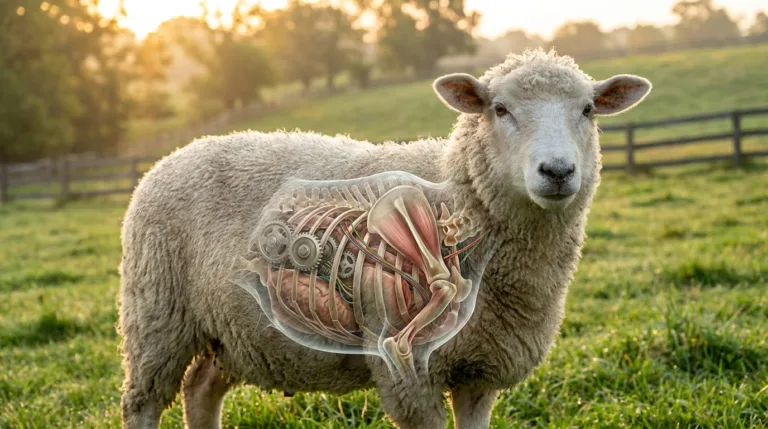
Imagine you’re watching a documentary about animals, and the narrator says something surprising like, “This animal has been helping humans survive for over 10,000 years.” You might guess a horse, or maybe a dog. But the answer is actually the humble sheep! These woolly animals are far more impressive than most people give them credit for, and a big reason for that lies in something called sheep form, the way a sheep’s body is shaped, structured, and built from the ground up. Every part of a sheep’s body has a purpose, and understanding sheep form helps farmers raise healthier, more productive animals. It also helps scientists and breeders develop new generations of sheep that are stronger and better suited to different environments. Whether you’re interested in farming, biology, or just curious about the animal world, learning about sheep form opens up a fascinating window into how nature and human effort can shape a living creature over thousands of years. Let’s dive in!
So What Is Sheep Form, Exactly?
Before we get into the details, let’s make sure we’re clear on what sheep form actually means. In simple terms, it refers to the physical shape, size, proportions, and body structure of a sheep. Farmers and animal experts study sheep form the same way a coach might study an athlete’s posture and build to figure out their strengths and weaknesses. A sheep with a good form is balanced, well-proportioned, and built in a way that supports its health and productivity. A sheep with poor form might struggle with movement, have difficulty gaining weight, or produce less wool and milk. It’s a bit like comparing a well-designed chair to a wobbly one. Both are chairs, but one is clearly built better and will last longer.
The Head and Neck: More Important Than You Think
Most people look at a sheep’s face and just think it’s adorable. But the shape of a sheep’s head and neck actually tells you a lot about the animal. A well-formed head should be proportional to the body, not too large and not too small. The forehead should be broad and the eyes should be set wide apart, which gives sheep excellent side vision and helps them spot predators from a distance. The neck connects the head to the rest of the body, and in a healthy, well-formed sheep it should be moderate in length and blend smoothly into the shoulders. Think of it like the neck of a guitar connecting to the body. If that connection is awkward or too thin, the whole instrument feels off. The same goes for sheep. A well-set neck supports good posture and makes it easier for the sheep to graze comfortably for hours.
The Back and Chest: The Foundation of a Strong Sheep
If you had to pick the single most important feature of sheep form, many experts would point to the back and chest. The back of a well-formed sheep should be straight, wide, and strong, running evenly from the shoulders all the way to the rear. A sagging or narrow back is usually a warning sign that something isn’t quite right with the animal’s structure or nutrition. The chest needs to be deep and full, because that space houses the lungs and heart. A larger chest means more room for these vital organs to work efficiently, which gives the sheep better endurance and overall health. Picture two marathon runners. The one with better lung capacity is going to outlast the other every single time. The same principle applies here. Sheep with deep, well-developed chests handle physical stress better and tend to live longer, more productive lives.
Hindquarters: The Powerhouse of the Sheep
Here’s something that might surprise you: the back end of a sheep, called the hindquarters, is often the most carefully evaluated part of the entire body. For sheep raised for meat, this region is where the most valuable cuts come from, including lamb chops and the leg of lamb. A broad, rounded, heavily muscled hindquarter is exactly what meat farmers look for when selecting their best animals. But even in wool and dairy breeds, strong hindquarters matter because they power the sheep’s movement. The rear legs act like the engine of the animal, pushing it forward across pastures, up hills, and through all kinds of terrain. Weak or underdeveloped hindquarters can lead to joint problems and limited mobility, which affects the sheep’s ability to graze and stay healthy over time.
Legs and Hooves: Designed for Distance
Sheep spend the majority of their lives on their feet, so it makes perfect sense that their legs and hooves are built for durability and grip. Sheep have cloven hooves, which means each foot is divided into two sections that spread slightly with every step. This design works like natural shock absorbers and provides grip on all kinds of surfaces, from wet grass to rocky mountain slopes. Good leg structure in sheep form means straight limbs that are set evenly under the body, distributing weight equally across all four feet. Here’s a simple analogy: think about what happens when a table has one leg shorter than the others. It wobbles and eventually breaks down under pressure. A sheep with uneven or crooked legs faces the same kind of structural stress over time, which leads to health problems and a shorter lifespan.
How Breed and Purpose Shape the Form
One of the most interesting things about studying sheep form is seeing how dramatically it changes across different breeds. There are more than 1,000 sheep breeds in the world, and each one has a body shape fine-tuned for a specific purpose. Here’s a quick breakdown:
- Merino: Compact, fine-boned, with dense soft wool covering most of the body. Bred specifically for premium quality fiber.
- Suffolk: Tall, muscular, with a distinctive black face and heavy hindquarters. One of the most popular meat breeds globally.
- Dorper: Medium-sized, fast-growing, short coat. Ideal for meat production in hot climates like those found in South Africa and the Middle East.
- Rambouillet: Large, sturdy frame, excellent wool and decent meat production. A true dual-purpose breed with a balanced form. Each breed’s form is the result of generations of careful selection, with farmers choosing the animals that best matched their goals and allowing them to breed. It’s slow, patient work, but over hundreds of years it produces remarkable results.
Bringing It All Together
Understanding sheep form is about seeing past the fluffy exterior and recognizing the brilliant biological engineering underneath. From the broad back that signals strength to the cloven hooves that grip rough terrain, every feature of a sheep’s body is there for a reason. Farmers who understand these details raise healthier animals, produce better products, and build more successful farms. Sheep form is also a reminder of how much humans and animals have shaped each other over thousands of years. We’ve influenced how sheep look and grow, and in return, sheep have provided us with food, clothing, and so much more. So here’s a thought to leave you with: if sheep have been so carefully shaped by human hands over thousands of years, what responsibilities do we have toward the animals we depend on?