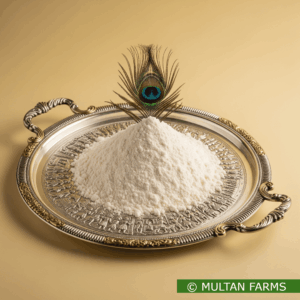
Have you ever used a face mask that made your skin feel amazing and left you wondering what magical ingredient was inside? There’s a good chance it contained something called Multani Mitti, a natural clay that’s been used for beauty treatments for thousands of years. The name literally translates to “mud from Multan,” but here’s the million-dollar question: does this famous clay actually come from the city of Multan in Pakistan?
The answer might surprise you! While the name clearly points to Multan, the story behind Multani Mitti is more interesting than you might think. This special clay has a fascinating history that connects ancient trade routes, natural geology, and a city that became famous for more than just its mangoes. Understanding where Multani Mitti comes from helps us appreciate why it’s been such a popular beauty product for centuries.
In this article, we’ll uncover the real origins of Multani Mitti, explore its connection to the city of Multan, and discover why this humble clay became a beauty secret that traveled across continents. Get ready to dig into some seriously cool geology and history!
The Historical Connection: Why Multan Got Its Name on the Clay
Let’s travel back in time to when Multan was a major trading hub on ancient trade routes. Centuries ago, before planes, trains, and trucks, merchants traveled along the famous Silk Road, carrying goods between Asia, the Middle East, and Europe. Multan sat right on one of these important routes, making it a bustling marketplace where traders from different countries would meet to buy and sell products.
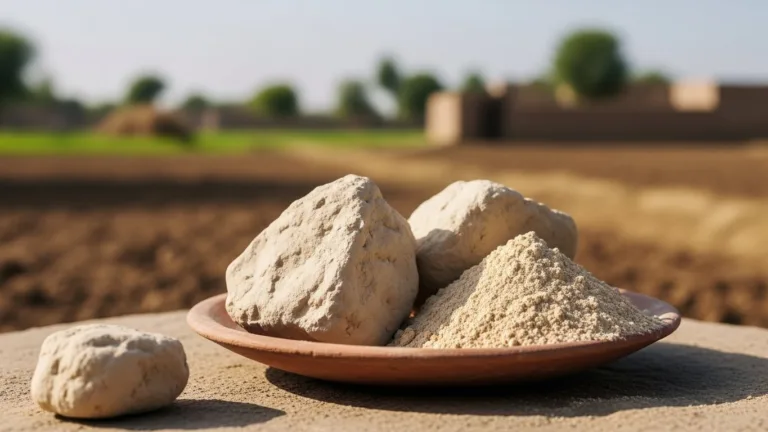
Here’s where our clay comes into the story. This special type of clay, which geologists call Fuller’s Earth, was found in areas around Multan and other parts of the region. Traders who stopped in Multan discovered this amazing clay and started buying it to take back to their home countries. When people in far-off places asked where this wonderful clay came from, the traders would say “Multan,” because that’s where they purchased it!
Think of it like this: if you bought an awesome video game at a store called “GameWorld,” you might tell your friends you got it at GameWorld, even though the game was actually made in a factory somewhere else. The store just became the name you associated with the product. That’s basically what happened with Multani Mitti! The name stuck because Multan was the famous marketplace where people could reliably find and buy this clay, not necessarily because all of it came from right there.
Where Does Multani Mitti Actually Come From?
Now for the geological truth! Multani Mitti, or Fuller’s Earth as scientists call it, is found in various locations across Pakistan, India, and even other parts of the world. It’s not exclusive to the city of Multan at all. This clay forms in specific geological conditions over millions of years, and these conditions exist in multiple places across South Asia.
In Pakistan, deposits of this clay are found in several regions, including areas in Punjab province (where Multan is located), but also in other provinces like Sindh and Balochistan. The clay forms when volcanic ash or certain types of rocks break down over incredibly long periods of time. It’s like how a giant boulder can slowly crumble into sand if you give it enough time, rain, and wind. Except in this case, the process creates something much more special than ordinary mud!
The largest deposits of Fuller’s Earth in Pakistan are actually found in the Attock, Jhelum, and Chakwal districts, which are pretty far from Multan itself. India also has significant deposits in states like Rajasthan, Gujarat, and Andhra Pradesh. So while Multan gave this clay its famous name, the clay itself comes from various places where the right geological conditions existed millions of years ago.
What Makes This Clay So Special Anyway?
You might be thinking, “Okay, so it’s clay from different places, but what’s the big deal?” Great question! Multani Mitti isn’t just any old dirt. It has some unique properties that made it valuable for trade and useful for beauty treatments, and scientists can explain exactly why it works so well.
First, this clay has an incredible ability to absorb oil and impurities. Imagine a super-absorbent paper towel, but way more powerful. The microscopic structure of Multani Mitti is full of tiny spaces that trap oil, dirt, and other gunk from your skin. When you apply it as a face mask and let it dry, it literally pulls the oils and impurities out of your pores. That’s why people with oily skin love using it!
Second, Multani Mitti contains minerals like magnesium, silica, iron, and calcium. These minerals aren’t just good for your body when you eat them, they can also benefit your skin when applied topically. The clay has cooling properties too, which is why people in hot countries like Pakistan and India have been using it for centuries to soothe sunburned or irritated skin. It’s like nature’s version of aloe vera gel, but in clay form!
The Ancient Beauty Secret That Went Global
Here’s something really cool: Multani Mitti has been used in beauty treatments for over 2,000 years! Ancient civilizations figured out that this clay was perfect for cleaning wool (which is actually where the name “Fuller’s Earth” comes from, fullers were people who cleaned wool), but they also discovered its amazing skincare benefits.
In ancient India and Pakistan, people didn’t have fancy face washes or expensive beauty products from stores. Instead, they used natural ingredients like Multani Mitti, turmeric, sandalwood, and rose water. Grandmothers would pass down their secret beauty recipes to their daughters, and these recipes often featured Multani Mitti as a star ingredient. Women would mix the clay with water, yogurt, or rose water to create face masks that kept their skin healthy and glowing.
As trade routes expanded, this beauty secret traveled to other parts of the world. Middle Eastern traders brought it to their countries, and eventually, it reached Europe and beyond. Today, you can find Multani Mitti in stores around the world, from small shops in Pakistan to big beauty retailers in New York and London. The ancient secret went totally global! Modern cosmetic companies even use Fuller’s Earth in their products, though they might not always call it Multani Mitti on the label.
Multan’s Real Claim to Fame Today
So if Multani Mitti doesn’t exclusively come from Multan, what is this city actually famous for now? Well, Multan has quite a few claims to fame! It’s one of the oldest cities in South Asia, with a history stretching back over 5,000 years. That’s older than the pyramids in Egypt! The city is known for its beautiful shrines, ancient forts, and rich cultural heritage.
But here’s something really interesting that connects to our website, Multanfarms.com. Today, Multan and the surrounding region are absolutely famous for their agriculture, especially their incredible mangoes! The area’s hot climate, fertile soil, and generations of farming expertise have made it one of the world’s premier mango-growing regions. Farms in and around Multan produce some of the most delicious varieties of mangoes on the planet, including the famous Chaunsa and Sindhri varieties.
The region also grows other crops like cotton, wheat, and sugarcane. The same ancient trade routes that once made Multan famous for Multani Mitti now help export delicious mangoes and other agricultural products to markets around the world. So while the clay might have given Multan its name recognition centuries ago, today the city’s agricultural excellence keeps it on the map! The fertile lands that surround Multan have always been special, whether they were producing clay for ancient traders or growing world-class fruit for modern consumers.
The Science Behind the Name Game
Let’s talk about something scientists call “geographic association.” This fancy term describes what happens when a product becomes so strongly linked with a place that the place’s name becomes part of the product’s identity, even if the product doesn’t only come from there. It’s actually pretty common in the world around us!
Think about champagne, the fancy sparkling wine. True champagne only comes from the Champagne region in France, but lots of people use the word “champagne” to describe any sparkling wine, even though that’s technically incorrect. Or consider “cheddar cheese,” which originally came from the village of Cheddar in England, but is now made all over the world. The same thing happened with Multani Mitti!
The geographic association between Multan and this special clay was so strong during the ancient trading era that the name stuck forever. Even though we now know the clay comes from multiple locations, the name “Multani Mitti” remains. It’s like how we still say “Kleenex” when we mean any tissue, or “Band-Aid” when we mean any bandage. The original geographic connection created a brand identity that lasted for centuries. Pretty amazing when you think about it!
Why This Story Matters
You might wonder why any of this matters. Who cares where some clay comes from, as long as it works, right? Well, understanding the true story behind Multani Mitti teaches us some valuable lessons. First, it shows us how trade and geography shaped the names and identities of products we use today. The ancient Silk Road wasn’t just about moving goods, it was about sharing knowledge and creating connections between cultures.
Second, it reminds us that things aren’t always what they seem on the surface. The name “Multani Mitti” tells part of the story, but not the whole story. In our world of instant information, it’s easy to assume that a product’s name tells us everything we need to know. But digging deeper often reveals more interesting and complex truths. This applies to everything from beauty products to the food we eat to the places we visit!
Finally, this story connects us to the past in a really tangible way. When you use Multani Mitti for a face mask, you’re using the same natural ingredient that people used thousands of years ago. You’re participating in a beauty tradition that has survived through centuries because it actually works. That’s pretty special when you think about it! And it all started because ancient traders in Multan recognized something valuable and shared it with the world.
The Multan Connection Lives On
So, does Multani Mitti really come from Multan? The answer is both yes and no. While the clay is found in various regions across Pakistan, India, and other areas, Multan’s role as a historic trading center made it the namesake for this valuable product. The city might not be the exclusive source of the clay, but its place in history ensured that its name would be forever linked with this ancient beauty secret.
Today, Multan continues to be a significant city in Pakistan, though it’s now more famous for its agricultural excellence, especially its world-renowned mangoes from farms like those at Multanfarms.com. The same region that once helped spread Multani Mitti across ancient trade routes now exports delicious fruit to markets worldwide. The land around Multan has always been productive and valuable, whether it’s producing clay or growing incredible mangoes!
Next time you see a beauty product with Multani Mitti listed as an ingredient, you’ll know the fascinating story behind the name. You’ll understand that you’re using something with thousands of years of history, connected to ancient trade routes, geological processes millions of years in the making, and a city that served as a bridge between cultures. Not bad for some humble clay, right? What other everyday products in your life might have surprising stories behind their names?