Picture this: rows and rows of lush green vines stretching as far as your eye can see, heavy with clusters of juicy grapes glowing in the sunlight. Maybe you’re imagining purple grapes for your favorite jelly, or green ones perfect for snacking. But have you ever stopped to think about where those grapes actually come from? Sure, they grow on farms, but running a grape farm is way more complicated and fascinating than you might think!
A grape farm, also called a vineyard, is a special type of farm dedicated to growing grapes. Some grape farms grow grapes for eating fresh (called table grapes), while others grow grapes specifically for making wine, juice, or raisins. Places like Multanfarms.com are perfect examples of farms that understand the art and science behind growing these amazing fruits. Whether it’s a small family vineyard or a huge commercial operation, grape farming requires knowledge, patience, and a whole lot of hard work. So let’s dig into what makes grape farms so interesting and important!
What Exactly Happens on a Grape Farm?
If you think grape farming is just about planting some vines and waiting for grapes to appear, think again! Running a grape farm is like conducting an orchestra where everything needs to work together perfectly. Farmers need to understand soil science, weather patterns, pest control, and even a bit of chemistry.
First, grape farmers have to choose the right type of grape to grow. Did you know there are over 10,000 different varieties of grapes in the world? That’s right, way more than just the red and green ones you see at the grocery store! The farmer needs to pick varieties that will grow well in their specific climate and soil. It’s kind of like choosing the right character for a video game, you need one that matches your playing style and the level you’re on.
Once the vines are planted, farmers spend years caring for them before they even produce their first harvest. Young grapevines are like teenagers, they need time to mature before they can do what they’re meant to do. Most vines don’t produce a full crop until they’re about three to five years old. During this time, farmers carefully prune the vines, manage the soil, and protect them from diseases and pests.
The Science Behind Growing Perfect Grapes
Growing grapes isn’t just about having green thumbs, it’s about understanding some pretty cool science! Grapevines are incredibly sensitive to their environment, which means farmers need to pay attention to tons of details.
Let’s talk about soil first. Grapes are actually kind of picky about where they grow. They don’t want soil that’s too rich or too wet. In fact, grapevines actually prefer slightly rocky or sandy soil that drains water well. This might sound backwards (don’t plants need nutrients?), but here’s the thing: when grapevines have to struggle a little bit to find water and nutrients, they develop deeper root systems and produce grapes with more concentrated flavors. It’s like how you might study harder for a challenging test and actually remember the information better!
Weather is another huge factor. Grapes need warm, sunny days to develop their sweetness, but they also need cool nights to maintain their acidity. This balance is super important. Too much heat, and the grapes become overly sweet and lose their flavor complexity. Too much cold, and the grapes won’t ripen properly. Farmers constantly monitor weather forecasts and sometimes even use special equipment to protect their vines from unexpected frost or hail.
Water management is crucial too. Most grape farms use drip irrigation systems that deliver water directly to the roots of each plant. This is way more efficient than spraying water everywhere, and it helps the farmer control exactly how much water each vine gets. Some farmers even deliberately stress their vines by reducing water during certain growth periods, which sounds mean but actually helps produce higher-quality grapes!
A Year in the Life of a Grape Farm
Grape farming follows the seasons, and there’s always something happening on the farm throughout the year. Let’s walk through what a typical year looks like.
Winter is when the vines are dormant, kind of like they’re taking a long nap. This is when farmers do most of their pruning, cutting back old growth to make room for new shoots in the spring. Pruning might seem simple, but it’s actually an art form! Experienced farmers know exactly which branches to cut and which to keep to ensure the best harvest later.
Spring brings new life to the vineyard. Tiny buds appear on the vines, eventually growing into leaves and then small flower clusters. This is an exciting but nerve-wracking time for farmers because late spring frosts can destroy the entire year’s crop. Some farmers use wind machines or even helicopters to keep cold air moving and prevent frost damage. Yes, helicopters!
Summer is when the grapes actually form and grow. Farmers spend this time managing the canopy (all those leaves), making sure each grape cluster gets enough sunlight but not too much. They also watch out for pests like birds, insects, and diseases. Many modern grape farms use sustainable methods like releasing beneficial insects that eat the harmful ones, instead of relying heavily on pesticides.
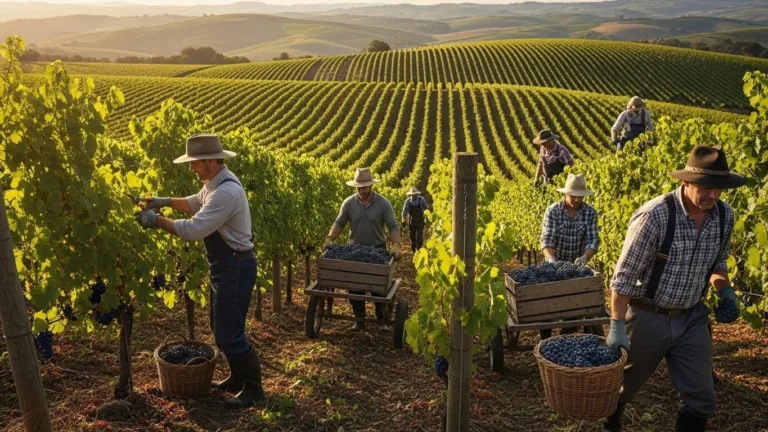
Fall is harvest time, also called “crush” in the grape-growing world. This is when all the year’s hard work pays off! Depending on the type of grapes and what they’ll be used for, farmers carefully monitor sugar levels, acidity, and other factors to pick the perfect harvest day. Some grapes are picked by hand, while others are harvested by machines. Hand-picking is more expensive but gentler on the fruit, so it’s usually reserved for higher-quality grapes.
Challenges Grape Farmers Face Today
Running a grape farm today isn’t just about traditional farming skills. Modern grape farmers face challenges that farmers from 50 years ago never imagined.
Climate change is a big one. As weather patterns become less predictable, farmers struggle to plan ahead. A region that was perfect for growing certain grape varieties might become too hot or too dry. Some farmers are experimenting with new grape varieties that can handle changing conditions, or they’re investing in technology like weather stations and soil sensors to make better decisions.
Water scarcity is another serious issue, especially in places where grape farming is popular, like California. Farmers are getting creative with water conservation, using recycled water, collecting rainwater, and constantly improving their irrigation systems to use every drop efficiently.
Pests and diseases are always evolving too. Just like how bacteria can become resistant to antibiotics, insects and plant diseases can adapt to the methods farmers use against them. This means farmers need to keep learning and trying new approaches to protect their crops.
Why Grape Farms Matter More Than You Think
You might be thinking, “Okay, grape farms are interesting, but why should I care?” Well, grape farms are actually super important for lots of reasons beyond just giving us snacks and juice!
Economically, grape farming supports entire communities. A single grape farm might employ dozens or even hundreds of people, from field workers to managers to scientists. In regions famous for grapes, like Napa Valley in California or wine regions in France, grape farming drives tourism and brings money into local economies.
Environmentally, well-managed grape farms can actually be good for the planet. Many modern vineyards practice sustainable farming, which means they work with nature instead of against it. They might plant cover crops between vine rows to prevent soil erosion, create habitats for beneficial wildlife, or use solar panels for energy. Some farms, like those practicing regenerative agriculture, actually improve the soil over time, making it healthier and better at storing carbon from the atmosphere.
Culturally, grapes and grape farming have been important to human civilization for thousands of years. Ancient Egyptians, Greeks, and Romans all grew grapes, and evidence of grape cultivation goes back at least 8,000 years! Today, grape farming traditions continue to shape cultures around the world.
Your Connection to Grape Farms
Even if you live in a city far from any vineyards, you’re connected to grape farms every time you pop a grape in your mouth, spread jelly on your toast, or pour a glass of grape juice. Understanding where your food comes from and how much work goes into producing it can help you appreciate it more and make better choices as a consumer.
Next time you eat grapes, think about the farmer who spent years nurturing those vines, the science that went into growing them perfectly, and the careful timing it took to harvest them at just the right moment. Pretty amazing when you think about it, right? Maybe you’ll even be inspired to learn more about where your other foods come from, or perhaps you’ll discover an interest in agriculture that could lead to a future career. After all, the world will always need skilled, creative people who can grow food sustainably and efficiently. Could that person be you?