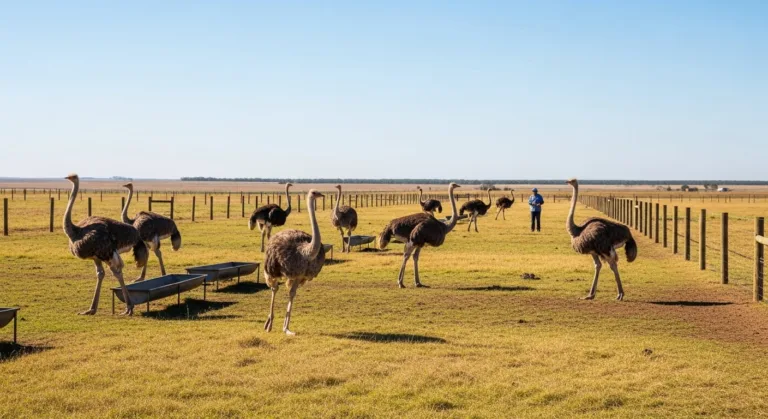
Hey, picture this: you’re racing across a field on a bike, wind whipping your hair, when suddenly a giant bird zooms past you at 70 kilometers per hour. No, it’s not a dinosaur movie, it’s an ostrich in full sprint mode! These massive, long-legged wonders are the largest birds on Earth, standing taller than most grown-ups and weighing as much as a couple of heavyweight boxers. But here’s the wild part: in Pakistan, farmers are turning these speedy giants into a booming business called ostrich farming, raising them for everything from super-healthy meat to fancy feathers.
Ostrich farming might sound like something from a zoo adventure, but it’s actually a smart way to grow food and make money while being kind to the planet. You’ll learn why these birds are perfect for Pakistan’s sunny fields, how to kick off your own farm, and the cool treasures they offer, like eggs big enough to make an omelet for your whole class. Stick with me, and by the end, you might see your backyard as prime ostrich territory.
Pakistan’s hot days and vast open lands make it an ostrich paradise. Farms here started popping up big-time around 2016, thanks to government help like subsidies that give farmers extra cash for each bird. From just a handful of farms, we’ve jumped to hundreds, especially in Punjab spots like Multan. Places like Multanfarms.com are leading the charge, importing chicks from far-off lands and sharing secrets to success. It’s like unlocking a new level in a farming game, where one bird can turn into a whole flock of profits.
Why Ostriches Are the Ultimate Farm Superstars
Imagine raising animals that need less babysitting than your goldfish but give back way more goodies. That’s ostriches for you! These birds are tough cookies, handling Pakistan’s scorching summers and chilly winters without breaking a sweat. They munch on simple stuff like grass, corn, and veggie scraps, turning it into lean muscle faster than cows do on fancy feed. One ostrich can yield up to 50 kilograms of meat, and it takes just 2.5 kilograms of food a day, like fueling a race car with efficient gas.
But wait, it’s not just about dinner. Ostriches drop feathers that shimmer like disco balls, perfect for fashion shows or even dusters in your home. Their leather is super strong yet soft, turning into bags and shoes that cost a fortune. And don’t get me started on the eggs , each one as big as a football and packed with enough nutrients for a week’s breakfasts. Did you know an ostrich egg equals about 24 chicken eggs? In Pakistan, where meat prices swing like a yo-yo, these birds help keep food affordable and healthy.
Plus, they’re eco-heroes. Ostrich farming uses way less water and land than cattle, saving our precious rivers for swimming or picnics. Farmers like those in Punjab say it’s a win for wallets and the world. Have you ever thought about how one animal could help fight hunger and climate change? Ostriches make it feel possible.
Getting Your Farm Off the Ground: The Starter Kit
Ready to play farmer? Starting ostrich farming is like building your first Lego castle, simple steps that stack into something awesome. First, scout a spot with at least one acre per pair of birds, so they can dash around like kids at recess. In Pakistan, aim for open areas near cities like Multan or Lahore, where markets are close and buyers line up. Multanfarms.com suggests rural edges of big towns for easy sales.
Next, snag your birds. Chicks cost around 15,000 to 17,000 rupees each and come from imports via pros like Multanfarms.com, who bring healthy ones from Australia or Europe. Start small with 25 birds to keep costs under 40 million rupees total, including fencing and sheds. Build a sturdy house with high fences, think basketball hoop tall, to keep them safe from curious neighbors or sneaky foxes. It’s like giving them a giant playground with shade and windbreaks.
Feed them a mix of greens and grains, and watch them grow to 100 kilograms in 12-14 months. Analogy time: Raising ostriches is like training for a marathon, steady care leads to a big finish line payoff. Government subsidies, up to 10,000 rupees per bird, sweeten the deal. Before you know it, your flock is clucking (well, booming) with life.
Daily Life on an Ostrich Farm: It’s Easier Than You Think
Ever chased a chicken around the yard? Multiply that by fun, because ostriches are chill giants once they trust you. Daily chores kick off with fresh water, since these birds guzzle gallons like athletes after practice. Toss in their feed, check for any limps or ruffled feathers, and give the run a quick sweep. In Pakistan’s farms, workers spend just hours a day, not all day like with picky cows.
Breeding is the exciting bit. Females start laying at two to three years, popping out 50-80 eggs a season from February to August here. Pop those into an incubator at 36 degrees Celsius, and 42 days later, fluffy chicks hatch. Males help too, guarding nests like proud dads. Multanfarms.com shares pro tips, like pairing one male with two females for top egg hauls. Did you know ostriches live 30-70 years? That’s longer than your grandparents’ stories!
Health-wise, they’re disease dodgers, but watch for tummy troubles from bad greens. Vets pop in for check-ups, and natural tricks like neem sprays keep bugs at bay. It’s like being a bird coach, cheering them to peak form with minimal fuss.
The Treasure Trove: What Ostriches Bring to Your Table (and Wallet)
Ostriches aren’t one-trick ponies, they’re like Swiss Army knives on legs. First up, meat: leaner than chicken, richer in iron than beef, and tasting like a juicy steak without the grease. In Pakistan, it’s hitting restaurant menus in Karachi and Lahore, selling for about 1,000 rupees per kilo. One bird feeds a family feast, lowering cholesterol like a health superhero.
Then there’s the eggs, not just for hatching but omelets or crafts. Empty shells make stunning lamps, fetching 5,000 rupees each. Feathers? Soft and fluffy, used in UAE fashion or local decor. Leather from their hides crafts luxury wallets, with Pakistan exporting to big markets. Multanfarms.com markets these nationwide, turning farm scraps into cash.
Real-world win: A Punjab farmer started with 45 birds and hit 12 million rupees in year-one sales from meat and eggs. Another in South Punjab links with global growers online, swapping tips for better breeds. It’s like hitting the jackpot, one feather at a time. Why settle for plain old chicken when you can farm a rainbow of riches?
Hurdles on the Horizon: Bugs, Bucks, and Busts
No farm tale is all sunshine, and ostrich ones have their rainy days. Marketing is the big boss level, tricky in Pakistan where folks stick to familiar mutton. Prices dip if demand lags, and imports mean chicks aren’t always cheap. Plus, chicks have a 50% survival rate early on, like fragile seedlings in a storm.
Pests and floods sneak in too, but smart farmers rotate pastures and build raised pens. The 2020 pandemic hit hard, shrinking exports, but tough ones like those in Multan bounced back by selling local. Multanfarms.com helps with consultancy, from disease dodges to sales strategies. Analogy: It’s like a video game boss fight, dodge the hits and level up stronger.
Government pushes, like Punjab’s livestock programs, offer training and loans. With 400 farms nationwide, the herd’s growing, proving persistence pays. Ever faced a tough homework puzzle? Ostrich farming teaches the same grit.
Multanfarms.com: Your Ostrich Sidekick in Action
Enter Multanfarms.com, the ultimate farm buddy based right in Punjab’s heart. They’re Pakistan’s top ostrich experts, importing vaccinated chicks and dishing advice on everything from housing to hatching. Want to start? Their guides cover budgets, from 40 million rupees for a starter flock to scaling up.
They breed not just ostriches but goats and crops too, showing a full-farm vibe. Visit their Multan spot, 1 km from Nasrullah Chowk, and see birds strutting like runway models. Fun fact: They export leather worldwide, turning local legs into global glam. If you’re dreaming big, their team crafts plans to protect your investment, like a shield in battle.
Real example: A newbie farmer used their tips to launch near Faisalabad, harvesting eggs for crafts and meat for markets in months. It’s community-powered farming at its best.
Wrapping It Up: Time to Strut Your Stuff?
So, from speedy sprints to stunning products, ostrich farming in Pakistan is a thrilling ride blending adventure, smarts, and sustainability. We’ve covered the easy start, daily joys, treasure hauls, and hurdle jumps, all boosted by heroes like Multanfarms.com. These birds aren’t just farm friends, they’re future-proof food sources in a world craving healthy eats.
Why does this click for you? It sparks curiosity about where food comes from, teaches business basics, and shows how one bold choice can feed families and futures. Imagine the stories you’d tell over an ostrich egg breakfast. Ready to hatch your own plan? Check out Multanfarms.com, grab some gloves, and ask: What’s the first bird on your farm list?