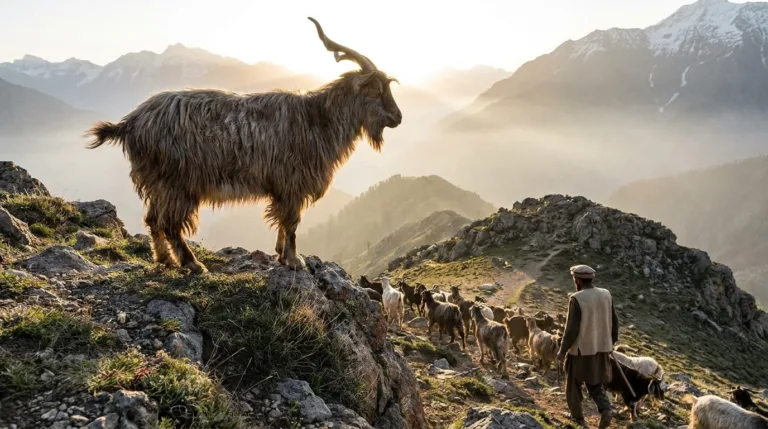
Picture a goat so tough and powerful that it can thrive in rugged mountain terrain, survive extreme temperatures, and still produce enough to support an entire family. That’s not a made-up superhero animal, that’s the Khurasani goat, one of Pakistan’s most impressive and underappreciated livestock breeds. If you’ve never heard of it before, you’re in for a treat!
The Khurasani goat gets its name from the ancient Khorasan region, a historic area that stretches across parts of modern-day Pakistan, Afghanistan, and Iran. These goats have been part of that landscape for centuries, shaped by the same mountains and harsh conditions that made the people of those regions so resilient. They’re basically the mountain climbers of the goat world.
By the time you finish reading this, you’ll know exactly what makes the Khurasani goat so special, where it comes from, what it looks like, what it produces, and why farmers across Pakistan continue to prize it as one of the most valuable breeds around. Let’s dive in!
Where Does the Khurasani Goat Actually Come From?
The Khurasani goat is native to the northwestern regions of Pakistan, particularly Khyber Pakhtunkhwa (KPK) and parts of Balochistan. These areas are known for their dramatic landscapes, with towering mountain ranges, rocky hillsides, and extreme weather that swings from freezing winters to blazing hot summers.
Living in these conditions for thousands of years has turned the Khurasani goat into an incredibly hardy breed. Think of it like this: if goats were students, the Khurasani would be the one who studied through power outages, bad weather, and every possible distraction, and still aced the exam. Tough conditions created a tough animal.
This breed has been raised by local farming communities for generations, providing food, income, and resources in areas where other livestock might struggle to survive. It’s a living example of how animals and humans can adapt together over time.
What Does a Khurasani Goat Look Like?
One look at a Khurasani goat and you’ll know it means business. This is a large-sized breed, noticeably bigger than many common goat breeds you might see in lowland farms. It has a tall, strong body frame with long, sturdy legs built for navigating uneven mountain terrain.
The coat of a Khurasani goat is usually medium to long in length and can come in a variety of colors, including white, black, brown, and mixed patterns. Many Khurasani goats have a distinctively long, flowing beard and large, often slightly drooping ears that give them a regal, confident look. Honestly, if goats could have a “cool kid” style, this breed would be setting the trends.
Both male and female Khurasani goats can have horns, though the shape and size vary. Males, also called bucks, tend to be significantly larger than females, called does. A fully grown buck can be an impressive sight, standing tall and broad like a small but mighty mountain guardian.
What Makes the Khurasani Goat So Valuable?
Here’s where things get really interesting. The Khurasani goat is what farmers call a dual-purpose breed, which means it’s raised for more than one product. It’s a bit like a smartphone that can take great photos, play music, and help you with homework all at once. One animal, multiple benefits!
Meat production is the primary reason most farmers raise Khurasani goats. The breed is known for producing high-quality meat with excellent flavor and a good meat-to-bone ratio, which means more edible meat per animal. In Pakistani culture, goat meat (commonly known as mutton) is a central part of traditional cooking, from festive Eid celebrations to everyday family meals.
The Khurasani goat also produces milk, though in moderate quantities compared to dedicated dairy breeds. This milk is nutritious and is used by families for drinking, making yogurt, and preparing traditional dairy-based dishes. In remote communities where a trip to the grocery store isn’t always possible, a goat that gives you both meat and milk is an incredibly practical asset.
How Do Khurasani Goats Live and What Do They Eat?
Khurasani goats are natural grazers and browsers, which means they eat a wide variety of plants. In their native mountain regions, they roam and forage, nibbling on wild shrubs, leaves, grasses, and even tree bark. Think of them as the ultimate outdoor adventurers who aren’t picky about their meals.
On managed farms, they’re typically fed a combination of:
- Dry fodder and hay for daily nutritional needs
- Fresh grass and leafy plants when available
- Grains and supplements for added energy, especially during pregnancy or growth phases
One of the standout qualities of this breed is its low-maintenance feeding needs. Because they evolved in regions where food wasn’t always abundant, Khurasani goats are efficient eaters. They can extract good nutrition from even basic, low-quality forage, which makes them economical for farmers who don’t have access to expensive feed.
Raising Khurasani Goats: What Farmers Need to Know
If you were going to start a Khurasani goat farm, what would you need to think about? Quite a lot, actually! Like any livestock, these goats need proper shelter, clean water, regular health checkups, and a safe space to roam.
Shelter is especially important. Even though Khurasani goats are tough, they still need protection from heavy rain, extreme cold, and predators. A well-built shed or pen keeps them safe and comfortable, and happy goats are productive goats!
Veterinary care is another key part of successful farming. Goats can be affected by internal parasites, foot problems, and respiratory infections, so regular health monitoring is essential. Farmers who stay on top of their goats’ health tend to have animals that live longer, grow bigger, and produce more. It’s the same logic as going for regular checkups at the doctor, prevention is always better than treatment.
The breeding season is also something farmers plan carefully. Khurasani goats typically give birth to one or two kids per pregnancy, and good breeding practices ensure healthier offspring and a stronger herd over time. At Multanfarms.com, responsible and informed farming practices are at the heart of everything, because great animals deserve great care.
Why the Khurasani Goat Deserves More Attention
Despite being such a valuable breed, the Khurasani goat doesn’t always get the recognition it deserves outside of its native regions. As interest in local and heritage breeds grows, more farmers and researchers are starting to appreciate what this goat brings to the table, literally and figuratively.
The Khurasani goat represents generations of natural adaptation and human partnership. It’s a breed that has quietly supported families, fed communities, and kept farming traditions alive in some of Pakistan’s most challenging landscapes. That’s a story worth telling.
Whether you’re interested in farming, animal science, or just the incredible diversity of the natural world, the Khurasani goat is a reminder that some of the most remarkable things are found not in the spotlight, but quietly doing their job in the mountains, one sturdy step at a time.
So here’s something worth thinking about: if animals like the Khurasani goat have been sustaining communities for centuries, what does that tell us about the importance of preserving traditional breeds and farming knowledge for future generations? The answer to that question might matter more than you think.