Have you ever stood beside a big river and watched the water rush by, wondering where it’s headed next? Near the city of Multan, there’s a place where that question has a very practical answer. It’s called Head Muhammad Wala, and it plays a big part in helping nearby farms grow food.
Many people know it as a peaceful spot by the Chenab River, a place for a family outing or a quiet evening by the water. But there’s more going on here than meets the eye. Let’s explore what Head Muhammad Wala is, why it matters, and how it connects to the food on your table.
What Is Head Muhammad Wala?
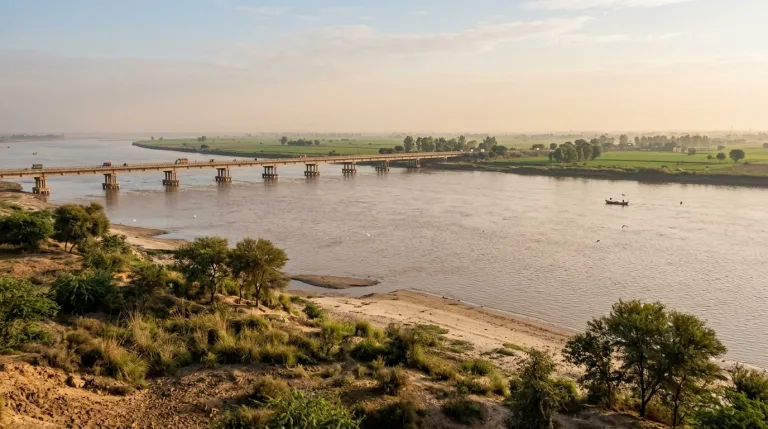
Head Muhammad Wala is a well-known place on the Chenab River, close to Multan in South Punjab. The word “head” here comes from headworks. A headworks is a structure built on a river to help control and direct its water.
Think of it like the main tap in a big house. When you turn it one way, water flows to the kitchen. Turn it another way, and it goes to the garden. A headworks does the same job on a much bigger scale. It helps decide how much river water flows into different channels and where it goes.
Why Is the Chenab River Such a Big Deal?
The Chenab is one of the major rivers that flow through Punjab, a name that means “land of five waters.” Rivers like the Chenab bring fresh water down from the mountains, and farmers depend on that water to grow crops.
Here’s a simple way to picture it. Imagine a giant water bottle sitting up in the mountains, slowly pouring water down toward the plains. Without that water, the land around Multan would be very dry, because this region gets very little rain and hot summers.
Did you know? Pakistan has one of the largest irrigation systems in the world. Rivers, canals, and headworks work together like a giant network of water roads across the country.
How Do Headworks Help Farmers?
Rivers don’t flow exactly where fields are, so people built canals, which are man-made water channels. A headworks helps guide river water into these canals so it can travel to farms far from the riverbank.
Here’s how that helps in everyday life:
- Watering crops: Wheat, cotton, sugarcane, and vegetables all need steady water to grow.
- Feeding orchards: Fruit trees, like the famous mango trees of the Multan region, need lots of water in hot weather.
- Controlling water levels: During heavy rain or floods, gates can be adjusted to manage how much water moves through.
- Sharing water fairly: Many farms depend on the same river, so careful sharing keeps things balanced.
It’s a bit like sharing a pizza at a party. Someone has to slice it carefully so everyone gets a piece, and a headworks helps “slice” the river’s water.
A Great Spot to Visit, Too
Head Muhammad Wala isn’t only about farming. Many local families enjoy visiting riverside places like this one, especially when the weather is pleasant. The open space, the sound of flowing water, and the cool breeze make it a relaxing break from busy city life.
If you visit a place like this, remember to be safe near the water. Stay with an adult, keep away from deep or fast-moving areas, and always follow any local rules or warnings. Rivers are beautiful, but they can be powerful too, so respect them.
What Grows Near the River?
Land close to a river is usually rich and fertile, which is a fancy way of saying it’s great for growing things. Over many years, rivers carry tiny bits of soil and nutrients and leave them behind, a bit like a delivery service dropping off free fertilizer.
That’s one reason the Multan region is famous for its farm products. Mangoes, dates, wheat, cotton, and sugarcane all grow well in this part of Punjab. When sugarcane grows nearby, farmers can turn it into traditional treats like gurr, which people enjoy all winter long.
Next time you eat something fresh from a Pakistani farm, remember that rivers and canals probably helped it grow. That’s where trusted farm-based brands like Multanfarms.com come in, bringing the goodness of South Punjab’s fields to people’s homes.
Why Should You Care About Places Like This?
It’s easy to forget how much work goes into a simple meal. But behind every roti, every mango, and every glass of sugarcane juice is a long chain of water, soil, sunshine, and hardworking farmers.
Head Muhammad Wala is one small link in that chain. It reminds us that clean, well-managed water is one of the most valuable things we have. When we save water at home, like turning off the tap while brushing our teeth, we’re helping protect it too.
Wrapping It Up
Head Muhammad Wala is a headworks on the Chenab River near Multan. It helps guide water into canals that nourish farms and orchards, and it’s also a lovely place for families to enjoy nature. Rivers, canals, and fertile soil work together to make South Punjab one of the most productive farming regions in Pakistan.
So the next time you bite into a juicy mango or a piece of sweet gurr, ask yourself: how far did the water travel to help grow it?