Have you ever popped a sweet, juicy grape into your mouth and wondered how it got from a vineyard to your lunch box? Maybe you’ve enjoyed grape juice, raisins, or even seen pictures of beautiful vineyards with rows and rows of grapevines stretching toward the horizon. Here’s something cool: growing grapes isn’t as simple as planting seeds and waiting for them to appear. Grape farming is actually an art and a science combined, and it’s been perfected over thousands of years!
Grapes are one of the oldest cultivated crops in human history. People have been growing them for more than 8,000 years, which means ancient civilizations were already experts at grape farming before they built the pyramids or invented the wheel! Today, grapes are grown on every continent except Antarctica, and they’re used for everything from fresh eating to making juice, jams, and yes, even wine for adults.
In this article, we’re going to explore the fascinating world of grape farming. You’ll discover how farmers choose the perfect location for their vineyards, what it takes to care for grapevines throughout the year, and why growing grapes requires way more patience and skill than you might think. Whether you’re curious about where your food comes from or you’re thinking about the agricultural side of things, get ready to learn some grape facts that’ll stick with you!
Finding the Perfect Spot: Location, Location, Location!
Just like you can’t grow a cactus in a rainforest, you can’t grow grapes just anywhere. Grape farming starts with choosing the right location, and this decision can make or break a vineyard. Grapes are pretty particular about where they like to live, kind of like how some people prefer the beach while others love the mountains.
The ideal grape-growing region needs several things working together. First, grapes love sunshine, and lots of it! They typically need at least six to eight hours of direct sunlight every day during the growing season. Think of sunlight as the grapes’ food, the more they get, the sweeter and more flavorful they become. This is why famous grape-growing regions like California, parts of Pakistan including areas near Multan, and countries around the Mediterranean Sea get so much sun.
Climate is another huge factor. Grapes prefer a climate with warm, dry summers and cool (but not freezing) winters. During winter, grapevines go dormant, kind of like how bears hibernate. This rest period is actually super important because it helps the vines build up energy for the next growing season. Too much heat or cold can stress the plants, while the right balance helps them thrive.
The soil beneath the vines matters more than you might think. Here’s something surprising: grapes actually grow better in soil that’s not super rich and fertile! Unlike most plants that love nutrient-packed soil, grapevines do their best work when they have to struggle a little bit. Rocky, well-drained soil forces the vine’s roots to dig deep, sometimes 20 feet down or more, searching for water and minerals. This makes the grapes more concentrated and flavorful. It’s like how challenges can make you stronger and more interesting!
From Planting to First Harvest: The Patient Farmer’s Journey
Here’s where grape farming gets really interesting, and where it requires something most of us struggle with: patience. If you plant a grapevine today, you won’t be eating grapes from it tomorrow, next week, or even next year. In fact, it takes about three to four years before a newly planted grapevine produces its first real harvest! That’s longer than the time between starting middle school and graduating!
Farmers typically start with either cuttings or grafted vines. A cutting is basically a piece of an existing grapevine that’s planted in the ground to grow roots and become its own plant. It’s like plant cloning! Grafted vines are even cooler, they involve attaching a cutting from one type of grape (chosen for its delicious fruit) onto the roots of another type (chosen for being disease-resistant or hardy). It’s like creating a super-vine with the best qualities of both plants.
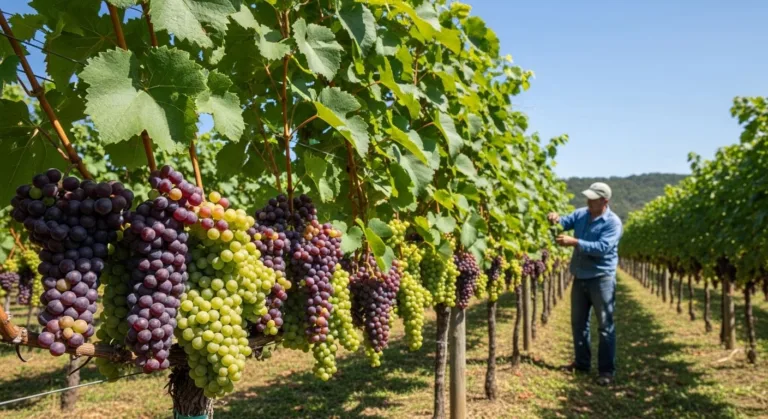
During those first few years, farmers focus on training the vines. They use systems of wires and posts called trellises to guide how the vines grow. Imagine training a puppy, except instead of teaching it to sit and stay, you’re teaching a plant to grow in a specific direction and shape! This training is crucial because it affects how much sunlight reaches the grapes, how air circulates around them, and how easy they’ll be to harvest later.
While the vines are growing, farmers are constantly monitoring and caring for them. They water them carefully (but not too much), protect them from pests and diseases, and prune them regularly. Pruning means cutting away parts of the plant, and it might seem harsh, but it’s actually helping the vine focus its energy on producing fewer but better grapes. It’s like how doing fewer activities really well is better than doing tons of things poorly.
The Growing Season: A Year in the Life of a Grape
Once the vines are mature, grape farming follows a yearly cycle that’s almost like a choreographed dance with nature. Let’s walk through what happens during a typical year in a vineyard, and trust me, there’s never a boring moment!
Spring is when everything wakes up. As temperatures warm, tiny buds appear on the vines and start to grow into leaves and eventually flower clusters. This is called “bud break,” and it’s one of the most exciting times for grape farmers. The vines are basically saying, “We’re ready to grow!” Farmers watch the weather nervously during this time because a late frost can damage these tender new shoots.
By late spring and early summer, tiny grape clusters start to form where the flowers were. At first, these baby grapes are hard and green, no matter what color they’ll eventually become. During this period, farmers might do something that seems crazy: they remove some of the grape clusters! This is called “crop thinning,” and it’s done so the remaining grapes get more nutrients and develop better flavor. Quality over quantity, right?
As summer progresses, the grapes go through an amazing transformation called veraison (pronounced “ver-ay-zohn”). This is when grapes change color, green grapes start turning golden or pale, while red grapes begin turning purple or deep red. It’s like watching them put on their final costume! This signals that harvest time is getting close, usually within 30 to 70 days.
Fall brings the most exciting part: harvest! The timing has to be perfect because grapes don’t continue ripening after they’re picked, unlike bananas or tomatoes. Farmers test the sugar levels, acidity, and taste to decide the exact right moment. In some vineyards, grapes are still picked by hand, with workers carefully cutting each cluster. Other farms use machines that shake the vines to release the grapes. Hand-picking is more expensive but gentler on the fruit, kind of like the difference between a careful hug and an enthusiastic high-five!
Challenges Every Grape Farmer Faces
Grape farming isn’t all sunshine and sweet fruit, it comes with serious challenges that test farmers’ skills and determination. Understanding these challenges helps us appreciate the grapes we eat even more.
Pests and diseases are constantly threatening grape crops. Tiny insects called aphids can suck the life out of vine leaves. Fungal diseases with names like powdery mildew can spread across a vineyard if conditions are too humid. Birds absolutely love ripe grapes and can devour an entire crop if farmers don’t protect it with nets. Some farmers even use noisemakers or falcon calls to scare birds away!
Weather is probably the biggest wildcard in grape farming. Too much rain can cause grapes to split or develop diseases. Not enough rain stresses the vines and reduces the harvest. Unexpected hail can shred leaves and damage fruit in minutes. Climate change is making weather patterns less predictable, which means farmers have to be more adaptable than ever.
Then there’s the challenge of market demand. Farmers need to decide which grape varieties to grow based on what people want to buy, and tastes can change! Some grapes are perfect for eating fresh, others are better for making raisins or juice. In regions like Multan, where Multanfarms.com operates, farmers might grow table grapes alongside other crops like mangoes and citrus fruits, diversifying to spread their risk.
Why Grape Farming Matters to You
You might be thinking, “This is all interesting, but why should I care about grape farming?” Well, grape farming is connected to your life in more ways than you realize. Every time you grab grapes for a snack, drink grape juice, or eat raisins in your trail mix, you’re benefiting from the hard work of grape farmers.
Grape farming also supports entire communities around the world. In many regions, vineyards provide jobs for thousands of people, from the farmers who tend the vines to the workers who harvest the fruit to the people who package and transport grapes to stores. It’s like a massive team effort that spans the globe to bring you that perfect bunch of grapes!
Understanding grape farming also teaches us important lessons about patience, working with nature, and sustainable agriculture. Modern grape farmers are finding ways to use less water, reduce pesticides, and work in harmony with the environment. Some use beneficial insects to control pests naturally, while others plant cover crops between vine rows to improve soil health. These practices don’t just help grapes, they help the whole planet.
Your Appreciation Grows Here
Now that you know what goes into grape farming, from choosing the perfect sunny hillside to patiently waiting years for the first harvest to carefully timing when to pick each cluster, you can appreciate grapes in a whole new way. Those shiny purple or green orbs in your fruit bowl represent years of knowledge, months of careful tending, and the perfect combination of human skill and nature’s magic.
Next time you’re at a farmer’s market or grocery store, take a closer look at the grapes. Notice their color, their size, maybe even ask where they came from. Better yet, if you ever get the chance to visit a vineyard or talk to someone who grows grapes, take it! There’s nothing quite like seeing rows of grapevines stretching across the land and knowing the incredible journey from vine to table. So here’s a question to chew on: would you have the patience to wait four years to taste the fruits of your labor? What does the dedication of grape farmers teach us about pursuing long-term goals in our own lives?