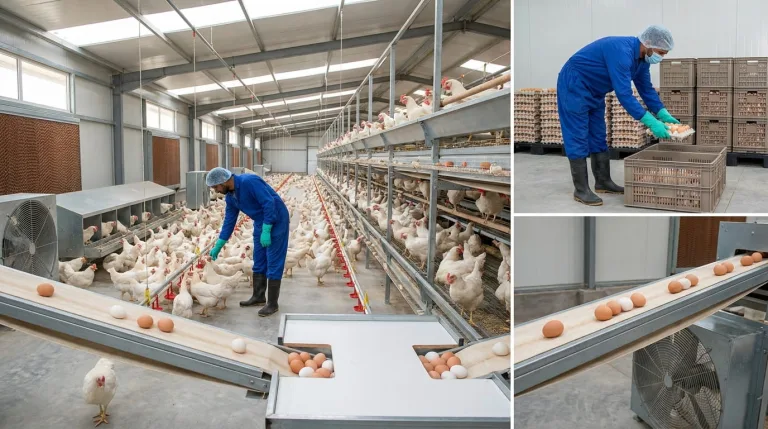
Every morning, millions of Pakistani families crack open eggs for breakfast without giving much thought to where those eggs came from. The journey from farm to table is surprisingly interesting, and it all starts at a place called an egg laying poultry farm. If you’ve ever wondered how farmers manage to produce so many eggs, day after day, you’re in the right place.
An egg laying poultry farm is exactly what it sounds like: a farm dedicated to raising hens that produce eggs for human consumption. Unlike broiler farms, which raise chickens for meat, these operations are built entirely around one goal, keeping hens healthy, comfortable, and productive. Let’s take a closer look at what really goes on inside one of these farms.
The Hens That Do All the Work
Not every chicken is cut out for egg production. Farmers rely on specific breeds called layer hens, which are specially selected for their ability to lay large numbers of eggs over their lifetime. The most popular commercial breeds include the Lohmann Brown, the Hy-Line, and the ISA Brown, all of which can lay close to 300 eggs per year under the right conditions.
Think of layer hens a bit like top athletes. Just as a marathon runner needs the right training, diet, and rest to perform at their best, a layer hen needs the right feed, lighting, and environment to lay consistently. Farmers study their flocks the way coaches study their teams, watching for signs of stress, illness, or nutritional gaps that could hurt productivity.
It’s also worth knowing that hens don’t need a rooster to lay eggs. The eggs you eat every day are unfertilised, meaning no chick would ever hatch from them. This surprises a lot of people, but it’s simply how the biology works.
Why Light Is One of a Farmer’s Most Powerful Tools
Here’s something genuinely surprising: light controls egg production more than almost anything else. Hens lay eggs in response to daylight, and their bodies are wired to produce more when days are long. Farmers use this to their advantage by controlling the lighting inside poultry sheds, keeping lights on for around 16 hours per day to simulate a long summer day all year round.
This is why egg production doesn’t drop dramatically in winter the way it would if hens were left entirely to nature. Artificial lighting keeps the hens’ hormonal cycles running consistently, which translates directly into a steady, year-round supply of eggs. It’s a bit like how a bakery keeps its ovens running through the night to make sure fresh bread is ready every single morning.
Getting this lighting schedule right takes precision. Even small disruptions, like a power outage or irregular light timing, can stress a flock and cause a noticeable dip in laying rates within just a few days.
Feed: The Foundation of Every Egg
You’ve probably heard the saying “you are what you eat,” and it applies just as much to hens as it does to people. The quality of a hen’s diet has a direct impact on the quality of the eggs she produces. A well-formulated layer feed contains the right balance of protein, carbohydrates, vitamins, and minerals, with calcium being especially important because it’s what makes eggshells strong and intact.
Most commercial layer feeds are a blend of maize, soybean meal, and calcium supplements like limestone or oyster shell. Farmers adjust these formulas at different stages of a hen’s life, because a young pullet (a hen that hasn’t started laying yet) has different nutritional needs from a mature hen that’s been producing eggs for several months. Getting this right is a bit like being a nutritionist for thousands of birds at once.
Water is just as critical as feed. A hen that doesn’t drink enough water will stop laying almost immediately, which is why poultry farms invest heavily in automated watering systems that deliver clean, fresh water around the clock.
Housing Systems: Keeping Hens Safe and Productive
The way hens are housed makes a significant difference to both their welfare and their egg output. There are several housing systems used on egg laying poultry farms, and each comes with its own set of advantages.
Battery cage systems keep hens in compact wire cages stacked in rows, which allows farmers to manage large numbers of birds efficiently and maintain high levels of hygiene. Colony cage systems give hens more room and let them engage in more natural behaviours. Free-range systems allow hens to roam outdoors during the day, returning to a sheltered house at night. The choice of system often depends on the farm’s scale, its target market, and local regulations.
Regardless of housing type, ventilation is crucial. Poultry sheds must stay well-aired to prevent the buildup of ammonia from droppings, which can damage hens’ respiratory systems and reduce laying rates. Modern farms use automated ventilation systems to keep air quality high at all times.
From Egg Collection to Your Kitchen
On a large poultry farm, eggs are collected several times a day to prevent breakage and keep them clean. Many farms use automated conveyor belts that carry eggs from the laying areas to a central collection point, where they’re inspected, washed, and sorted by size.
Once graded, eggs move into cold storage and are dispatched to retailers, wholesalers, or processing facilities, often within 48 hours of being laid. The whole system from hen to shelf is tight, well-organised, and built to minimise waste at every step. This is part of why eggs are considered one of the most efficiently produced foods in the world.
Why Egg Laying Poultry Farms Matter in Pakistan
Pakistan’s demand for eggs has grown enormously over the past few decades, driven by a growing population, rising awareness of protein-rich diets, and the relatively low cost of eggs compared to other protein sources. Egg laying poultry farms across Punjab, Sindh, and Khyber Pakhtunkhwa help meet this demand while supporting thousands of farming families and rural livelihoods.
For many small and medium-scale farmers, a layer poultry operation also provides a reliable and steady income. Unlike seasonal crops, hens lay eggs consistently throughout the year, giving farmers a more predictable cash flow. This consistency is one of the key reasons poultry farming has expanded so rapidly across Pakistan’s agricultural landscape, and why it continues to be one of the most important sectors in the country’s food system.
At Multanfarms.com, we’re passionate about Pakistan’s agricultural heritage and the hardworking farmers who keep our food supply running. Whether you’re curious about poultry farming, natural food products, or the rich farming traditions of the Multan region, come explore everything we have to offer at Multanfarms.com.