Imagine walking through a marketplace on a hot summer day, and suddenly you’re hit with the most amazing smell, sweet, tropical, and impossible to resist. You look around and see mountains of golden-yellow mangoes stacked everywhere. That incredible aroma? It’s the smell of Pakistan’s most beloved fruit, and the country produces so many of them that it’s become one of the world’s top mango exporters!
Pakistan and mangoes go together like peanut butter and jelly. Every summer, when temperatures soar and kids are on school break, something spectacular happens across the country. Orchards filled with mango trees transform into treasure troves of juicy, sweet fruit. From small family farms to massive commercial orchards, everyone’s talking about mangoes, selling mangoes, and of course, eating mangoes!
But here’s what most people don’t think about: how does a country produce over 1.8 million tons of mangoes every single year? What’s happening behind the scenes to make Pakistan one of the mango champions of the world? Let’s peel back the layers (pun intended!) and explore the fascinating world of Pakistan mango production.
The Secret Recipe: Why Pakistan Is Perfect for Mangoes
You know how some plants thrive in your home while others just won’t survive no matter what you do? Mango trees are picky about where they grow, and Pakistan happens to have exactly what they need. It’s like the country was designed by nature to be a mango paradise!
First, let’s talk about weather. Mango trees are tropical divas, they demand warmth, sunshine, and specific rainfall patterns. Pakistan delivers all three perfectly. The spring and summer months bring intense heat and bright sunshine, which helps mangoes develop their signature sweetness. Think of it like this: the sun is basically nature’s sugar factory for mangoes. The more sunshine, the sweeter the fruit becomes!
The soil in Pakistan’s mango-growing regions is another game-changer. The areas along the Indus River, especially in Punjab and Sindh provinces, have incredibly fertile soil. This soil is packed with nutrients from centuries of river flooding, kind of like how your body needs vitamins and minerals to stay healthy. Mango trees soak up these nutrients and use them to produce bigger, tastier fruit.
Water availability is crucial too. The Indus River system provides irrigation for millions of mango trees. Farmers have developed clever canal systems that channel water to their orchards, ensuring trees get the hydration they need during critical growing periods. It’s similar to how you need to water a houseplant regularly, except we’re talking about thousands of trees instead of one little pot on your windowsill!
From Tiny Flowers to Giant Harvests: The Growing Process
Ever wondered what happens between planting a mango tree and actually eating the fruit? The process is way more complex and interesting than you might think!
Pakistan mango production follows a yearly cycle that farmers know by heart. It all kicks off in late winter, around January and February, when mango trees start flowering. These flowers are small and yellowish, appearing in huge clusters that look like nature’s fireworks. But here’s the catch: only about 1% of these flowers will actually become mangoes! The rest will fall off naturally, which is the tree’s way of making sure it doesn’t try to grow more fruit than it can handle.
Once pollination happens (thanks to hardworking bees and other insects), tiny green mangoes start appearing in March. These baby mangoes are about the size of marbles at first. During this stage, farmers become super protective. They monitor weather conditions obsessively because unexpected rain or extreme heat can damage the developing fruit. It’s like being a worried parent watching over their kids!
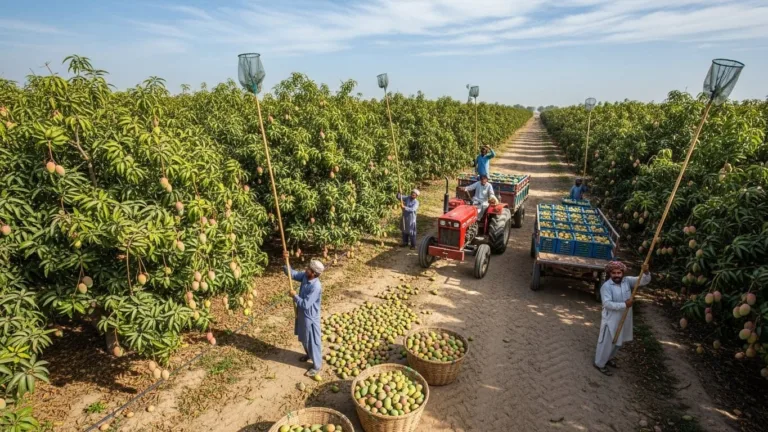
The real magic happens from April through June. This is when mangoes grow rapidly, transforming from marble-sized green balls into the large, colorful fruits we love. Farmers work overtime during this period, making sure trees get adequate water and protection from pests. Some farmers use traditional methods passed down through generations, while others, including progressive farms like Multanfarms.com, combine old wisdom with modern farming techniques.
Harvest season begins in June and continues through September, depending on the mango variety. Different types ripen at different times, which is actually great for business. Early varieties like Sindhri ripen in June, while the famous Chaunsa mangoes peak in late July and August. This staggered ripening means there are always fresh mangoes available throughout summer!
The Varieties: Pakistan’s Mango All-Stars
If mangoes were superheroes, Pakistan would have an entire superhero team! The country grows over 200 different mango varieties, but a few stand out as the real stars. Let’s meet the champions!
Sindhri is like the LeBron James of Pakistani mangoes, big, impressive, and incredibly popular. These mangoes come mainly from Sindh province (hence the name) and can weigh up to 800 grams each. That’s nearly two pounds of pure mango goodness! Sindhri mangoes have a golden-yellow color when ripe and taste like sweet honey. They’re usually the first major variety to hit markets in June, making them the unofficial opening act of mango season.
Then there’s Chaunsa, which many people consider the absolute best mango in Pakistan. Grown primarily around Multan and Rahim Yar Khan, Chaunsa has a unique aromatic quality that makes your mouth water just from the smell. The flesh is incredibly smooth and creamy, almost like eating mango-flavored butter (in the best way possible!). Chaunsa season is such a big deal that people plan their summer around it!
Anwar Ratol is the small but mighty member of the team. These mangoes are tiny compared to Sindhri, about the size of your fist, but they pack an intense, super-sweet flavor that makes up for their size. It’s like comparing a concentrated juice shot to a big glass of regular juice, smaller package, bigger punch!
Other notable varieties include Langra, which has a slightly tangy taste that some people prefer, and Dusehri, known for its elongated shape and aromatic quality. Each variety has its devoted fans who’ll argue passionately about which one is superior!
The Business of Mangoes: More Than Just Fruit
Pakistan mango production isn’t just about growing tasty fruit for summer snacks. It’s actually a massive industry that supports millions of people and brings in serious money for the country’s economy.
Let’s talk numbers for a second. Pakistan produces approximately 1.8 to 2 million metric tons of mangoes annually. To put that in perspective, if you stacked all those mangoes, they’d probably reach the moon (okay, maybe not, but it’s still an insane amount!). This massive production makes Pakistan the world’s fifth or sixth largest mango producer, competing with giants like India, China, and Thailand.
But here’s where it gets really interesting: Pakistani mangoes are exported to over 40 countries worldwide! Countries in the Middle East, especially the United Arab Emirates and Saudi Arabia, can’t get enough of them. European markets are growing too, with Pakistani mangoes showing up in stores across the United Kingdom, Germany, and France. Even countries as far away as Japan and Canada import Pakistani mangoes because they’re just that good.
The economic impact is huge. Thousands of farming families depend on mango production for their livelihoods. Then there are all the related jobs: people who work in packing houses, truck drivers who transport mangoes, workers in cold storage facilities, and vendors who sell fruit in markets. It’s like a massive employment machine powered by fruit!
Organizations like Multanfarms.com are working to make Pakistan mango production even more efficient and profitable. They help farmers access better farming techniques, connect with international buyers, and get fair prices for their hard work. It’s all about making sure farmers can earn a good living while producing world-class mangoes.
Challenges: It’s Not All Sweet and Easy
Of course, growing millions of mangoes every year isn’t without problems. Pakistani mango farmers face several challenges that make their jobs tougher than you might think.
Climate change is becoming a real headache. Mango trees need predictable weather patterns, but recent years have brought some wild surprises. Unexpected late-season rains can damage flowers and reduce the crop. Heat waves that are hotter than normal can stress trees. Changing weather is like trying to study for a test when someone keeps changing the questions, it throws everything off!
Pests and diseases are another constant battle. The mango fruit fly is public enemy number one for Pakistani mango farmers. These tiny insects lay eggs inside developing mangoes, and when the eggs hatch, the larvae eat the fruit from the inside. Gross, right? Farmers also deal with various fungal infections that can spread through orchards, especially during humid weather.
Water management is getting more difficult too. Mango trees need consistent irrigation, but water resources are becoming scarce in many areas. Farmers have to carefully balance giving trees enough water while not wasting this precious resource. Some are adopting modern drip irrigation systems that deliver water directly to tree roots, kind of like using a water bottle with a sports cap instead of trying to drink from a fountain.
Market competition presents challenges as well. While Pakistani mangoes are famous for their quality, they compete with cheaper mangoes from other countries. Getting mangoes to international markets quickly (before they spoil) requires expensive cold storage and air freight, which cuts into profits. Small farmers especially struggle with these costs.
Innovation and the Future: What’s Next for Pakistan’s Mangoes?
Despite the challenges, the future of Pakistan mango production looks pretty bright, thanks to innovation and dedication from farmers and agricultural organizations.
Technology is starting to play a bigger role in mango farming. Some forward-thinking farmers are using smartphone apps to monitor weather conditions, track irrigation schedules, and even diagnose tree diseases. Drones are being tested to survey large orchards and spot problems before they become serious. It’s like farming is getting a high-tech upgrade!
Research institutions are developing new mango varieties that can resist diseases better and tolerate changing climate conditions. They’re also teaching farmers about sustainable agriculture practices, which means growing mangoes in ways that protect the environment for future generations. This includes using organic fertilizers, reducing pesticide use, and conserving water.
Young people are bringing fresh perspectives to traditional mango farming too. Some are exploring value-added products like dried mango slices, mango pulp for export, and even mango-based cosmetics. Others are using social media to market directly to consumers, cutting out middlemen and getting better prices for their fruit.
The government has recognized mangoes’ importance to Pakistan’s economy and agricultural heritage. Various programs offer training, subsidies, and support to mango farmers, especially those trying to break into export markets. There’s a growing understanding that investing in mango production isn’t just about fruit, it’s about supporting rural communities and preserving agricultural traditions.
Why This Matters to You
So why should you care about Pakistan mango production? Well, for starters, if you live in Pakistan, these mangoes are part of your summer experience. They’re at every family gathering, every iftar during Ramadan, and probably in your freezer right now (because who doesn’t stock up during mango season?).
But it’s bigger than that. The mango industry shows how agriculture can support entire communities while producing something that brings joy to millions of people. It demonstrates how traditional knowledge and modern innovation can work together. And it reminds us that the food we eat every day connects us to farmers, soil, weather patterns, and global trade networks.
The next time you enjoy a juicy Pakistani mango, remember the journey it took to reach you. From a flower on a tree in a Multan orchard, through months of careful growing, to the skilled hands that picked and packed it, that mango represents the hard work and expertise of countless people.
Here’s something to think about: as your generation grows up, you’ll face questions about how to feed more people while protecting the environment. Pakistan mango production offers lessons about sustainable farming, adapting to climate change, and keeping traditional practices alive in a modern world. Who knows? Maybe you’ll be part of the next wave of innovation that takes Pakistani mangoes to even greater heights!