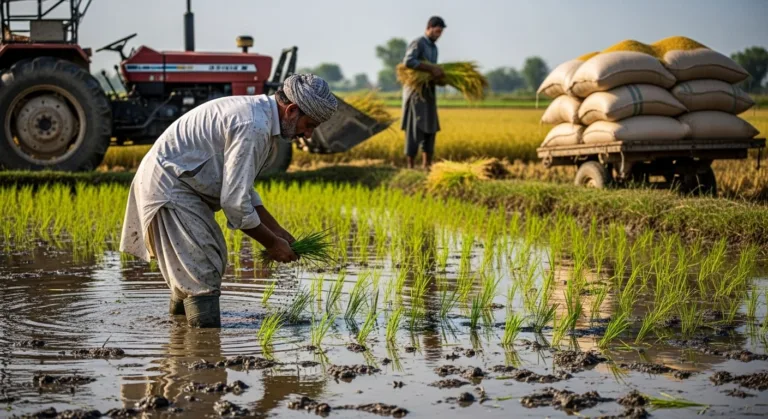
Have you ever thought about what happens to rice after farmers harvest it from the fields? Most people think the story ends there, but that’s just the beginning! In Pakistan, rice isn’t just a crop that gets sold right away. Instead, it goes through an incredible journey that makes it more valuable and useful for people all around the world. This process is called “value addition,” and it’s changing the way Pakistani farmers and businesses make money from agriculture.
Pakistan is one of the world’s biggest rice exporters, and rice farming is a huge part of the country’s economy. But here’s the cool part: when rice gets processed, packaged, and turned into different products, its value can multiply several times over! Imagine buying a plain notebook for 50 rupees, but if you add colorful designs, stickers, and organize it with dividers, you could sell it for 200 rupees. That’s exactly what value addition does to rice. In this article, you’ll discover how Pakistan transforms simple rice grains into valuable products and why this matters for farmers, businesses, and the entire country.
What Exactly Is Value Addition in Agriculture?
Let’s start with the basics. Value addition means taking a raw agricultural product and doing something to it that makes it more useful, attractive, or convenient for customers. When you add value to rice, you’re not just selling plain grains anymore. You’re creating something that people are willing to pay more money for.
Think of it like this: if you pick mangoes from a tree and sell them at a roadside stand, you’ll make some money. But what if you turned those mangoes into mango juice, packaged it in attractive bottles, and sold it in stores? You’d make way more money because you’ve added value! The same principle applies to rice in Pakistan. Farmers grow the rice, but then businesses process it, clean it, sort it by quality, package it beautifully, and even turn it into special products. Each of these steps adds value and increases how much people will pay for it.
In Pakistan’s rice industry, value addition includes things like removing the husk (the outer shell), polishing the grains to make them white and shiny, sorting them by size and quality, and packaging them in branded bags. Some companies even go further by making ready-to-eat rice meals, rice flour, rice crackers, or special varieties like brown rice and organic rice.
From Paddy to Premium: The Rice Processing Journey
The transformation of rice in Pakistan is honestly pretty amazing. It starts with something called “paddy,” which is rice that still has its tough outer covering. You can’t eat paddy rice straight from the field because it’s too hard and doesn’t taste good. This is where rice mills come in, and they’re like the factories that work magic on rice.
First, the paddy goes through a machine that removes the husk, revealing the brown rice underneath. Brown rice is actually healthier than white rice because it keeps a layer called the bran, which has lots of nutrients. But most people in Pakistan and around the world prefer white rice, so the process continues. The brown rice gets polished, which means machines rub off the bran layer to make the grains white and smooth. This polishing process is a form of value addition because polished white rice sells for more money than unpolished rice.
After polishing, the rice gets sorted. High-quality grains that are long, unbroken, and perfect go into one category. These are the premium grains that get the highest prices. Broken grains and shorter ones go into different categories and sell for less. It’s kind of like sorting candies by color and size, where the perfect ones are worth more! In Pakistan, the most famous rice variety is Basmati, and the best Basmati grains can sell for really high prices internationally because they’re aromatic and cook perfectly.
Creating Special Rice Products
Here’s where things get really interesting. Pakistani businesses aren’t just selling plain rice anymore. They’re getting creative and making all sorts of rice-based products that add even more value. These products reach different markets and help Pakistan earn more money from its rice.
One popular value-added product is parboiled rice. This type of rice gets partially cooked while still in its husk, which changes its texture and makes it harder to overcook. People in some countries really prefer parboiled rice, and it sells for a premium price. Another example is rice flour, which is made by grinding rice into a fine powder. Rice flour is used for making noodles, crackers, and even cosmetic products! Some Pakistani companies are also producing ready-to-cook rice meals where the rice comes with spices and seasonings already mixed in. You just add water and heat it up, which is super convenient for busy families.
Organic rice is another growing market. When farmers grow rice without using chemical fertilizers or pesticides, they can sell it as organic rice, which health-conscious customers will pay extra for. Some businesses in Pakistan are also experimenting with rice bran oil, which comes from the layer that gets removed during polishing. This oil is actually really healthy and can be used for cooking. By using every part of the rice plant, businesses maximize their profits and reduce waste.
Why Does This Matter for Pakistani Farmers?
You might be wondering, “Okay, this sounds cool, but why should I care?” Well, value addition in rice farming has a huge impact on Pakistan’s economy and especially on the lives of farmers. When rice gets processed and turned into valuable products, everyone in the supply chain benefits.
For farmers, value addition means they can potentially earn more money. When businesses pay better prices for high-quality rice that can be processed into premium products, farmers are motivated to grow better crops. Some farmers have even started doing basic processing themselves. Instead of just selling raw paddy to a middleman, they might clean and dry the rice first, which lets them charge more. It’s like the difference between selling loose cookies versus packaging them nicely in a box with a ribbon, you can charge more for the packaged version!
Rice processing also creates thousands of jobs in Pakistan. Rice mills need workers to operate machines, sort grains, and package products. Factories that make rice-based products employ even more people. This means more families have steady incomes, which helps entire communities grow stronger. According to agricultural experts, the rice industry supports millions of people in Pakistan either directly or indirectly.
Pakistan’s Rice on the Global Stage
Pakistan exports rice to more than 60 countries around the world! Countries in the Middle East, Africa, Europe, and even some parts of Asia buy Pakistani rice. But here’s the thing: if Pakistan only exported raw, unprocessed rice, it wouldn’t make nearly as much money. By adding value through processing and branding, Pakistani rice commands higher prices in international markets.
Basmati rice from Pakistan is especially famous globally. It’s known for its unique aroma and long grains that don’t stick together when cooked. Pakistani companies have worked hard to build brands around Basmati rice, creating attractive packaging and quality certifications that international buyers trust. When you walk into a grocery store in London, Dubai, or New York and see a fancy package of Pakistani Basmati rice, that’s value addition in action! The rice inside might have come from fields near Multan or other rice-growing regions in Pakistan, but the branding and packaging make it sell for much more than plain rice would.
Some Pakistani rice companies have even started making special blends by mixing different rice varieties or adding ingredients like saffron for color and flavor. These specialty products can sell for premium prices, especially during festive seasons when people want something extra special for their meals.
Challenges and Opportunities Ahead
Of course, adding value to rice isn’t always easy. Pakistani farmers and businesses face some challenges. One big issue is that modern processing equipment can be expensive. Small farmers often can’t afford to buy rice mills or packaging machines on their own. This is why cooperatives, where farmers work together and share resources, are becoming more popular.
Another challenge is competition. Other countries like India, Thailand, and Vietnam also export lots of rice, so Pakistan needs to keep improving quality and finding unique ways to stand out. Quality control is super important because if Pakistani rice develops a reputation for being inconsistent or low-quality, international buyers will go elsewhere.
But there are also amazing opportunities! As people around the world become more health-conscious, there’s growing demand for organic rice, brown rice, and rice-based health products. Pakistan can tap into these markets by investing in organic farming and developing new rice products. Technology is also helping. Modern rice mills with better machinery can process rice more efficiently and with less waste. Some companies are using solar power to run their mills, which reduces costs and is better for the environment.
Conclusion
From simple paddy fields to sophisticated rice products sold worldwide, value addition has transformed Pakistan’s rice industry into something truly impressive. By processing, packaging, and creating new rice-based products, Pakistan doesn’t just sell a crop anymore, it sells quality, convenience, and tradition all wrapped into one. This benefits farmers who earn more, workers who get jobs, and the country’s economy that earns valuable foreign exchange.
The next time you see a bag of rice at the store or eat rice with your meal, think about the incredible journey those grains took. Behind every grain is a story of hard work, innovation, and the power of adding value to simple agricultural products. As Pakistan continues to invest in better processing technology and explores new rice products, the future of rice value addition looks brighter than ever. What other ways do you think Pakistan could add even more value to its rice and other agricultural products?