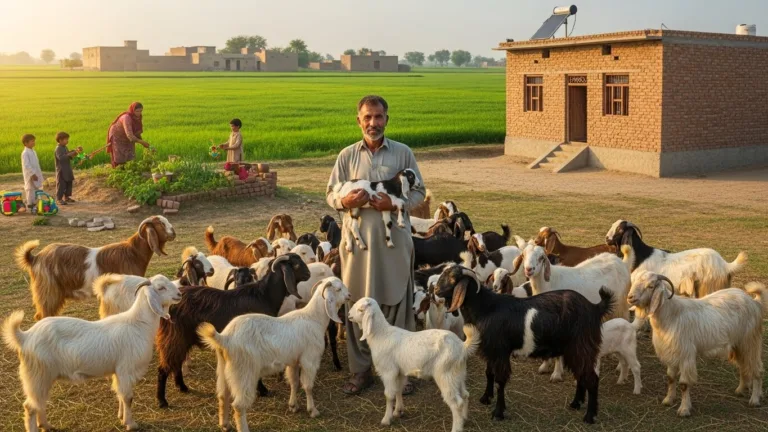
Picture this: the sun is just rising over the flat, green fields of Punjab, Pakistan, and you hear a chorus of bleating goats as a farmer opens the gates to let his herd out for the day. This scene plays out on thousands of farms across the region, where goat farming has become one of the most important and profitable types of agriculture. But why goats? And what makes Punjab such a perfect place for raising these hardy, useful animals?
Goat farming in Punjab isn’t just about having animals around. It’s a smart business that provides families with income, food, and opportunities they might not have otherwise. For many people in rural Punjab, goats are like a living savings account, they grow in value over time, produce milk and meat, and can be sold when families need money for emergencies or special occasions. It’s fascinating how something as simple as raising goats can have such a big impact on people’s lives!
In this article, we’ll explore why goat farming has become so popular in Punjab, what makes it different from other types of farming, and how farms like those featured on Multanfarms.com are helping to grow this important industry. Get ready to discover why goats might just be the unsung heroes of Pakistani agriculture!
Why Punjab Is Perfect for Goat Farming
Punjab, which means “land of five rivers,” is one of Pakistan’s most fertile and productive provinces. You might think that a place this good for growing crops wouldn’t need to focus on raising animals, but that’s where you’d be wrong! The same things that make Punjab great for farming, plenty of water, good weather, and lots of open land, also make it ideal for goat farming.
The climate in Punjab is actually perfect for goats. These animals are incredibly tough and can handle both the hot summers and relatively mild winters that Punjab experiences. Unlike cows or buffalo, which need lots of water and can get sick in extreme heat, goats are like the superheroes of the animal world. They can thrive in conditions that would make other livestock uncomfortable.
Another advantage is that Punjab has a huge agricultural base, which means there’s plenty of food for goats. Farmers can feed their goats crop leftovers, grass from fields, and other plant materials that might otherwise go to waste. It’s like having a recycling system that turns your leftover vegetables into valuable products! This makes goat farming not only profitable but also environmentally smart.
The Different Types of Goat Breeds in Punjab
Not all goats are created equal! Just like there are different breeds of dogs (think tiny Chihuahuas versus huge Great Danes), there are many different breeds of goats, each with special characteristics. Punjab is home to some of the most productive and valuable goat breeds in the world.
Beetal goats are the rock stars of Punjab’s goat farming industry. These goats are large, with long ears that hang down like curtains, and they produce an impressive amount of milk. A good Beetal goat can provide enough milk for a family and still have extra to sell. They’re also known for producing kids (baby goats) that grow quickly and can be sold for meat.
Teddy goats are another popular breed. Despite their cute name, these aren’t the stuffed animals you might be thinking of! Teddy goats are smaller than Beetals but are prized for their excellent meat quality. They grow fast and don’t require as much food as larger breeds, making them perfect for farmers who are just starting out or have limited space.
Kamori goats are considered the most beautiful goats in Pakistan. With their sleek black coats and elegant appearance, they’re often kept for breeding and showing. But don’t let their good looks fool you, Kamoris are also excellent milk producers and can fetch high prices at markets.
Choosing the right breed is like picking the right tool for a job. Each breed has strengths that make it better for different purposes, whether that’s milk production, meat, or breeding.
How Goat Farming Actually Works
So what does a day in the life of a goat farmer look like? It’s more interesting than you might think! Goat farming requires dedication, knowledge, and a real connection with the animals. Farmers typically start their day early, checking on their goats to make sure everyone is healthy and happy.
Feeding is one of the most important daily tasks. Goats need a balanced diet to stay healthy and productive. Most farmers in Punjab use a mix of fresh grass (which they either grow or cut from nearby fields), grain supplements, and sometimes special feed that contains vitamins and minerals. Think of it like how you need a balanced diet with vegetables, proteins, and vitamins to grow strong, goats need variety too!
Health care is another crucial part of goat farming. Farmers need to vaccinate their goats against diseases, treat any injuries or illnesses, and make sure the animals are clean and comfortable. Many farmers work with veterinarians (animal doctors) who visit the farm regularly to check on the herd. Modern farms, including those showcased on Multanfarms.com, are getting better at preventing diseases before they start, which keeps the goats healthier and saves money in the long run.
Breeding is the process of having baby goats, and it’s essential for growing the herd. Farmers carefully choose which goats to breed together to produce kids that will be healthy, grow fast, and have good milk or meat qualities. It’s like how plant breeders create new types of fruits or vegetables, except with animals!
The Money Side of Goat Farming
Let’s talk about something really important: how goat farming helps families earn money. This is where things get really interesting! Goat farming in Punjab can be incredibly profitable, but it requires smart planning and hard work.
Goats provide multiple sources of income. First, there’s milk, which many families sell to local markets or use to make products like yogurt and cheese. Goat milk is actually easier to digest than cow milk, and some people prefer it for its unique taste and nutritional benefits. A single good milk-producing goat can generate steady income throughout the year.
Then there’s meat, which is in high demand, especially during religious festivals like Eid. Goat meat (called mutton in Pakistan) is considered a delicacy and sells for good prices. Farmers often raise goats specifically to sell during these peak times, kind of like how stores stock up on candy before Halloween!
Breeding is another income source. Farmers with high-quality goats can sell kids to other farmers who want to start or expand their herds. A well-bred kid from a good bloodline can sell for a lot of money, much more than a regular goat raised just for meat.
Finally, there are products like manure (yes, goat poop!), which makes excellent fertilizer for crops. Nothing goes to waste in smart goat farming, everything has value!
Challenges That Goat Farmers Face
Of course, goat farming isn’t all sunshine and profits. Farmers in Punjab face real challenges that they need to overcome to be successful. Understanding these challenges helps us appreciate how hard farmers work and how resourceful they need to be.
Diseases are probably the biggest worry for goat farmers. When goats live close together, illnesses can spread quickly through a herd. Common diseases include pneumonia (lung infections), parasites (tiny creatures that live inside or on the goats), and various bacterial infections. Losing even a few goats to disease can be devastating for a family that depends on them for income.
Market prices can be unpredictable. Sometimes goat prices are high, and farmers make good money. Other times, prices drop, and farmers struggle to cover their costs. It’s like if the price of video games constantly changed, sometimes you could afford them easily, and other times they’d be way too expensive. This uncertainty makes it hard for farmers to plan ahead.
Access to good breeding stock can also be a challenge. Not every farmer can afford high-quality goats with excellent genetics. Without good breeding animals, it’s harder to produce kids that will grow well and be profitable. This is where organizations and farms like Multanfarms.com can help by providing access to better quality animals.
Climate change is becoming a growing concern too. Unpredictable weather patterns, droughts, or unexpected cold snaps can affect the grass and crops that goats eat, making it harder and more expensive to keep animals fed.
Modern Changes in Goat Farming
The exciting news is that goat farming in Punjab is evolving and improving all the time! New technologies and methods are making it easier for farmers to be successful, even small farmers who are just starting out.
Better veterinary care is now more accessible in many areas. Mobile vet clinics travel to rural areas, bringing vaccines and treatments directly to farms. This means goats get better health care, which leads to healthier herds and more profit for farmers.
Improved breeding programs are helping farmers access better quality goats. Organizations and progressive farms are keeping careful records of which goats produce the best offspring, helping the entire industry improve over time. It’s like how dog breeders keep track of bloodlines to produce dogs with specific good qualities.
Training programs teach farmers new techniques for feeding, housing, and caring for their goats. Many young people in Punjab are now getting interested in goat farming because they see it as a real business opportunity, not just traditional farming. They’re bringing fresh ideas and modern business thinking to an ancient practice.
Digital platforms like websites and social media are connecting farmers with buyers more directly. Instead of relying only on local markets, farmers can now advertise their goats online and reach customers across the region. This is where platforms like Multanfarms.com play an important role, connecting quality farms with people who want to buy good livestock.
Why Goat Farming Matters Beyond the Farm
You might be thinking, “This is all interesting, but why should I care about goat farming in Punjab?” Well, agriculture like goat farming affects all of us in ways you might not realize!
First, goat farming helps fight poverty. In rural areas where job opportunities are limited, goat farming provides families with a way to earn money and support themselves. It’s especially helpful for women, who often take care of goats while men work in fields or other jobs. This extra income can mean the difference between kids going to school or having to drop out to work.
Second, goat farming supports food security. The milk and meat from goats provide important nutrition for growing kids (the human kind!). Goat milk is packed with protein, calcium, and vitamins that help children grow strong and healthy.
Third, it’s environmentally sustainable when done right. Goats can graze on land that’s not suitable for growing crops, they eat plants that other animals won’t touch, and their manure enriches the soil. They’re like nature’s lawn mowers and fertilizer factories combined!
Finally, goat farming preserves important cultural traditions while adapting to modern times. People in Punjab have been raising goats for thousands of years, and that knowledge and connection to the land is valuable. By making goat farming profitable and modern, young people can stay connected to their heritage while still earning a good living.
Your Connection to Goat Farming
Even if you live far from Punjab or have never seen a goat farm, you’re connected to this industry in ways you might not realize. The leather in your shoes might have come from a goat. Products you use could contain ingredients derived from goat milk. And learning about how people around the world farm and care for animals helps us appreciate where our food comes from.
Goat farming in Punjab shows us that agriculture isn’t just about big industrial farms with huge machines. Sometimes the most successful and sustainable farming happens on smaller farms where families care deeply about their animals and work hard every day to make their business succeed. It’s a reminder that innovation and tradition can work together beautifully.
So next time you hear about farming, remember the goat farmers of Punjab, Pakistan. They’re working hard every day, caring for their animals, providing for their families, and contributing to their communities. What they do matters, not just for Pakistan but for showing us all that with knowledge, dedication, and the right resources, farming can be a path to a better future. Pretty cool, right?