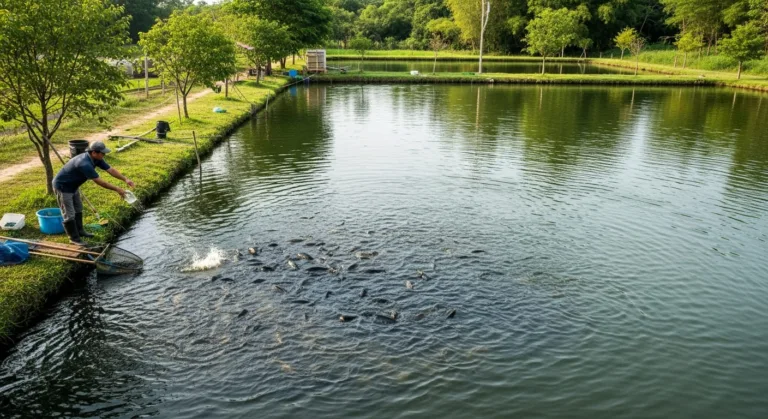
Imagine having a pond the size of a football field filled with fish. Now, how many fish do you think could live in that space comfortably? A hundred? A thousand? Maybe even ten thousand? The answer might surprise you! Fish farming, also called aquaculture, is becoming super important around the world because we need more food for our growing population. But here’s the tricky part, you can’t just throw unlimited fish into a pond and hope for the best.
Fish production per acre is all about finding the sweet spot between raising enough fish to make your farm successful and keeping those fish healthy and happy. It’s kind of like figuring out how many people can comfortably fit in your classroom. Sure, you could squeeze in way more desks, but then nobody would have room to move, breathe, or learn properly! The same goes for fish. They need space, clean water, oxygen, and the right conditions to grow big and strong.
In this article, we’re going to explore the fascinating world of fish farming and help you understand what fish production per acre really means. We’ll look at different types of fish farms, what factors affect how many fish you can raise, and some real numbers that might blow your mind. Whether you’re curious about where your fish dinner comes from or you’re thinking about the future of food production, this is going to be an interesting journey!
What Does “Per Acre” Actually Mean in Fish Farming?
First things first, let’s break down what we’re talking about. An acre is a measurement of land area that equals about 43,560 square feet. To picture this, think of a football field without the end zones, that’s pretty close to one acre! When fish farmers talk about production “per acre,” they’re measuring how many pounds or kilograms of fish they can harvest from that amount of water space.
But here’s where it gets interesting. Unlike farming corn or wheat where you’re working with flat land, fish farming involves depth too. A pond that’s one acre in surface area but ten feet deep has way more usable space than a pond that’s only three feet deep. It’s three-dimensional farming! So when we talk about fish production per acre, we’re usually referring to the surface area, but depth plays a huge role in the final numbers.
Fish farms can be set up in many different ways. Some use natural ponds, others dig artificial ponds, and some even use big tanks or cages in lakes and oceans. At places like Multanfarms.com, farmers carefully plan their pond systems to maximize production while keeping the environment healthy. The goal is always to find that perfect balance between quantity and quality.
Different Fish, Different Numbers
Not all fish are created equal when it comes to farming! Some fish species can handle crowded conditions better than others, grow faster, or need less fancy equipment. Let’s look at some popular fish and how many you can typically raise per acre.
Tilapia is like the superstar of fish farming. These tough little swimmers can handle crowded conditions pretty well and grow super fast. In a well-managed pond, farmers can produce anywhere from 3,000 to 6,000 pounds of tilapia per acre each year! That’s roughly 1,500 to 3,000 fish, depending on how big you let them grow. Tilapia are popular because they eat plants and small organisms, which makes feeding them easier and cheaper.
Catfish farming is huge in many countries, especially in the southern United States. These bottom-dwelling fish are pretty hardy and taste great. A typical catfish farm might produce about 3,000 to 5,000 pounds per acre annually. The cool thing about catfish is that they can tolerate lower oxygen levels than some other fish, which makes them easier to raise in certain conditions.
Carp have been farmed for thousands of years, especially in Asia. Different types of carp can actually live together in the same pond, with some eating plants near the surface while others munch on stuff at the bottom. This is called polyculture, and it’s like having a diverse community where everyone has their own job! Carp farms can produce anywhere from 2,000 to 8,000 pounds per acre depending on the management style and species mix.
What Affects How Many Fish You Can Raise?
You might be wondering, why can’t every farm just produce the maximum amount possible? Well, there are tons of factors that determine how many fish you can successfully raise per acre. Let’s break down the big ones!
Water quality is absolutely the most important factor. Fish breathe through their gills, pulling oxygen out of the water just like you pull oxygen from air. When you pack too many fish into a pond, they use up all the oxygen, produce tons of waste, and basically create a really gross, unhealthy environment. It’s like being stuck in a tiny room with 50 other people and no windows, not fun at all! Farmers have to constantly monitor oxygen levels, temperature, and waste buildup.
Feeding and nutrition also make a huge difference. Fish need the right kind of food to grow quickly and stay healthy. Some farmers use special pellet food that’s scientifically designed to help fish grow fast. Others use more natural feeding methods. The better you feed your fish, the faster they grow, and the more you can produce per acre. But feed costs money, so farmers have to find the right balance.
Technology and equipment can seriously boost production numbers. Modern fish farms might use aerators (machines that add oxygen to the water), filtration systems to keep water clean, or even automatic feeders. These tools allow farmers to raise way more fish per acre than traditional methods. It’s like the difference between washing dishes by hand versus using a dishwasher, technology makes everything more efficient!
Climate and location matter too. Fish are cold-blooded, which means their body temperature matches the water around them. In warm climates, fish grow faster and farmers can sometimes raise multiple batches in one year. In colder places, fish grow slowly during winter months, which affects total annual production.
Intensive vs. Extensive Fish Farming
There are two main approaches to fish farming, and they produce very different results per acre. Understanding these methods helps explain why production numbers can vary so wildly.
Extensive fish farming is the old-school, low-tech approach. Farmers stock ponds with fish and let nature do most of the work. The fish eat natural food in the pond like algae, insects, and tiny plants. This method produces maybe 500 to 1,500 pounds of fish per acre, which doesn’t sound like much. But it’s super cheap to run, doesn’t require fancy equipment, and is better for the environment because it’s more natural.
Intensive fish farming is the high-tech, high-production method. Farmers pack way more fish into each acre and use aerators, filtration systems, and high-quality feed to keep everything running smoothly. This method can produce 5,000 to 10,000 pounds or even more per acre! The downside? It’s expensive, requires constant monitoring, uses more resources, and has a bigger environmental impact if not managed carefully.
Many modern farms, including operations like Multanfarms.com, try to find a middle ground called semi-intensive farming. This approach combines some technology and management practices with more natural methods to get good production numbers while staying sustainable and cost-effective.
Real-World Production Numbers That Might Surprise You
Let’s get into some specific numbers from actual fish farms around the world. These examples show just how different fish production per acre can be depending on the type of fish and farming method!
In the United States, catfish farms typically produce about 4,000 to 6,000 pounds per acre per year using semi-intensive methods. That’s enough fish to feed hundreds of families! In countries like Thailand and Vietnam, where intensive tilapia farming is common, some farms achieve production levels of 15,000 to 20,000 pounds per acre using multiple harvest cycles throughout the year.
China, which is the world’s biggest fish farming country, often uses polyculture systems where different fish species live together. These farms might produce 3,000 to 5,000 pounds per acre, but they’re harvesting several different types of fish, which gives farmers more flexibility in what they sell.
Here’s a mind-blowing fact: with super intensive systems using tanks or recirculating aquaculture systems (RAS), some facilities can produce the equivalent of 100,000 pounds per acre or more! These aren’t traditional ponds though. They’re basically fish factories with complete control over every aspect of the environment. It’s like comparing a small vegetable garden to a massive greenhouse operation.
Why Fish Production Per Acre Matters for Our Future
Understanding fish production per acre isn’t just interesting trivia, it’s actually super important for feeding the world’s growing population. Right now, there are almost 8 billion people on Earth, and that number keeps growing. We’re already overfishing our oceans, which means we need to raise more fish on farms to meet demand.
The cool thing is that fish farming is actually more efficient than raising land animals like cows or pigs. Fish convert their food into body weight much more efficiently, and they don’t need as much space as cattle ranches. A well-run fish farm can produce tons of protein from just one acre of water! Compare that to raising beef, where you might need many acres of land to support just a few cows.
This is where operations like Multanfarms.com become really important. By focusing on sustainable, efficient farming practices, they help ensure we’ll have enough fish to eat in the future without destroying our oceans or environment. Every time you eat farm-raised fish, you’re part of this bigger picture of sustainable food production!
So How Much Fish Can One Acre Really Produce?
After all this information, what’s the final answer? Well, it depends! A basic extensive fish farm might produce 500 to 1,500 pounds per acre, while a semi-intensive farm could hit 3,000 to 6,000 pounds, and intensive operations might reach 10,000 pounds or more. The “right” amount depends on what type of fish you’re raising, what equipment you have, and how sustainable you want your farm to be.
The most important lesson is that successful fish farming isn’t about cramming as many fish as possible into one acre. It’s about creating a healthy, balanced system where fish can thrive, grow efficiently, and produce high-quality food. Think of it as quality over quantity, although with good management, you can actually get both!
What do you think about fish farming? Would you be interested in trying your hand at raising fish, or does learning where your food comes from change how you think about that fish dinner? The future of food is happening right now in ponds and tanks all around the world!