Have you ever cracked open an egg for breakfast and wondered where it actually comes from? Most people know eggs come from hens, but there’s a whole system behind getting those eggs from a farm to your plate. It starts with a special group of birds called poultry layers, and understanding how they work can change the way you think about one of the world’s most common foods.
Poultry layers are hens raised specifically to produce eggs. Unlike broiler chickens, which are raised for their meat, layers are bred and managed with one goal in mind, producing as many eggs as possible over their lifetime. It’s a fascinating world where science, farming, and daily nutrition all come together.
What Exactly Is a Poultry Layer?
A layer hen is a female chicken that has been selectively bred over many generations to lay a high number of eggs. While a wild chicken might lay 10 to 15 eggs a year, a modern layer hen can produce 250 to 300 eggs in a single year. That’s almost one egg every single day, which is pretty remarkable when you think about it.
Not every chicken breed is suited for egg production. Breeds like Leghorn, Rhode Island Red, and Hy-Line are among the most popular layer breeds in the world. Each breed has its own strengths, from feed efficiency to egg size to how well they handle different climates.
When Do Layers Start Laying Eggs?
A young female chicken is called a pullet until she starts laying eggs. Most pullets begin laying between 18 and 22 weeks of age, which is roughly four to five months after hatching. Think of it like starting a new job: the pullet has to reach a certain maturity before she’s ready to take on the responsibility.
The first few eggs a pullet lays might be small or irregular in shape, and that’s completely normal. Her body is still getting into a rhythm. After a few weeks, egg production becomes steady and consistent, and that’s when a farmer really starts to see results.
What Does a Layer Hen Need to Stay Productive?
Running a successful poultry layer farm is a lot like managing a sports team. Every player needs the right training, nutrition, and environment to perform at their best, and the same goes for hens.
Nutrition is the foundation. Layer hens need a diet rich in calcium to produce strong eggshells, along with protein, vitamins, and minerals to stay healthy. Farmers use specially formulated layer feed to make sure every hen gets exactly what she needs.
Lighting also plays a huge role. Hens are sensitive to daylight hours, and longer periods of light stimulate egg production. In commercial farms, lighting schedules are carefully managed to keep production consistent throughout the year, even during winter months when natural daylight is shorter.
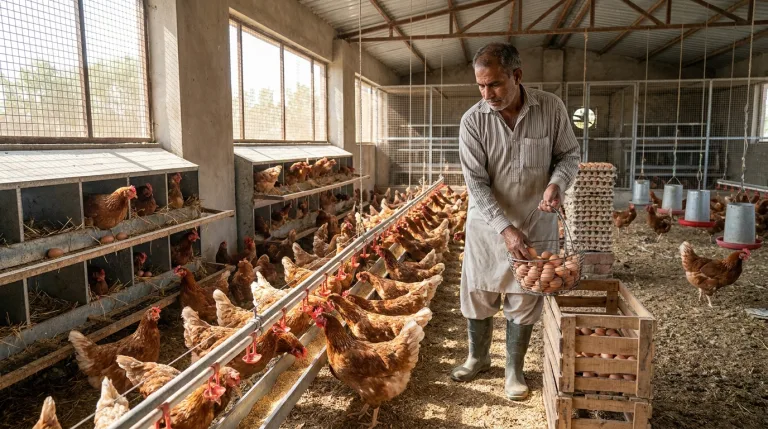
Housing matters just as much. Whether hens live in cages, open barns, or free-range systems, they need proper ventilation, clean water, and enough space to move comfortably. Stressed hens produce fewer eggs and are more prone to disease, so keeping them comfortable is both a welfare concern and a business priority.
How Long Does a Hen Stay in Production?
A layer hen’s most productive period generally runs from the time she starts laying until she’s about 72 weeks old. After that, egg production starts to decline, and farmers have to decide whether to keep the flock going or replace it with younger pullets.
Some farmers practice molting, which is a controlled process that gives hens a break from laying for several weeks, after which they begin producing again with renewed energy. It’s similar to how athletes take a recovery period after an intense season. This technique can extend a hen’s productive life and improve the quality of her eggs.
Types of Layer Farming Systems
There’s more than one way to run a layer poultry farm, and the system a farmer chooses depends on budget, goals, and local conditions.
Cage systems keep hens in individual or small group enclosures, making it easier to control disease, collect eggs, and manage feed. Free-range systems allow hens to roam outdoors, which many consumers prefer because of animal welfare concerns. Deep litter systems keep hens in large open sheds with bedding on the floor, striking a balance between management ease and bird comfort.
In Pakistan, especially in areas like Multan, layer farming has grown into a significant part of the poultry industry. Farmers in the region increasingly adopt modern practices to improve both egg quality and flock health.
Why Does Layer Farming Matter?
Eggs are one of the most affordable and nutritious foods available. They’re packed with protein, healthy fats, vitamins like B12 and D, and essential minerals. A single egg contains almost every nutrient the human body needs, which is why nutritionists often call it a near-complete food.
Layer farming makes it possible for millions of families to access this nutrition every single day. Whether you’re eating a fried egg at breakfast, baking a cake, or grabbing an egg sandwich on the go, there’s a good chance a layer hen is responsible for that meal. Supporting well-managed layer farms means supporting a food system that keeps communities fed and healthy.
Final Thoughts
Poultry layers are at the heart of one of the world’s most important food industries. From breed selection to daily feeding routines, every part of a layer hen’s life is carefully managed to bring nutritious, affordable eggs to your table. It’s a system built on knowledge, care, and a deep understanding of how animals and agriculture work together.
If you’re curious about layer farming, egg nutrition, or how to start your own poultry operation, visit Multanfarms.com to start exploring.