You’ve probably walked past a sunflower field and admired those huge, golden blooms standing tall in the summer heat. But have you ever stopped to think about what’s hiding right at the centre of that flower? Packed inside every sunflower head are hundreds of small, striped seeds, what we call surajmukhi ke beej, and they’re quietly one of the most nutritious foods you can eat. Surajmukhi, the Urdu name for the sunflower plant, has been grown across Pakistan’s Punjab and Sindh regions for decades. The seeds it produces are far more than a snack. They’re a concentrated source of vitamins, healthy fats, and minerals that your body uses every single day. Whether you eat them raw, roasted, or pressed into oil, you’re getting something genuinely powerful from a very small package. In this article, you’ll learn exactly what surajmukhi ke beej are, why they deserve a place in your kitchen, what they do for your health, and how to use them in everyday cooking. Let’s start with the basics.
What Exactly Are Surajmukhi Ke Beej?
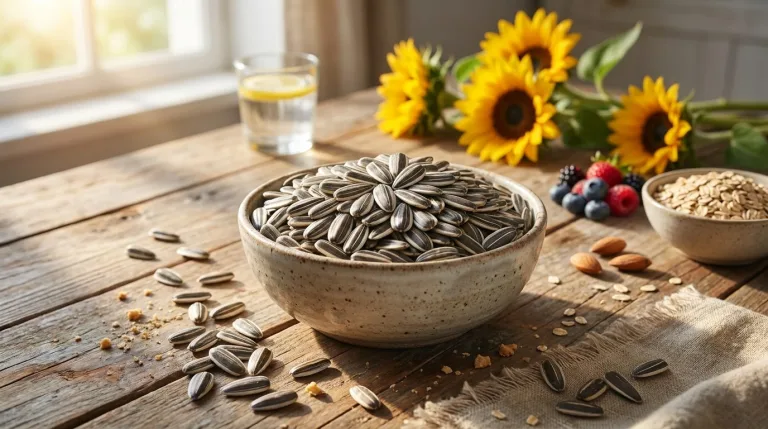
Surajmukhi ke beej are the seeds of the sunflower plant, scientifically known as Helianthus annuus. Each sunflower head can contain anywhere between 1,000 and 2,000 seeds arranged in a beautiful spiral pattern. The seeds themselves are enclosed in a black and white striped shell called a hull, and inside that hull sits the edible kernel, which is the part you actually eat. There are two main types grown commercially. The first type is grown specifically for oil production, with smaller, black seeds that have a higher fat content. The second type is grown for direct consumption, with larger, striped seeds that are easier to shell and eat as a snack. Both types are nutritionally dense, though the eating variety is what most households are familiar with. Pakistan has seen a steady rise in sunflower cultivation, particularly in Punjab, because the crop is relatively drought-tolerant, matures quickly, and produces a high yield of oil-rich seeds per acre. That makes surajmukhi one of the more practical crops for Pakistani farmers looking to diversify beyond wheat and cotton.
A Nutritional Treasure Hiding in a Tiny Shell
It’s easy to underestimate something this small, but surajmukhi ke beej are remarkably dense with nutrients. A small handful, roughly 30 grams, gives you a meaningful dose of Vitamin E, which is one of the body’s most important antioxidants. Antioxidants are compounds that protect your cells from damage caused by pollution, stress, and an unhealthy diet. Think of Vitamin E as a shield your cells wear every day. The seeds are also rich in magnesium, a mineral most people don’t get enough of. Magnesium plays a role in over 300 biochemical reactions in the body, including muscle function, blood sugar regulation, and maintaining a steady heartbeat. Beyond that, they contain selenium, zinc, B vitamins, and a solid amount of plant-based protein. The fat in sunflower seeds is predominantly polyunsaturated fat, specifically linoleic acid, which belongs to the omega-6 family. Unlike the saturated fats found in fried foods, these healthy fats support heart function and help the body absorb fat-soluble vitamins more effectively.
The Health Benefits That Make Surajmukhi Ke Beej Worth Eating
One of the most talked-about benefits of sunflower seeds is their support for heart health. The combination of healthy fats, Vitamin E, and plant sterols helps reduce levels of LDL cholesterol, the kind associated with blocked arteries. Including a small portion of surajmukhi ke beej in your daily diet is one of the simpler dietary changes with measurable long-term impact. Sunflower seeds also support healthy skin. Vitamin E is known for its ability to keep skin moisturised and protected from environmental damage. In fact, many skin-care products use Vitamin E as a key ingredient for the same reason your body values it internally. Eating the seeds gives you this benefit from the inside out. The selenium content in surajmukhi ke beej is worth highlighting separately. Selenium supports thyroid function and immune response, two systems that play a central role in how energetic and resilient you feel day to day. Many Pakistani diets are naturally low in selenium, which makes sunflower seeds a practical way to bridge that gap without supplements.
How to Use Surajmukhi Ke Beej in Everyday Cooking
One of the best things about sunflower seeds is how easily they fit into food you’re already eating. Here are some practical ways to include them:
- As a snack: Lightly roasted and salted surajmukhi ke beej make a satisfying snack that travels well in a small container or bag.
- On salads: Tossing a handful of raw or roasted seeds onto a cucumber or tomato salad adds crunch and nutrition in one step.
- With breakfast: Stirring them into oatmeal, yoghurt, or a fruit chaat adds texture and boosts the protein content of your morning meal.
- In baking: Sunflower seeds can be pressed into homemade bread or added to whole-wheat rotis before cooking for a nutty flavour.
- As sunflower butter: Ground into a paste, surajmukhi ke beej produce a smooth, nutty butter that works just like peanut butter on toast.
One thing to keep in mind is portion size. Because of their high fat content, sunflower seeds are calorie-dense. A small handful, 25 to 30 grams, is plenty for one sitting. More than that daily over a long period can add unnecessary calories without extra benefit.
Surajmukhi Farming in Pakistan: A Crop Worth Knowing
Sunflower cultivation in Pakistan is concentrated in Punjab, with significant production in districts including Multan, Dera Ghazi Khan, and Sahiwal. The crop has two growing seasons, spring and autumn, making it one of the few oilseed crops that can be harvested twice a year under the right conditions. Pakistani farmers value surajmukhi because it requires less water than sugarcane and matures faster than many other oil crops. The seeds are sold both directly for consumption and to oil-pressing units that produce surajmukhi tail, sunflower oil, which is now one of the most widely used cooking oils in Pakistani households. The global demand for sunflower products has also grown significantly in recent years, giving Pakistani growers an opportunity to export processed seeds and oil. For smallholder farmers in southern Punjab, surajmukhi has become a reliable income crop that fits naturally into existing agricultural rotations.
Bringing Surajmukhi Ke Beej Into Your Kitchen
Surajmukhi ke beej are proof that good nutrition doesn’t have to be complicated or expensive. A small investment in a bag of quality sunflower seeds gives you Vitamin E for your skin, magnesium for your muscles, healthy fats for your heart, and protein to keep you going through the day. The next time you reach for a snack, consider swapping it for a handful of roasted surajmukhi ke beej. Your body will notice the difference long before you do. Ready to explore authentic farm-fresh products from the heart of Punjab? Visit Multanfarms.com to discover more about Pakistan’s finest natural foods.