Imagine walking up to a huge swimming pool filled with thousands of shiny fish all swimming happily together. No ocean, no river, just a big man-made pond or tank right in the middle of a farm. That’s a fish farm! Have you ever wondered where the fish you eat with your fries comes from when it’s not caught in the sea? A lot of it comes from places called fish farms, and today we’re going to explore exactly what these cool places look like and how they work.
Why Do People Even Build Fish Farms?
Wild fish are awesome, but there just aren’t enough of them anymore for everyone who wants to eat fish. Plus, catching them from the ocean can sometimes hurt other sea animals by mistake. Fish farms solve that problem by growing fish the same way farmers grow chickens or vegetables, but in water! It’s like having a giant underwater garden where fish are the main crop.
Ponds: The Classic Fish Farm Look
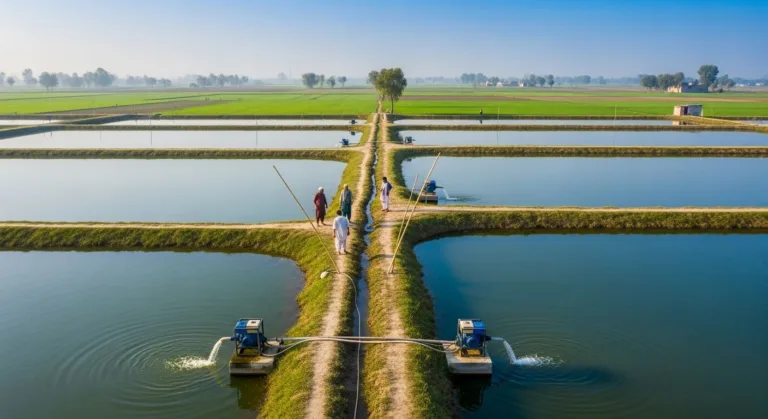
The most common type you’ll see, especially at places like Multan Farms, is big rectangular or round ponds dug right into the ground. Picture a bunch of swimming pools side by side, but instead of chlorine, they’re filled with fresh water and thousands of baby fish called fry. These ponds can be huge, sometimes as big as a soccer field! The water is usually calm, and the edges are lined with mud or concrete so the fish can’t escape.
Did you know? Some fish ponds in Pakistan are so big you could fit your whole school playground inside one.
Tanks and Raceways: Fish on a Highway
Not every fish farm uses ponds. Some use long, narrow channels called raceways that look like water highways. Fresh water rushes in one end and flows out the other, keeping everything super clean. It’s like putting fish on a gentle river treadmill! Other farms use round tanks made of plastic or concrete. These tanks spin the water slowly in a circle so waste sinks to the middle and gets sucked out, kind of like a self-cleaning fish bowl, but way bigger.
Cages in Lakes and the Sea
Out in the water, some fish farms drop giant net cages right into lakes or even the ocean. From the surface, you just see buoys floating, but underwater there’s a massive net pen full of fish. It looks like a huge underwater playground for salmon or sea bass. The fish get natural ocean water flowing through all day, so they grow strong and healthy.
What’s Happening Above the Water?
Walk around a fish farm and you’ll spot cool machines everywhere. There are aerators that look like giant lawn sprinklers splashing water to add oxygen, because fish need to breathe just like we do! You might see feeding machines that shoot fish food pellets like confetti at party time. Workers zoom around in small boats or walk on narrow paths between ponds, checking that everyone has enough food and space.
Baby Fish Nurseries Are the Cutest
Every big fish starts as a tiny egg. Fish farms have special small tanks or hatcheries that look like aquariums on steroids. Millions of eggs float in gentle water currents until they hatch into fry smaller than your pinky fingernail. It’s like a fish kindergarten where they learn to swim and eat before moving to the big ponds.
Keeping Everything Clean and Happy
Fish get sick too, so farms have to be super careful. Many use natural tricks like growing plants around the ponds that clean the water, or adding good bacteria that eat waste. Some even raise fish and plants together in the same system, the plants use the fish poop as fertilizer and clean the water in return. It’s teamwork between fish and veggies!
A Day in the Life at the Farm
Early morning: workers toss food and watch fish jump like crazy Midday: checking water temperature (fish are picky about that) Afternoon: scooping out any extra food so the water stays clean Evening: turning on lights because some fish like to eat at night too
It’s a 24/7 job making sure the fish have perfect water, perfect food, and perfect space.
So Why Should You Care About Fish Farms?
Next time you bite into fish fingers or grilled fish at a barbecue, there’s a good chance it swam in one of these farms first. Fish farms help feed millions of people without emptying the oceans. They create jobs, give us healthy protein, and can actually be kinder to the planet when done right.
What do you think, would you want to visit a fish farm one day and see all those swimming fish up close? Maybe you’ll even become the person who designs the fish farms of the future!