Have you ever bitten into a perfectly ripe mango and thought, “This is the best thing I’ve ever tasted”? You’re definitely not alone. Mangoes are one of the most loved fruits on the planet, enjoyed by billions of people across more than 100 countries. But beyond that incredible sweetness and juicy texture, there’s a whole world of fascinating history and goodness packed inside every single one.
Whether you enjoy them sliced fresh, blended into a smoothie, or turned into a tangy chutney, mangoes have a way of making everything better. This article is your complete guide to everything worth knowing about this extraordinary fruit, from its ancient roots to the nutrients hiding beneath that golden skin.
A Fruit With Ancient Roots
The mango isn’t just delicious, it’s also one of the oldest cultivated fruits in human history. Mangoes have been grown in South Asia for over 5,000 years, with origins tracing back to the forests of present-day India, Myanmar, and Bangladesh. Ancient Sanskrit texts mention mangoes as far back as 4,000 years ago, which means this fruit was making people happy long before modern civilization as we know it.
Mangoes made their way across the world through traders and explorers, eventually reaching the Middle East, Africa, and the Americas. Today, the mango is the national fruit of three countries: India, Pakistan, and the Philippines. That’s not a coincidence, those are places where mango culture runs deep, from village orchards to grand festivals celebrating the harvest season.
Why Is the Mango Called the King of Fruits?
You’ve probably heard the title before, “King of Fruits.” But what actually earns a mango that crown? The answer is a combination of flavor, aroma, history, and cultural significance. No other fruit quite matches the complex sweetness of a ripe mango, a flavor that ranges from floral and honeyed to citrusy and sharp depending on the variety.
Beyond taste, the mango stands out because of how deeply it’s woven into the culture, art, and cuisine of South Asia. In Pakistan alone, the mango season is practically a national event. Families plan their summers around it, markets overflow with dozens of varieties, and the question “Which mango is your favorite?” can start a conversation that lasts for hours.
The Incredible Variety of Mangoes Around the World
Here’s something that might surprise you: there are over 1,500 known varieties of mango in the world. Each one has its own unique flavor, texture, size, and color. Some are small and round, some are long and kidney-shaped, some turn a deep sunset red while others stay perfectly green when ripe.
Pakistan is home to some of the most celebrated mango varieties on earth. The Chaunsa is famous for its intensely sweet, almost honey-like flavor. The Anwar Ratol is small but punchy, with a concentrated sweetness that loyal fans swear has no equal. The Sindhri is large, smooth, and fiber-free, making it perfect for eating without the mess. And then there’s the Langra, the slightly tart, greenish variety that has its own devoted fanbase who insist nothing else comes close.
What’s Actually Inside a Mango?
Let’s talk about what makes mangoes more than just a treat. A single mango packs an impressive nutritional punch that your body genuinely appreciates. Here’s a quick look at what you’re getting with every serving:
- Vitamin C: Mangoes are one of the richest fruit sources of Vitamin C, which supports immune health and skin repair.
- Vitamin A: Crucial for eye health and a strong immune system.
- Folate: A B vitamin that supports cell growth and healthy development.
- Fiber: Great for digestion and keeping you feeling full longer.
- Antioxidants: Compounds like mangiferin help protect your cells from damage.
One cup of mango gives you about 100 calories and nearly 70% of your daily recommended Vitamin C intake. So the next time someone tells you that sweet things can’t be good for you, hand them a mango.
How Does a Mango Actually Grow?
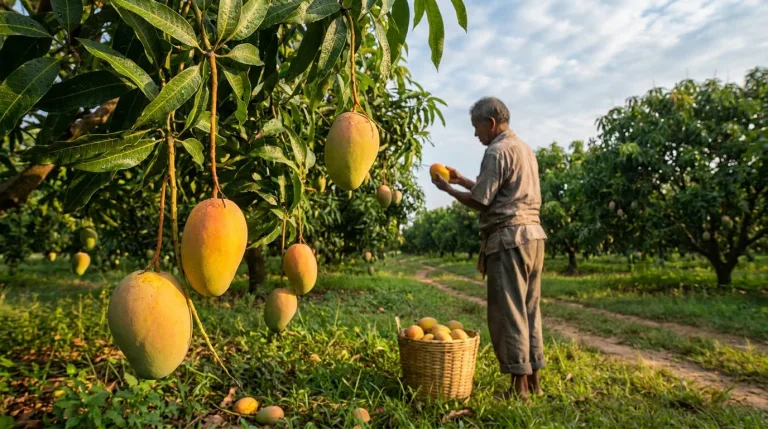
If you’ve ever seen a mango tree, you know they’re impressive, tall, leafy, and built to last. Mango trees (Mangifera indica) are tropical trees that can live for over 100 years and grow up to 40 meters tall. A well-established mango tree can produce hundreds of fruits in a single season, making mango orchards a vital part of agricultural life across South Asia.
Mangoes need a warm climate to thrive. They love heat, long dry spells before flowering, and a reliable water source. This is why regions like Multan in Pakistan are so well suited to mango cultivation. The climate there creates the exact conditions for producing fruit with exceptional sweetness and depth of flavor.
Mangoes in the Kitchen: More Than Just a Snack
Most people think of mango as a fresh, eat-it-right-now kind of fruit. And yes, nothing beats a perfectly ripe mango on a warm afternoon. But mangoes are also one of the most versatile fruits in any kitchen, showing up across a surprising range of dishes, drinks, and condiments in cultures all over the world.
In Pakistan, raw green mangoes are used to make aam ka achaar, a tangy, spiced pickle that transforms any ordinary meal into something special. Ripe mangoes are blended into aam ras, a thick, sweet pulp served alongside meals or enjoyed as a refreshing drink. Mango lassi, a blend of mango pulp and yogurt, has won fans all over the world. And then there’s mango ice cream, mango chutney, and dried mango slices. Even unripe green mangoes shine in salads and sour drinks, where their tartness creates a completely different but equally delicious experience.
Why Multan and the Mango Go Hand in Hand
Multan is more than just a city in southern Punjab, it’s one of the most important mango-producing regions in all of Pakistan. The soil, climate, and centuries of farming knowledge passed down through generations have made Multan synonymous with premium quality mangoes. When you hear someone say “Multani mango,” it carries a certain weight, a promise of quality that mango lovers across the country and beyond recognize and trust.
At Multanfarms.com, the connection to this proud agricultural heritage is at the heart of everything. The goal is simple: bring the real taste of Multan straight to your table, with the quality that only comes from people who truly care about what they grow.
The Mango Is More Than Just a Fruit
Now you know the full story of a fruit that’s been capturing hearts and imaginations for thousands of years. The mango is a cultural icon, a nutritional powerhouse, a culinary chameleon, and for millions of people in Pakistan and around the world, a symbol of summer, family, and home.
So the next time you pick up a mango, take a second to appreciate what you’re holding. There are 5,000 years of history, countless farmers’ hard work, and one of nature’s most perfect flavor combinations right there in your hands. That’s worth savoring slowly.
Curious to discover authentic Multani mangoes and other natural products straight from the heart of southern Punjab? Visit Multanfarms.com and taste the difference that real, honest farming makes.