If there’s one ingredient that holds South Asian cooking together, it might just be besan. It thickens curries, binds fritters, coats vegetables, lends body to desserts, and somehow shows up in a face mask too. But have you ever stopped to wonder what besan actually is, what it’s made of, and what’s really going on inside that golden, nutty flour?
The answer is simpler than you’d expect, and a lot more impressive. Besan isn’t a complex blend of additives or a processed product with a long ingredient list on the label. It’s one of the most natural, wholesome ingredients in any South Asian kitchen, and understanding what goes into it changes the way you see every dish that calls for it.
The One Ingredient Behind All of Besan’s Power
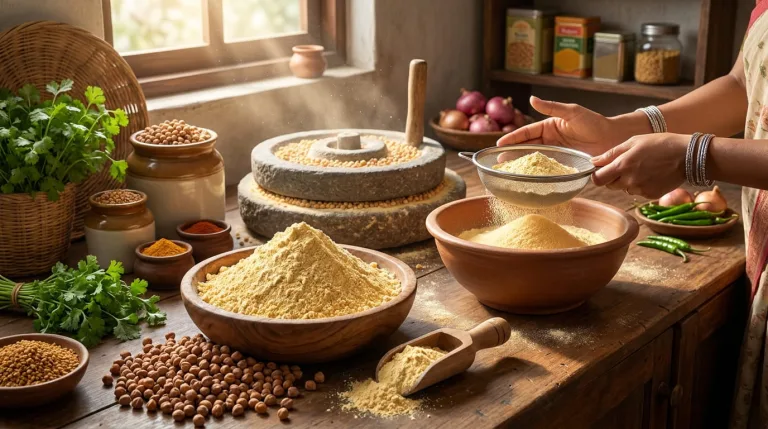
Here’s the thing about besan: it has exactly one raw ingredient. Besan is made entirely from ground chickpeas, specifically from a variety called chana dal, the split and husked form of desi chickpeas (Cicer arietinum var. desi). These are not the large, pale chickpeas you’d find in a tin of hummus. Desi chickpeas are smaller, darker, and denser, with a more pronounced nutty flavor and a nutritional profile that’s genuinely superior to most other legumes.
The desi chickpea is split to remove its outer husk, dried, and then ground into a fine, smooth flour. That’s it. No additives, no preservatives, no processing shortcuts. The quality of besan depends entirely on the quality of the chana dal used to make it, which is why sourcing good raw material matters so much.
What the Nutritional Ingredients in Besan Actually Do
Because besan comes from a legume rather than a grain, its nutritional make-up is quite different from wheat flour or rice flour. Here’s a breakdown of the key ingredients you’re getting in every serving:
- Protein: Besan contains roughly 22 grams of protein per 100 grams, making it one of the highest-protein flours available. For a plant-based ingredient, that’s remarkable.
- Complex carbohydrates: Unlike refined wheat flour, besan’s carbohydrates digest slowly, releasing energy gradually rather than causing a quick sugar spike.
- Dietary fiber: Both soluble and insoluble fiber are present in generous amounts, supporting digestion and helping you feel full longer.
- Iron: Besan is a solid plant-based source of iron, which the body needs to produce red blood cells and maintain energy levels.
- Folate: Also called Vitamin B9, folate supports cell growth, healthy DNA formation, and plays an important role during development.
- Potassium: Important for heart health and maintaining healthy blood pressure.
- Magnesium: Supports muscle function and energy metabolism.
- Manganese: A trace mineral that plays a role in bone development and antioxidant function.
This combination of ingredients explains why besan has been a dietary staple across South Asia for centuries. It’s not just a cooking convenience, it’s a genuinely nourishing food.
How Besan’s Natural Composition Shapes the Way It Cooks
Knowing what besan is made of also explains why it behaves the way it does in the kitchen. The high protein content is what makes besan such an effective binder. When you mix it with water, the proteins hydrate and link together, creating a sticky, cohesive batter that holds ingredients together without needing eggs. This is why besan is the backbone of pakoras, onion bhajis, and countless fritters across South Asian cooking.
The natural starch content in besan makes it an excellent thickener. When stirred into a hot liquid, those starch granules absorb water and swell, giving dishes like kadhi their thick, velvety body. Besan also has a low glycemic index compared to most flours, meaning it doesn’t cause blood sugar levels to rise as sharply after eating. This is a direct result of its fiber and protein content slowing the rate of digestion.
Because it comes from a legume rather than a grain, besan contains no gluten at all. That makes it a genuinely useful option for people with gluten sensitivity and for anyone looking to diversify the flours in their cooking.
Besan in the Kitchen: Where Those Ingredients Come to Life
The functional ingredients in besan show up beautifully across the full range of dishes it appears in. In savory cooking, the protein and starch work together in classics like besan ki roti, pakoras, and chilla, a thin, crepe-like flatbread that comes together with nothing more than besan, water, and spices. Kadhi, the tangy yogurt-based curry thickened with besan, is one of the most iconic showcases of its natural thickening ability.
In sweet dishes, the behavior of besan changes completely. When you cook besan in ghee to make besan ka halwa or laddoo, the proteins and natural sugars in the flour undergo a reaction that transforms the raw, slightly bitter taste into something warm, toasted, and deeply nutty. That flavor shift is not magic, it’s simply the chemistry of besan’s natural ingredients responding to heat and fat.
Even outside the kitchen, besan’s ingredients have practical value. Mixed with a little milk or yogurt, besan has been used for generations as a natural face scrub and skin brightener. The flour gently exfoliates, while its protein content leaves skin feeling smooth. Same ingredient, completely different application.
Why the Source of Your Besan Matters
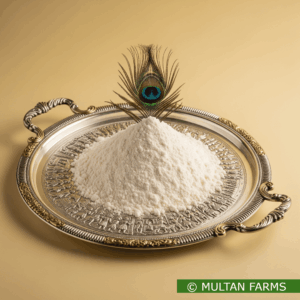
Not all besan is the same. The quality of the chana dal, how it’s cleaned, how finely it’s milled, and how it’s stored all affect the final product. Freshly milled besan has a vivid golden color, a pronounced nutty aroma, and a smooth texture. Older or lower-quality besan can smell flat, look pale, and perform poorly in the kitchen.
At Multanfarms.com, besan is made from carefully sourced, sun-dried chana dal rooted in the fertile agricultural land of southern Punjab. That commitment to raw ingredient quality is what makes the difference between flour that merely works and flour that genuinely delivers.
One Ingredient, Endless Possibilities
Besan is proof that the simplest ingredients are often the most remarkable. One humble legume, split and ground, delivers protein, fiber, complex carbohydrates, and a suite of essential minerals in every handful. It thickens, binds, fries, sweetens, and even takes care of your skin.
The next time you reach for besan, you’re not just grabbing a flour. You’re working with centuries of agricultural wisdom and one of the most nutritionally complete ingredients in your pantry.
Discover authentic, freshly milled besan and other natural products from the farms of southern Punjab at Multanfarms.com.