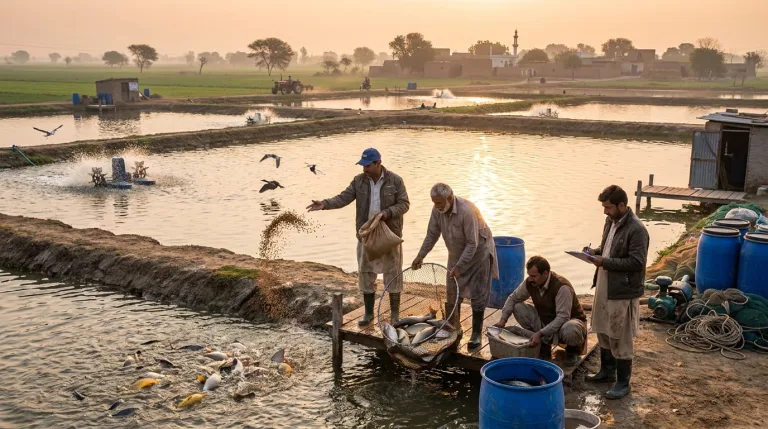
Picture a piece of farmland that grows fish instead of wheat or cotton. It sounds unusual, but this is exactly what’s happening on thousands of acres across Punjab and Sindh right now. Fisheries farming, also called aquaculture, is the practice of raising fish and other aquatic animals in controlled ponds or tanks rather than catching them from rivers, lakes, or the sea.
For a country like Pakistan, where rivers and canals crisscross the land, this shift makes a lot of sense. Farmers who once relied only on crops are now adding fish ponds to their land, and entire new farming communities have grown around this practice. In this article, we’ll walk through how fisheries farming actually works, why it’s spreading so quickly, and what it means for the food on your plate.
How Does Fisheries Farming Actually Work?
At its core, fisheries farming starts with a pond. Farmers dig earthen ponds, fill them with water from canals or tube wells, and stock them with young fish called fingerlings. These fingerlings are usually bought from hatcheries that specialize in breeding healthy fish stock in large numbers.
Once the fish are in the pond, the farmer’s job is to manage water quality, feed the fish regularly, and protect them from disease. Common species raised in Pakistani fisheries include rohu, catla, mori, and grass carp, all of which grow well in the warm freshwater conditions found across Punjab. Within eight months to a year, depending on the species and feeding schedule, the fish reach market size and are ready for harvest.
Why Are Farmers Switching to Fish Ponds?
Traditional crop farming depends heavily on weather, soil quality, and market prices that can swing unpredictably. Fisheries farming offers a different kind of stability, since fish grow in a controlled environment that the farmer can monitor closely. A one acre pond can produce a steady, predictable harvest that often brings better returns than the same acre planted with wheat or rice.
There’s also a practical land advantage at play. Low lying or waterlogged land that struggles to support regular crops is often perfectly suited for digging ponds. Instead of fighting against poor drainage, farmers turn that weakness into their biggest asset.
The Business Side of Raising Fish
Running a fish farm isn’t just about digging a hole and waiting. Successful farmers track feed conversion ratios, meaning how much feed it takes to produce a kilogram of fish, since feed is usually the largest ongoing cost. They also monitor oxygen levels in the water, because fish, like every living creature, need enough oxygen to survive and grow.
Many fish farms in Punjab now use aeration systems, essentially machines that pump air into the water to keep oxygen levels high, especially during hot summer months when oxygen naturally drops. This kind of investment might seem small, but it can mean the difference between a healthy harvest and a devastating loss. Buyers, including wholesalers who supply fish markets in cities like Multan and Lahore, often pay premium prices for fish raised under these more careful conditions.
Fisheries Farming and the Local Economy
Beyond the farm gate, fisheries farming supports an entire chain of jobs. Hatchery workers breed and sell fingerlings, feed mills produce specialized fish feed, and transporters move live or fresh fish to markets across the country. Local labor is needed for pond construction, harvesting, and daily maintenance, which brings steady income to rural households.
This ripple effect matters a great deal in regions like Multan, where agriculture already forms the backbone of the local economy. As demand for protein rich foods grows alongside Pakistan’s population, fish farming offers a way to meet that demand without putting more pressure on already stretched grazing land or crop fields.
Challenges Fish Farmers Still Face
Fisheries farming isn’t without its difficulties. Diseases can spread quickly through a pond if water quality isn’t managed properly, and a single bad outbreak can wipe out months of investment. Rising feed costs also squeeze profit margins, particularly for smaller farmers who can’t buy feed in bulk at discounted rates.
Water availability is another concern, especially in areas where canal water is shared between fish ponds and traditional crop irrigation. Farmers who succeed long term are usually the ones who treat fish farming as a skilled trade, constantly learning about water chemistry, disease prevention, and efficient feeding practices rather than treating it as a side project.
Why This Matters for Everyday Consumers
Every time fisheries farming expands, it generally means more affordable, fresher fish reaching local markets. Farmed fish also offer a more predictable supply than wild caught fish, which depend on seasonal rivers and unpredictable weather. That predictability helps keep prices more stable throughout the year, which benefits households across income levels.
There’s also a sustainability angle worth understanding. Wild fish populations in many rivers face pressure from overfishing and pollution, so farmed fish take some of that strain off natural ecosystems. Choosing responsibly farmed fish, in that sense, is a small but meaningful way consumers support both food security and environmental balance.
Fisheries farming has quietly become one of Pakistan’s most promising agricultural sectors, turning ordinary ponds into productive, income generating assets for farmers across the country. Whether you’re a farmer weighing your next investment or simply someone curious about where your food comes from, understanding aquaculture gives you a clearer picture of how modern agriculture is evolving. Want to learn more about sustainable farming practices rooted in Multan’s agricultural heritage? Visit Multanfarms.com to explore more.