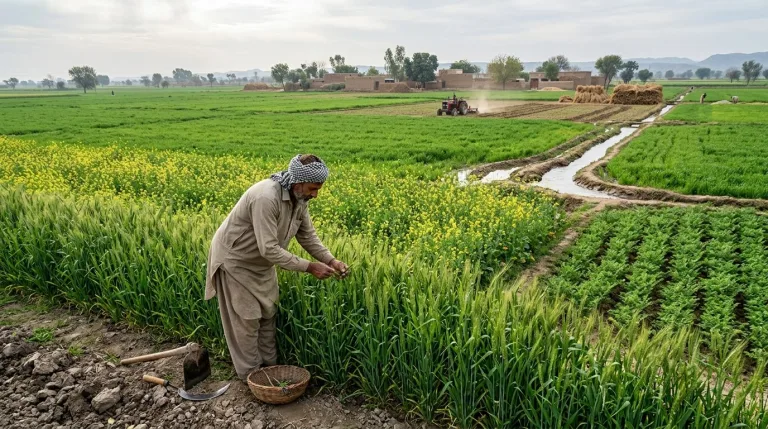
Walk through the fields of Punjab in November and you’ll see something remarkable: millions of acres of freshly sown wheat stretching to the horizon, green shoots just beginning to push through the soil. This is the start of Pakistan’s rabi season, one of the two major agricultural cycles that feed this country of 240 million people. If you’ve ever wondered where the atta in your roti comes from, the answer starts here.
Pakistan runs on two farming seasons, each tied to rainfall patterns and temperature cycles that have shaped agriculture across South Asia for centuries. Rabi is the cooler of the two, sown in autumn and harvested in spring, and it produces the staple crops that fill Pakistani kitchens year-round. Understanding rabi season means understanding a huge part of how this country eats, earns, and sustains itself.
What Is Rabi Season, and How Is It Different from Kharif?
The agricultural year in Pakistan is divided into two seasons: kharif and rabi. Kharif, which means “autumn” in Arabic, covers the summer growing period from June to November, and crops like rice, cotton, sugarcane, and maize fall under it. These crops depend on monsoon rains for much of their water, which is what makes the summer season so weather-sensitive.
Rabi, which means “spring” in Arabic, is the winter growing season. Sowing starts in October or November, and harvesting happens between March and May. Unlike kharif crops that need heat and heavy rain, rabi crops grow during cool, dry months and rely much more heavily on irrigation. This makes rabi farming in Pakistan especially dependent on canal systems, tube wells, and careful water management across the country.
The Major Rabi Crops You Should Know About
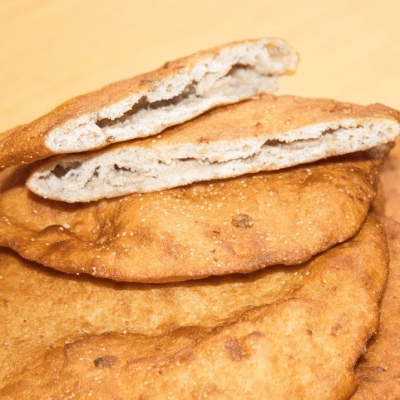
When people talk about rabi season in Pakistan, one crop dominates the conversation above all others: wheat. Pakistan is consistently ranked among the world’s top wheat producers, and nearly all of that wheat is a rabi crop. The wheat sown in November and December becomes the flour that goes into roti, paratha, naan, and bread across the country from March onward.
But wheat isn’t the only story. Other important rabi crops include:
- Barley, grown as animal feed and for use in malt production
- Gram (chickpeas), especially in drier areas like Thal and Balochistan, where it grows on stored rainwater
- Mustard and rapeseed, which produce cooking oil and are widely cultivated across Punjab and Sindh
- Lentils (masoor), an affordable and essential protein source for millions of households
- Oilseed crops like sunflower and canola, which have seen growing adoption in recent planting cycles
Together, these crops form the nutritional and economic backbone of Pakistan’s winter farming output.
Why Punjab Is the Heart of Rabi Farming
When it comes to rabi agriculture in Pakistan, no province contributes more than Punjab. Punjab produces over 75% of Pakistan’s total wheat crop, with the districts of Faisalabad, Multan, Sahiwal, Bahawalpur, and Sargodha consistently leading in production volume. The fertile soil of the Indus plains, combined with an extensive canal irrigation network built over more than a century, makes Punjab uniquely suited for large-scale rabi farming.
South Punjab, including the areas around Multan, plays a particularly significant role. The region’s flat land, long sunshine hours in spring, and reliable access to canal water from the Indus system make it ideal for wheat and mustard cultivation. Farmers here often rotate between cotton in kharif and wheat in rabi, a practice that keeps soil productive and income relatively stable across the full year.
The Farming Calendar: What Happens and When
Understanding rabi season means following the calendar that guides every farmer’s decisions from October to May. Here’s how it typically unfolds:
- October to November: Land preparation begins after kharif harvesting. Farmers plough fields, add fertilizers, and prepare seedbeds. Wheat sowing starts in late October and runs through November.
- December to February: Crops are in the vegetative and tillering stage. This is a critical period for irrigation scheduling, pest monitoring, and applying nitrogen fertilizers at the right moment.
- March: Wheat heads form and begin to fill. Temperatures start rising, which puts pressure on the grain-filling window, and heat stress becomes a real concern for farmers.
- April to May: Harvesting begins across Punjab and Sindh. Combine harvesters move through fields in one of the most active agricultural events of the Pakistani year, and gram and lentil harvests also wrap up during this period.
Challenges Farmers Face During Rabi Season
Rabi farming in Pakistan is not without its difficulties, and farmers face a range of pressures every single season. Water availability is a persistent challenge, especially in areas dependent on canal irrigation rather than tube wells. When canal systems face shortages or maintenance shutdowns during winter months, farmers in tail-end areas can lose a significant portion of their crop before it ever reaches harvest.
Temperature extremes create serious problems too. Unexpected frost in January or February can damage wheat at a vulnerable growth stage, while a sudden heat wave in March can cut short the grain-filling period and reduce yields sharply. In recent years, erratic weather patterns have made these risks harder to predict and manage. Input costs, including seeds, fertilizers, pesticides, and diesel for tube wells, have also risen steeply, squeezing profit margins for small and medium farmers across Pakistan.
Why Rabi Season Matters to Every Pakistani
Whether you live on a farm in Multan or in a flat in Karachi, rabi season affects your life more directly than you might think. The price of wheat flour, lentils, and cooking oil in your kitchen is shaped by what happened in Pakistan’s fields between October and May. A strong rabi season means stable food prices and better income for millions of farming families. A poor one, caused by drought, frost, or pest outbreaks, pushes food prices up and adds real pressure to household budgets across the country.
Pakistan’s agriculture sector employs roughly 37% of the country’s workforce and contributes around 19% of GDP, and rabi crops sit right at the center of that contribution. When rabi performs well, the ripple effects reach far beyond the farm gate. The next time you tear a piece of roti at the dinner table, it’s worth remembering the months of careful work that went into growing the grain that made it possible.
For more insights into Pakistani farming seasons, crops, and agricultural practices rooted in real field experience, Multanfarms.com brings you grounded knowledge from the heart of South Punjab’s farming country.