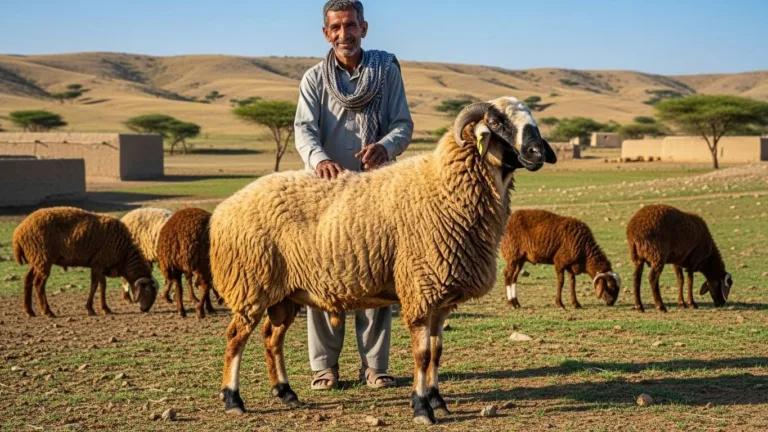
Picture this: you’re walking through the rugged, sun-baked hills of Balochistan, Pakistan’s largest province, when you spot a flock of sheep grazing peacefully on sparse vegetation. These aren’t your typical fluffy white sheep from storybooks. These are Balochi sheep, tough survivors that have adapted to one of the harshest environments on Earth. They’re like the superheroes of the sheep world, thriving where most other breeds would struggle to survive.
If you’ve ever wondered what makes certain animals perfectly suited to their environment, Balochi sheep are a fascinating example. These remarkable animals have been raised by herders in Pakistan for centuries, and they’ve become incredibly important to the region’s economy and culture. At Multanfarms.com, we understand how valuable these hardy animals are to Pakistan’s agricultural heritage. Let’s explore what makes Balochi sheep so unique and why farmers across the region depend on them.
Where Do Balochi Sheep Come From?
Balochi sheep are native to Balochistan, a province in southwestern Pakistan that’s known for its extreme weather and challenging landscape. Imagine living in a place where summer temperatures can soar above 110°F (43°C), but winter nights can drop below freezing. That’s the kind of tough environment these sheep call home!
The province of Balochistan is mostly made up of rocky mountains, dry plateaus, and desert areas where rainfall is scarce. You might think nothing could survive there, but Balochi sheep have evolved over hundreds of years to handle these difficult conditions. They’re found throughout Balochistan and also in neighboring areas of Sindh and Punjab provinces.
What’s really cool is that these sheep weren’t created in a lab or through modern breeding programs. They developed naturally over time as herders selected the strongest, most adaptable animals for breeding. It’s like natural selection working alongside human choices to create the perfect sheep for this environment.
What Do Balochi Sheep Look Like?
If you saw a Balochi sheep, you’d notice right away that they look different from sheep you might see in pictures or on TV. First off, they’re pretty big! Male Balochi sheep (called rams) can weigh between 110 to 130 pounds (50 to 60 kilograms), while females (called ewes) usually weigh around 75 to 90 pounds (35 to 40 kilograms). That’s about as heavy as a large dog!
Their most striking feature is their color. Most Balochi sheep have beautiful brown or tan coats, though you’ll also see some with black, white, or mixed coloring. Their wool isn’t super thick and fluffy like you might expect. Instead, it’s coarser and shorter, which actually helps them stay cool in the scorching heat. Think of it like wearing a light jacket instead of a heavy winter coat when you’re in warm weather.
Another distinctive feature is their ears, which are medium-sized and droop down slightly. Both males and females can have horns, though the rams’ horns are usually more impressive, curving backward in a spiral pattern. These sheep also have long legs and strong bodies, perfect for walking long distances across rocky terrain in search of food and water.
Why Are Balochi Sheep So Tough?
Here’s where things get really interesting. Balochi sheep are famous for being incredibly resilient, which means they can handle hardships that would be too much for other sheep breeds. But what makes them so tough?
Heat Tolerance: Remember how we talked about those extreme summer temperatures? Balochi sheep can graze comfortably in heat that would exhaust other animals. Their body design and lighter coat help them regulate their temperature naturally. It’s like they have built-in air conditioning!
Water Efficiency: In areas where water is scarce, Balochi sheep have learned to survive on very little. They can go longer between drinks than many other sheep breeds, getting some of their moisture from the plants they eat. This is crucial in desert environments where finding water sources can be a daily challenge.
Dietary Flexibility: These sheep aren’t picky eaters, and that’s a huge advantage. While other sheep might need lush green pastures, Balochi sheep can survive on thorny bushes, dry grasses, and scrub vegetation that most animals would ignore. They’re like the ultimate food recyclers, making use of plants that would otherwise go to waste.
What Products Do Balochi Sheep Provide?
You might be wondering why farmers invest so much time and effort in raising Balochi sheep. The answer is simple: these animals provide multiple valuable products that support families and local economies.
Meat Production: This is the primary reason most farmers raise Balochi sheep. Their meat, called mutton when it comes from adult sheep or lamb when it’s from younger animals, is considered high quality and delicious. The meat is an important source of protein for families throughout Pakistan and is especially popular during religious festivals and celebrations.
Wool: While Balochi sheep don’t produce as much wool as some other breeds, their coarse wool is still useful. Local craftspeople use it to make carpets, rugs, and traditional blankets. The wool’s toughness makes these products extremely durable. Each sheep produces about 2 to 3 pounds (1 to 1.5 kilograms) of wool per year when sheared.
Milk: Though Balochi sheep aren’t primarily dairy animals, ewes do produce milk that some families use for making traditional dairy products. It’s not as common as cow or buffalo milk in Pakistan, but it’s still valued in rural communities.
Income Generation: Perhaps most importantly, Balochi sheep represent a form of savings and income security for families. Farmers can sell sheep when they need money for emergencies, education, or other expenses. They’re like a living bank account!
How Do Farmers Care for Balochi Sheep?
Raising Balochi sheep requires knowledge, dedication, and hard work. In Balochistan and other regions, shepherds typically use a semi-nomadic or extensive grazing system. This means the sheep spend most of their time outdoors, roaming across open rangelands in search of food.
During the day, shepherds guide their flocks to areas with vegetation and water. You’ll often see a shepherd walking with dozens or even hundreds of sheep, using calls and sometimes dogs to keep the flock together. It’s a lifestyle that hasn’t changed much in centuries, and it requires incredible patience and understanding of animal behavior.
At night, the sheep are usually brought to a protected area or pen to keep them safe from predators like wolves or wild dogs. Basic shelter might be provided during extreme weather, but these hardy animals can tolerate much rougher conditions than most livestock.
Veterinary care is becoming more common, with farmers vaccinating their sheep against common diseases and treating them for parasites. However, one advantage of Balochi sheep is that they’re naturally resistant to many diseases that affect other breeds, probably because they’ve adapted to their environment over so many generations.
Why Do Balochi Sheep Matter to Pakistan’s Future?
You might think, “Okay, these are cool sheep, but why should I care?” Here’s why Balochi sheep are more important than you might realize.
For thousands of families in Pakistan’s rural areas, these sheep are their primary source of income and food security. In regions where farming crops is nearly impossible due to lack of water and poor soil, raising Balochi sheep is often the only viable way to make a living. The sheep convert plants that humans can’t eat into valuable meat and wool.
Balochi sheep also represent an important genetic resource. As climate change makes many parts of the world hotter and drier, scientists are increasingly interested in animals that can thrive in harsh conditions. The traits that make Balochi sheep so resilient could potentially be used to improve other sheep breeds or help us understand how animals adapt to challenging environments.
Additionally, these sheep play a cultural role in their home regions. Traditional festivals, weddings, and religious celebrations often feature Balochi sheep, and the skills of shepherding are passed down from generation to generation. It’s not just about raising animals; it’s about preserving a way of life and cultural identity.
The Challenges Facing Balochi Sheep Today
Despite their toughness, Balochi sheep and the people who raise them face several challenges. Droughts are becoming more frequent and severe due to climate change, making it even harder to find grazing land and water. Overgrazing in some areas has degraded the land, reducing the vegetation available for sheep to eat.
There’s also competition from other, more “productive” sheep breeds that grow faster or produce more wool. Some farmers are tempted to switch to these breeds, which could lead to a decline in pure Balochi sheep populations. However, experts at organizations like Multanfarms.com emphasize that preserving these native breeds is crucial for maintaining genetic diversity and ensuring that Pakistan’s livestock sector can adapt to future challenges.
Limited access to veterinary services and modern farming techniques also affects many Balochi sheep herders, particularly in remote areas. Education and support programs are helping, but there’s still much work to be done to ensure these traditional shepherds have the resources they need to succeed.
Looking Ahead: The Future of Balochi Sheep
The story of Balochi sheep is far from over. In fact, there’s growing recognition of their value both in Pakistan and internationally. Researchers are studying these animals to understand exactly how they’ve adapted to their harsh environment, which could provide insights applicable to livestock farming in other dry regions around the world.
Organizations and farms like Multanfarms.com are working to promote awareness of Balochi sheep and support the herders who raise them. By connecting traditional knowledge with modern farming practices, there’s hope that these remarkable animals will continue to thrive for generations to come.
Whether you live in Pakistan or halfway around the world, the story of Balochi sheep teaches us important lessons about adaptation, resilience, and the relationship between people and animals. These sheep aren’t just livestock; they’re survivors, cultural icons, and potential keys to understanding how we can farm sustainably in an increasingly challenging climate.
So the next time you think about sheep, don’t just picture fluffy white animals in green pastures. Remember the tough, adaptable Balochi sheep, grazing on mountainsides under the blazing sun, proving that with the right adaptations, life can thrive even in the most unlikely places. What other animals in your region have adapted in amazing ways to their environment?