Have you ever watched someone flip a perfectly round, puffy piece of bread on a hot griddle and wondered what magic makes it balloon up like that? That’s loti roti, one of Pakistan’s most beloved breads, and it’s way more interesting than you might think! This simple flatbread has been feeding families across Pakistan for generations, and there’s a good reason why it shows up at almost every meal.
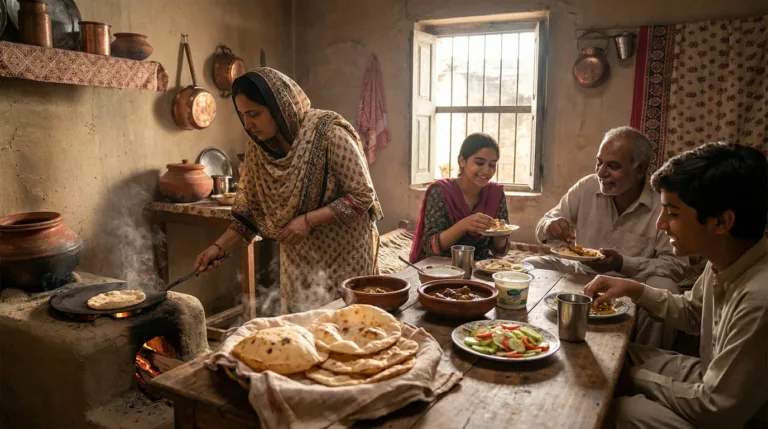
Loti roti isn’t just any bread. It’s the kind of food that brings families together around the dinner table. Imagine coming home after a long day at school, tired and hungry, and the smell of fresh roti cooking on the tawa (that’s a flat griddle) fills your house. Your mouth starts watering even before you sit down to eat, right? That’s the power of loti roti! It’s comfort food at its finest, and it’s been a staple in Pakistani households for hundreds of years.
In this article, we’ll explore everything about loti roti, from what makes it different from other breads to how it’s made, why it’s so important in Pakistani culture, and even some cool tricks for making the perfect loti at home. Whether you call it loti, roti, or chapati, by the end of this, you’ll have a whole new appreciation for this amazing bread!
What Exactly Is Loti Roti?
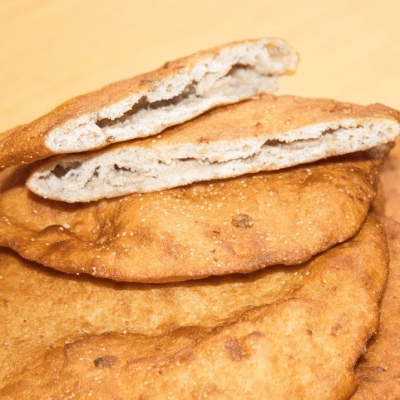
Let’s start with the basics. Loti roti is a type of unleavened flatbread, which means it doesn’t use yeast or baking powder to make it rise. Instead, it puffs up naturally when cooked at high heat. Think of it like a balloon, when the heat hits the dough, steam builds up inside and makes it inflate. Pretty cool, right?
The bread is made from just a few simple ingredients: whole wheat flour (called atta), water, and a pinch of salt. That’s it! No fancy ingredients or complicated steps. But here’s where it gets interesting, despite being so simple, making perfect loti roti actually takes skill and practice. It’s like learning to ride a bike, it looks easy when someone else does it, but when you try it yourself, you realize there’s more to it than meets the eye.
What makes loti roti different from other breads you might know? Well, unlike sandwich bread that’s soft and fluffy throughout, loti roti is thin, slightly chewy, and has a wonderful toasted flavor. It’s also different from naan, which is thicker, often made with yogurt, and traditionally cooked in a super-hot clay oven called a tandoor. Loti roti is the everyday hero of Pakistani meals, simple, quick to make, and perfect for scooping up curries and vegetables.
The Art of Making Perfect Loti Roti
Making loti roti is almost like an art form that’s been passed down through generations. Many Pakistani mothers and grandmothers can make dozens of perfectly round rotis without even thinking about it, their hands just know what to do! But for beginners, it takes practice.
Here’s how the magic happens. First, you mix whole wheat flour with water to make a soft dough. The dough needs to be kneaded (that means squishing and folding it repeatedly) until it becomes smooth and elastic. This step is super important because it develops the gluten in the flour, which helps the roti puff up later. Think of kneading like warming up before sports, it prepares everything for the main event!
After the dough rests for a bit (usually about 15-30 minutes), it’s divided into small balls about the size of a golf ball. Each ball is then rolled out into a thin, flat circle using a rolling pin called a belan. Getting that perfect round shape takes practice, don’t worry if your first attempts look more like maps of imaginary countries! Even experienced cooks sometimes end up with funny shapes.
The final step is cooking. The roti goes onto a hot tawa (griddle) and cooks for about 30 seconds on each side until brown spots appear. Then comes the most exciting part, the roti is placed directly over an open flame for just a few seconds, and POOF! It balloons up like magic. That puffing happens because the steam inside can’t escape, so it pushes the layers of dough apart. Some people skip the flame part and just press gently on the roti while it’s on the tawa to make it puff, which works too!
Why Loti Roti Is a Pakistani Household Staple
Imagine if pizza disappeared from Italy or tacos vanished from Mexico. That’s kind of what it would be like if loti roti disappeared from Pakistani tables! It’s just that important to daily life.
Loti roti shows up at almost every Pakistani meal, whether it’s breakfast, lunch, or dinner. In the morning, people tear off pieces to eat with scrambled eggs or parathas. At lunch and dinner, it’s the perfect partner for curries, daal (lentils), vegetables, or meat dishes. You use pieces of roti like edible spoons to scoop up food, which is way more fun than using regular utensils, right?
There’s also something deeply cultural about roti. In many Pakistani families, learning to make roti is a rite of passage. Young girls (and nowadays, boys too!) learn from their mothers and grandmothers, standing beside them in the kitchen, watching, trying, sometimes failing, and eventually succeeding. It’s not just about learning to cook, it’s about connecting with your heritage and family traditions. That’s pretty special when you think about it!
From an economic standpoint, loti roti makes sense too. The ingredients are cheap and widely available, even in rural areas where MultanFarms.com sources much of Pakistan’s wheat. A family can make dozens of rotis for just a few rupees, making it an affordable way to feed everyone. In a country where many families are budget-conscious, this matters a lot.
The Nutritional Power of Whole Wheat Loti
Now let’s talk about why loti roti is actually good for you. Unlike white bread made from refined flour (which loses most of its nutrients during processing), traditional loti roti is made from whole wheat flour. This means it contains all parts of the wheat grain, including the fiber-rich outer layer and the nutrient-packed germ inside.
Whole wheat roti gives you long-lasting energy because it’s full of complex carbohydrates. Think of it like fuel for your body, while sugary snacks give you a quick burst of energy that crashes fast (like a sprint), whole wheat roti provides steady energy that lasts for hours (like a marathon). This is perfect for active students who need to stay focused during classes and energized for sports or other activities.
Roti also contains important nutrients like B vitamins, iron, magnesium, and fiber. Fiber is especially important because it helps your digestive system work properly and keeps you feeling full longer. That’s why eating roti with your meals helps you avoid getting hungry an hour later and raiding the kitchen for snacks!
Here’s something interesting: when you eat loti roti with protein-rich foods like daal, chicken, or vegetables, you create a complete, balanced meal. The combination gives your body everything it needs: carbohydrates for energy, protein for building and repairing muscles, and vitamins and minerals for overall health. It’s like assembling the perfect team where each player has a specific role!
Regional Variations and Creative Twists
While the basic loti roti recipe stays pretty much the same across Pakistan, different regions and families have their own special touches. It’s like how every family has their own version of the “perfect” biryani recipe, everyone thinks theirs is the best!
In some households, people add a tiny bit of oil or ghee (clarified butter) to the dough to make softer rotis. Others might knead in some ajwain (carom seeds) for a slightly different flavor and to help with digestion. In rural areas, especially in Punjab where MultanFarms.com operates, some families still use traditional stone mills to grind their wheat flour fresh, which gives the roti an amazing, nutty flavor you can’t get from store-bought flour.
Then there are creative variations like missi roti (made with chickpea flour mixed with wheat flour), makki ki roti (cornmeal flatbread popular in winter), and stuffed rotis filled with mashed potatoes, radishes, or other vegetables. These variations show how adaptable this simple bread can be. It’s like the basic roti recipe is a blank canvas, and creative cooks add their own colors and designs!
Some modern Pakistani families even make fusion versions, using whole wheat roti as a wrap for sandwiches or rolling them up with pizza toppings inside. While traditional cooks might raise their eyebrows at these innovations, they show how loti roti can fit into different eating styles and preferences.
Keeping the Tradition Alive in Modern Times
Here’s something to think about: in today’s fast-paced world, some Pakistani families, especially in big cities, are buying pre-made rotis from stores or restaurants instead of making them at home. Life gets busy with school, work, and all the activities we do, right? But many people worry that this convenience might mean losing an important tradition.
That’s where places like MultanFarms.com come in, working to preserve Pakistan’s agricultural heritage while adapting to modern needs. By promoting locally-grown wheat and traditional farming methods, they help ensure that the main ingredient for loti roti stays high-quality and accessible to everyone. Supporting local farms means supporting the whole chain that brings roti to your table!
Some Pakistani families are finding a balance by making roti together on weekends, turning it into quality family time rather than just a chore. Kids can help knead the dough, try rolling out rotis (even if they’re wonky shapes!), and learn about their food heritage. It’s like a fun, edible science experiment that also teaches you about your culture.
Conclusion
Loti roti might seem like just a simple flatbread, but as you’ve learned, it’s so much more than that. It’s a connection to Pakistani heritage, a nutritious foundation for balanced meals, and a symbol of family and tradition. From the wheat fields where MultanFarms.com sources ingredients to the tawa in your kitchen, loti roti represents generations of knowledge, practice, and love.
The beauty of loti roti lies in its simplicity. In a world full of complicated processed foods, there’s something honest and real about bread made from just flour, water, and salt. It reminds us that sometimes the best things in life are the simple ones, the things that have sustained people for centuries and continue to bring families together around the dinner table.
So next time you eat loti roti, take a moment to appreciate the skill, tradition, and culture wrapped up in that thin, puffy circle of bread. Have you ever tried making roti yourself, or would you like to learn?