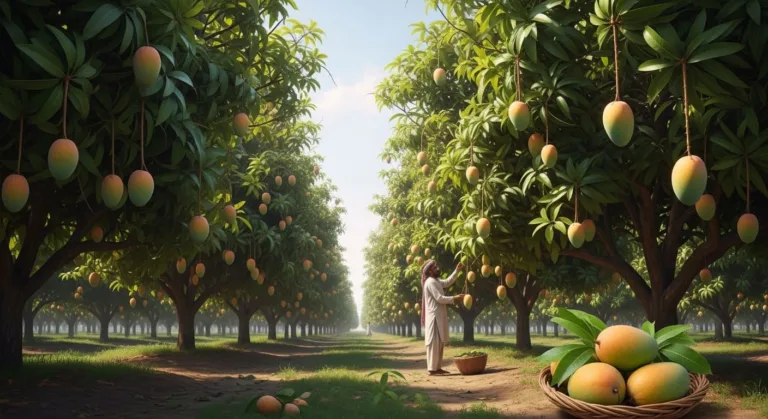
Imagine biting into the juiciest, sweetest mango you’ve ever tasted. The golden flesh practically melts in your mouth, and the tropical flavor is so intense that it feels like summer exploded on your taste buds. Now, what if I told you that Pakistan is home to some of the world’s most incredible mango farms, producing varieties of mangoes that people across the globe dream about eating? It’s true!
Pakistan isn’t just any mango-growing country, it’s a mango superpower! Every year, Pakistani farms grow millions of tons of mangoes in varieties with names like Sindhri, Chaunsa, Anwar Ratol, and the famous Alphonso. These farms, including ones like Multanfarms.com, are where the magic happens, transforming tiny seeds into gorgeous fruit that ends up on dinner tables from Karachi to London to New York.
But what actually goes on at a mango farm in Pakistan? How do farmers grow these amazing fruits in our climate? And why are Pakistani mangoes considered some of the best in the world? Let’s take a deep dive into the fascinating world of mango farming and discover what makes these orchards so special. Trust me, you’ll never look at a mango the same way again!
Pakistan’s Mango Belt: Where the Magic Happens
First things first, let’s talk geography. You can’t just plant mango trees anywhere and expect them to thrive. Mangoes are pretty picky about where they grow! They need specific conditions: hot summers, mild winters, and just the right amount of rainfall. Luckily, Pakistan has the perfect climate zones for mango cultivation.
The majority of Pakistan’s mango farms are located in Punjab and Sindh provinces. Cities like Multan (often called the “City of Saints and Mangoes”), Rahim Yar Khan, Mirpurkhas, and the areas around Hyderabad are absolutely packed with mango orchards. If you’ve ever driven through these regions during mango season, you know what I’m talking about. Endless rows of lush green trees stretch as far as the eye can see!
Think of these regions like the “Goldilocks zone” for mangoes, not too hot, not too cold, but just right. The soil in these areas is rich and well-draining, which mango trees absolutely love. Plus, the Indus River and its tributaries provide essential irrigation water during the dry months. It’s like nature designed these areas specifically for growing the perfect mango!
From Tiny Seed to Towering Tree: The Mango Growing Process
So how does a mango farm actually work? It all starts with selecting the right variety and planting young trees, which are usually grown from grafting. Grafting is a cool technique where farmers take a cutting from a high-quality mango tree and attach it to a hardy rootstock. This ensures that the new tree will produce the exact same type of mango as its parent tree, kind of like cloning!
Once planted, mango trees need patience. A newly planted tree won’t produce fruit for at least three to five years! That’s right, farmers have to wait years before they see their first harvest. But once a tree starts producing, it can keep giving delicious mangoes for 40 years or even longer. Imagine planting a tree when you’re in middle school and it’s still producing fruit when you’re a grandparent!
During the growing season, farmers at places like Multanfarms.com carefully tend to their orchards. They prune the trees to keep them healthy, apply organic fertilizers to enrich the soil, and monitor for pests and diseases. It’s not just about planting and waiting, successful mango farming requires constant attention and care, like taking care of thousands of plant pets all at once.
The Sweet Science: Why Pakistani Mangoes Taste So Good
Here’s something cool: not all mangoes taste the same, even within Pakistan! The country grows over 250 different varieties, each with its own unique flavor, texture, and appearance. The reason Pakistani mangoes are so famous worldwide comes down to a combination of perfect weather, skilled farming techniques, and generations of agricultural knowledge.
Let’s talk about some celebrity mangoes. Sindhri mangoes are huge, sometimes weighing over a kilogram each, and they’re incredibly sweet with fiber-free flesh. Chaunsa mangoes are smaller but pack an intense honey-like sweetness that makes them a favorite for export. Anwar Ratol is tiny but considered the king of flavor by many people, it’s so aromatic that one ripe Anwar Ratol can perfume an entire room!
The secret to these amazing flavors lies in the soil and climate. Pakistani mango-growing regions have nutrient-rich soil and get intense sunshine during the crucial ripening period. It’s like the difference between tomatoes grown in your backyard versus ones from a supermarket, the fresh, sun-ripened ones always taste better. Pakistani mangoes get to ripen naturally on the tree, soaking up all that Pakistani sunshine, which develops their complex flavors.
A Year in the Life of a Mango Farm
Mango farming follows a predictable annual cycle, and understanding this rhythm helps you appreciate the effort that goes into every fruit. Let’s walk through what happens during a typical year at a Pakistani mango farm.
Winter (December to February): This is rest time for mango trees. Farmers use this period to prune trees, removing dead branches and shaping the canopy. They also prepare the soil by adding organic matter and fertilizers. It’s like how athletes rest and train during the off-season.
Spring (March to April): This is when the magic begins! Mango trees start flowering, producing beautiful clusters of tiny yellow or pink blossoms. Not all flowers will become mangoes, in fact, thousands of flowers might produce just a few hundred fruits per tree. Farmers carefully monitor the flowering and sometimes thin out excess blooms to ensure the remaining fruits grow larger and healthier.
Early Summer (May to June): The small green fruits start developing and growing rapidly. This is a critical time when farmers must protect the young mangoes from pests, ensure adequate irrigation, and sometimes even wrap individual fruits in paper bags to protect them from fruit flies and harsh sun. Imagine wrapping thousands of tiny mangoes by hand, that’s dedication!
Peak Summer (June to August): Harvest time! This is when all that hard work pays off. Different varieties ripen at different times, so the harvest season stretches across several weeks. Farmers at Multanfarms.com and other orchards carefully pick mangoes by hand, making sure not to bruise the delicate fruit. It’s like a race against time because once mangoes start ripening, they need to be picked and shipped quickly.
Challenges That Mango Farmers Face
Growing mangoes in Pakistan isn’t all sunshine and sweet fruit. Farmers face some serious challenges that can make or break their harvest. Understanding these difficulties helps us appreciate the effort behind every mango we enjoy.
Water management is probably the biggest challenge. Mango trees need consistent watering, but not too much. Too little water and the fruits stay small and bitter. Too much water and the roots can rot, killing the tree. With climate change affecting rainfall patterns, farmers are getting creative with drip irrigation systems and water conservation techniques.
Then there are pests and diseases. Fruit flies are public enemy number one for mango farmers. These tiny insects lay eggs inside the fruit, ruining entire crops if not controlled. Farmers also deal with anthracnose (a fungal disease), mealybugs, and various other threats. Modern farms are moving toward organic pest control methods, using beneficial insects and natural sprays instead of harsh chemicals.
Market challenges can be tough too. Mangoes are highly perishable, meaning they start going bad quickly once ripe. Farmers need reliable transportation and cold storage facilities to get their fruit to markets while it’s still fresh. Small farmers often struggle with this, which is why cooperatives and companies like Multanfarms.com play an important role in helping connect farmers to bigger markets.
Modern Mango Farming: Technology Meets Tradition
Here’s where things get really interesting. While many Pakistani mango farms still use traditional methods passed down through generations, modern technology is starting to transform the industry in exciting ways.
Some progressive farms now use soil sensors that measure moisture levels and nutrient content in real-time. This helps farmers know exactly when to water and fertilize, taking the guesswork out of the equation. It’s like having a smartwatch for your farm that tells you what your trees need!
Drone technology is also making its way into Pakistani mango orchards. Farmers can fly drones over their fields to spot problems like diseased trees or pest infestations from above. This saves time and helps catch issues early before they spread. Imagine being a farmer and piloting a drone to check on your trees, that’s pretty cool!
Even with all this technology, there’s still a place for traditional knowledge. Experienced farmers can tell when a mango is perfectly ripe just by looking at it or gently pressing the fruit. They know which trees produce the best fruit and how to prune them for maximum yield. The best modern farms combine high-tech tools with this generational wisdom.
Why Mango Farms Matter Beyond the Fruit
Mango farms in Pakistan aren’t just about producing delicious fruit, they’re actually super important for the country’s economy and local communities. Let’s break down why these orchards matter so much.
First, there’s the economic impact. Pakistan exports mangoes to more than 40 countries, earning millions of dollars in foreign exchange every year. For many farming families, their mango crop is their main source of income for the entire year. When you buy Pakistani mangoes, you’re supporting thousands of families who depend on this fruit for their livelihood.
Mango farms also create seasonal employment for workers who help with harvesting, sorting, packing, and transporting the fruit. During peak season, a large mango farm might employ hundreds of people! These jobs are crucial in rural areas where other employment opportunities might be limited.
There’s also an environmental angle. Mango orchards, when managed properly, can actually be good for the environment. The trees absorb carbon dioxide, provide shade that cools the surrounding area, and create habitats for birds and beneficial insects. Some farms are even incorporating beekeeping, since bees help pollinate mango flowers while producing honey as a bonus crop!
The Journey From Farm to Your Table
Ever wondered how a mango gets from a farm in Multan to your kitchen? The journey is more complex than you might think! Let’s follow a mango’s adventure from tree to table.
Once a mango is picked, it’s carefully placed in a basket (throwing or dropping mangoes is a big no-no because they bruise easily). The harvested mangoes are then transported to a packing facility where workers sort them by size and quality. Premium mangoes destined for export get special treatment, they’re washed, individually wrapped, and packed in protective cartons.
For local markets, mangoes might go through a ripening chamber where the temperature and humidity are controlled to bring the fruit to perfect ripeness. It’s like a mango spa where they relax and get ready for their big debut at the fruit stand! Some farms use ethylene gas (a natural plant hormone) to speed up ripening in a controlled way.
From there, mangoes travel by refrigerated trucks to markets, stores, or directly to customers. Companies like Multanfarms.com are now also shipping directly to consumers, cutting out middlemen and ensuring fresher fruit reaches your home. It’s pretty amazing that we live in a time where you can order farm-fresh mangoes online and have them delivered to your door!
The Sweet Truth About Pakistani Mango Farming
After learning about all this, you probably have a whole new appreciation for the mangoes you eat, right? Mango farms in Pakistan represent an incredible combination of natural advantage, human skill, traditional knowledge, and modern innovation. They’re not just agricultural operations, they’re custodians of a fruit that’s deeply woven into Pakistani culture and cuisine.
The next time you enjoy a perfectly ripe Chaunsa or slice into a golden Sindhri, think about the farmer who planted that tree years ago, the careful pruning and watering throughout the year, the hand-picking at just the right moment, and the journey that brought that fruit to you. There’s a whole story in every mango, and now you know how that story unfolds in the orchards of Pakistan.
So here’s a question to chew on: knowing what you now know about the effort and expertise that goes into growing these fruits, how might that change the way you value and enjoy mangoes? Maybe you’ll savor each bite a little more, or maybe you’ll want to visit a mango farm yourself someday to see the magic firsthand!