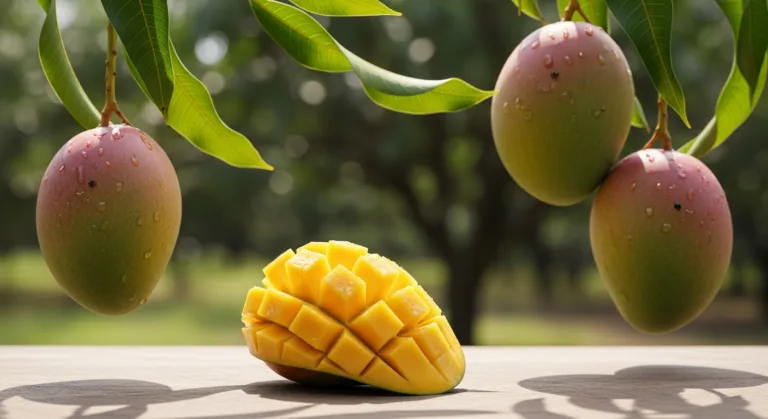
Imagine biting into the juiciest, sweetest, most delicious fruit you’ve ever tasted. The golden-yellow flesh drips down your chin, and you can’t help but smile because it tastes like sunshine in fruit form. If you’re thinking about mangoes right now, you’re absolutely right! Mangoes aren’t just incredibly tasty, they’re also one of the most fascinating fruits on the planet, with a history that goes back thousands of years and enough interesting facts to blow your mind.
Here’s something cool: mangoes are actually the national fruit of three countries, India, Pakistan, and the Philippines. That’s like being the most popular kid in three different schools at the same time! But there’s way more to mangoes than just being popular. From their ancient origins to their health superpowers, mangoes have some seriously impressive credentials.
In this article, we’re going to explore some mind-blowing facts about mangoes that’ll make you appreciate this fruit even more. Whether you’re already a mango superfan or you’ve only tried them a few times, get ready to learn some stuff that’ll make you sound like a mango expert at your next family dinner!
The Ancient History of the King of Fruits
Did you know that mangoes have been around for more than 4,000 years? That’s right, people were enjoying mangoes long before smartphones, cars, or even pizza existed! Mangoes originally came from South Asia, particularly from the region that includes India, Pakistan, and Myanmar. Ancient texts and stories from India mention mangoes, and they were considered so special that kings and emperors had their own private mango orchards.
Here’s where it gets even cooler. Buddhist monks actually helped spread mangoes to other parts of Asia. They would carry mango seeds with them on their travels, planting them in different countries. It’s like the monks were the original mango ambassadors! Thanks to them and later to explorers and traders, mangoes eventually made their way to Africa, the Middle East, and eventually to the Americas.
The name “mango” comes from the Tamil word “mangkay” or “mankay,” which Portuguese traders picked up when they arrived in India in the 1400s. They changed it slightly to “manga,” and eventually, it became the word we use today. So every time you say “mango,” you’re actually using a word that traveled across the world, just like the fruit itself!
Mangoes Are Nutritional Superstars
Okay, let’s talk about why mangoes are basically nature’s candy, but way better for you than actual candy. One cup of mango has about 100 calories and is packed with good stuff your body needs. We’re talking about vitamin C, vitamin A, fiber, and a whole bunch of antioxidants. Think of antioxidants as tiny superheroes that fight off bad guys in your body called free radicals.
Here’s a fact that might surprise you: one cup of mango gives you almost all the vitamin C you need for an entire day! Vitamin C is super important because it helps your immune system fight off colds and infections. It’s like giving your body’s defense system a power-up. Mangoes also have tons of vitamin A, which is awesome for your eyes and skin. So basically, eating mangoes can help you see better and have healthier skin. Not bad for something that tastes like dessert, right?
The fiber in mangoes is really important too. Fiber helps your digestive system work properly, kind of like how oil helps a machine run smoothly. Plus, mangoes contain special compounds that can help with digestion and might even help reduce inflammation in your body. It’s like mangoes are working overtime to keep you healthy!
There Are Over 1,000 Types of Mangoes
This fact totally blew my mind when I first learned it: there are more than 1,000 different varieties of mangoes grown around the world! That’s crazy, right? Each variety has its own unique taste, texture, color, and size. Some are super sweet, others are a bit tangy, some are small like your fist, and others can be as big as a small watermelon.
In Pakistan, some of the most famous varieties include Sindhri, Chaunsa, Anwar Ratol, and Langra. Each one has passionate fans who’ll argue that their favorite is the best. It’s kind of like how people debate about which superhero is the coolest! The Chaunsa mango, for example, is super sweet and has almost no fiber in it, making it incredibly smooth to eat. The Sindhri is huge and can weigh up to a kilogram, that’s about the same weight as a textbook!
Different countries have their own special varieties too. The Alphonso mango from India is often called the “king of mangoes” and is super expensive. In the Philippines, they have the Carabao mango, which once made it into the Guinness Book of World Records as the sweetest mango in the world. And here’s something fun: in some countries, people even eat green, unripe mangoes with salt and chili powder. It’s a completely different taste experience but equally delicious!
Mango Trees Are Pretty Incredible Too
Let’s give some love to mango trees because they’re just as amazing as the fruit they produce. A mango tree can live for more than 100 years and can grow up to 100 feet tall! That’s about as tall as a 10-story building. Imagine a tree in your backyard that could potentially be there for your entire life and then some.
Mango trees are also super productive. A mature, healthy mango tree can produce hundreds, sometimes even thousands, of mangoes in a single season. That’s like hitting the jackpot every summer! The trees have beautiful, long leaves that stay green all year round, and when they flower, they produce these amazing clusters of tiny white or pinkish flowers. Only a small percentage of these flowers actually turn into mangoes, though. It’s nature’s way of quality control!
Here’s another cool fact: mango trees are related to cashew and pistachio trees. They’re all part of the same plant family called Anacardiaceae. Some people are actually allergic to mango skin because it contains the same chemical found in poison ivy. Don’t worry though, the flesh of the mango is totally safe for pretty much everyone, and most people can handle the skin just fine. It’s just one of those weird nature facts!
Mangoes in Culture and Tradition
Mangoes aren’t just food, they’re deeply woven into the culture and traditions of many countries. In South Asian weddings, mango leaves are often used as decorations because they’re considered symbols of prosperity and good luck. It’s like having a four-leaf clover, but way prettier and it smells amazing!
In Pakistan, the arrival of mango season in summer is a huge deal. Families wait all year for those first mangoes to hit the markets. There are mango festivals, mango eating contests, and endless debates about which variety is superior. It’s practically a national obsession! People gift boxes of premium mangoes to friends and family, kind of like how people might give chocolates or flowers in other cultures.
The mango also appears in art, poetry, and literature across Asia. Ancient poets wrote about mangoes as symbols of love and life. The paisley pattern that you might see on clothing or decorations? That’s actually based on the shape of a mango! Artists throughout history have been inspired by the mango’s beautiful shape and vibrant colors. It’s pretty incredible how one fruit can have such a big impact on human culture.
The Global Mango Economy
Now let’s talk numbers, because the mango business is absolutely massive. Worldwide, people grow about 55 million tons of mangoes every year. To put that in perspective, if you loaded all those mangoes onto trucks, the line of trucks would probably stretch around the entire Earth! India is the world’s largest producer, growing almost half of all the mangoes on the planet.
Mangoes are super important for the economies of many countries. In Pakistan, mangoes are one of the most valuable fruit exports. Pakistani mangoes, especially varieties like Sindhri and Chaunsa, are shipped to countries all over the world, from the Middle East to Europe and even North America. When you buy a box of mangoes, you’re not just getting fruit, you’re supporting farmers and their families, truck drivers, market vendors, and lots of other people along the way.
The mango industry also creates jobs in some pretty interesting ways. There are people who specialize in grafting mango trees, which is a special technique to create better varieties. There are mango experts who can tell you exactly when a mango is perfectly ripe just by looking at it or gently pressing it. And then there are the people who work in processing plants, turning mangoes into juice, dried mango slices, mango ice cream, and all sorts of other products. It’s a whole ecosystem built around one amazing fruit!
Why Mangoes Matter to You
So why should you care about all these mango facts? Well, for one thing, mangoes are delicious and nutritious, so eating them is a win-win situation. But beyond that, mangoes represent something bigger. They show us how food connects cultures, how agriculture shapes economies, and how something as simple as a fruit can have thousands of years of history behind it.
Next time you eat a mango, think about the journey it took to get to you. Think about the farmer who planted and cared for the tree, maybe for years, before it produced fruit. Think about the 4,000-year history of people enjoying this same fruit. Think about how the same mango you’re eating connects you to people in dozens of countries around the world who are also mango lovers.
Mangoes also remind us to appreciate the seasons and to enjoy things when they’re at their best. Unlike some fruits that are available year-round, mangoes have a special season, and that makes them feel even more special. It’s something to look forward to, like your birthday or summer vacation.
Whether you like them fresh, in smoothies, in desserts, or even in savory dishes, mangoes have earned their reputation as one of the world’s favorite fruits. With their incredible history, amazing health benefits, and absolutely delicious taste, it’s no wonder mangoes are sometimes called the “king of fruits.” So the next time mango season rolls around, will you look at this golden fruit a little differently? What’s your favorite way to enjoy a mango?