Imagine walking through a vegetable market in January and seeing rows of bright green spinach, snow-white cauliflower, and vibrant orange carrots, all looking incredibly fresh and delicious. You might wonder why these vegetables look so much better during winter months compared to summer. Here’s a fascinating secret: Pakistan’s winter season creates the perfect natural refrigerator for growing some of the world’s most nutritious and tasty vegetables!
While most people think of winter as a time when plants go to sleep, in Pakistan it’s actually when many vegetables come alive and reach their absolute best. The cool, crisp air that makes you want to wear a warm sweater is exactly what certain plants need to grow strong, colorful, and packed with nutrients.
By the time you finish reading this article, you’ll understand why winter vegetables in Pakistan are like nature’s gift during the coldest months, and you might even start looking forward to winter vegetable season as much as summer vacation!
Pakistan’s Winter Vegetable Powerhouses: The Cool Weather Champions
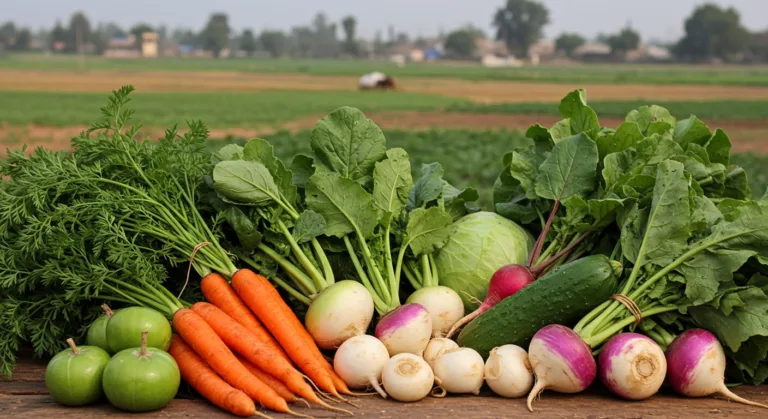
The winter season is the most important for growing a wide variety of vegetable crops including cauliflower, cabbage, lettuce, spinach, onion, potato, carrot, radish, turnip, coriander, fenugreek and peas. The best sowing time of winter vegetables is September, October and they will produce till Feb, March.
Think of winter vegetables like students who perform better in air-conditioned classrooms rather than stuffy, hot rooms. These vegetables absolutely thrive when temperatures drop because they can focus all their energy on growing instead of just trying to survive the heat.
Cauliflower is probably the superstar of Pakistan’s winter vegetables. It looks like a white brain made of tiny trees, and it’s packed with vitamin C and fiber. During the cool months, cauliflower develops its characteristic white color and crunchy texture perfectly.
Spinach is another winter champion that grows incredibly well during Pakistan’s cool months. It’s like nature’s multivitamin, loaded with iron, calcium, and vitamins A and K. The cool weather helps spinach leaves stay tender and sweet instead of becoming bitter and tough.
Carrots turn into candy-sweet, bright orange gems during winter because the cool temperatures allow them to develop their natural sugars slowly and steadily. It’s like slow-cooking a delicious meal, the longer, gentler process creates a much better final result.
Why Winter is the Perfect Season for These Vegetables
You know how you feel more energetic and focused when it’s pleasantly cool outside compared to blazing hot summer days? Well, vegetables feel the same way! Winter vegetables in Pakistan, are sowing in the mild winter or cold climate mostly started from the months of September and October. The vegetables that start germinating in the starting of winter season will give fruiting till February and March.
During Pakistan’s winter months, temperatures typically range between 10°C to 20°C, which creates ideal growing conditions. This temperature range is like the “Goldilocks zone” for these vegetables, it’s not too hot, not too cold, but just right for optimal growth.
The cooler air also means less water evaporates from the soil, so plants can stay hydrated more easily. It’s similar to how you don’t get as thirsty when you’re sitting in an air-conditioned room compared to standing outside in summer heat.
Another amazing thing about winter weather is that it naturally protects vegetables from many pests and diseases that thrive in hot, humid conditions. It’s like having a natural pest control system that keeps the vegetables healthier without needing lots of chemicals.
The Nutritional Superpowers of Winter Vegetables
Winter vegetables are like nature’s pharmacy, each one packed with different nutrients that help keep us healthy during the colder months when our bodies need extra support. This isn’t just coincidence, it’s nature’s intelligent design working perfectly!
Cabbage becomes incredibly rich in vitamin C during winter growing seasons. One cup of fresh winter cabbage can provide more vitamin C than an orange! This vitamin C helps boost your immune system right when you need it most to fight off winter colds.
Radishes grown in Pakistan’s winter become crisp, spicy little power-packed vegetables full of antioxidants. They’re like nature’s natural cleaners, helping your body get rid of toxins while adding a delicious crunch to salads and meals.
Turnips might look plain on the outside, but winter-grown turnips in Pakistan are loaded with fiber, vitamin C, and potassium. They’re like underground treasure chests, storing all their nutrients in their roots during the cool growing season.
The cool weather actually concentrates the nutrients in these vegetables because the plants grow more slowly and steadily, allowing them to pack more vitamins and minerals into each leaf, root, or flower head.
From Farm to Table: The Winter Vegetable Journey
The journey of Pakistan’s winter vegetables is like a perfectly timed dance between nature and farming expertise. Pakistan producing 35 different types of vegetables in summer and winter seasons. In winter may other vegetables like cauliflower, cabbage, onion, potato and carrots are cultivated.
Farmers start preparing for winter vegetable season in late summer, kind of like how students start preparing for final exams weeks in advance. They carefully prepare the soil, making sure it’s loose and rich with nutrients. This preparation is crucial because winter vegetables need perfect growing conditions to reach their full potential.
During September and October, farmers plant tiny seeds that will slowly grow throughout the cooler months. It’s amazing to think that a cauliflower seed smaller than your fingernail will eventually become a vegetable that weighs several pounds!
The harvesting period from January through March is when Pakistani markets become filled with the freshest, most delicious vegetables you’ll find all year. These vegetables have had months of perfect growing weather to develop their flavors, colors, and nutritional content.
Regional Varieties: Different Areas, Different Specialties
Pakistan’s diverse climate zones mean that different regions specialize in growing different winter vegetables, kind of like how different cities are famous for different things. The northern areas, with their colder temperatures, produce incredibly sweet carrots and crisp radishes. The central plains are perfect for growing massive heads of cauliflower and cabbage.
There are certain exceptions varying from crop to crop, and different varieties exist for different seasons for example summer Radish variety is different from winter variety. This means that farmers have developed special varieties of vegetables that are perfectly adapted to Pakistan’s winter conditions.
The Punjab region becomes like a winter vegetable paradise, with fields stretching for miles filled with green spinach, white cauliflower, and orange carrots. It’s like nature’s own colorful quilt spread across the landscape.
Cooking with Winter’s Best: Making the Most of Seasonal Bounty
Winter vegetables in Pakistan aren’t just nutritious, they’re also incredibly versatile and delicious when cooked properly. The cool weather actually improves their flavor, making them sweeter and more tender than vegetables grown in other seasons.
Saag (cooked spinach) becomes incredibly rich and flavorful when made with winter-grown spinach. The leaves are more tender and have a naturally sweet taste that doesn’t require lots of added ingredients to taste amazing.
Gajar ka Halwa (carrot pudding) tastes so much better when made with winter carrots because these carrots have concentrated natural sugars that develop during the slow, cool growing process. It’s like the difference between natural honey and artificial sweetener.
Winter vegetables also stay fresh longer because they’re naturally adapted to cooler storage conditions. This means families can buy larger quantities and store them for weeks without worrying about spoilage.
Conclusion: Celebrating Nature’s Winter Gifts
Understanding Pakistan’s winter vegetables helps us appreciate the incredible timing and intelligence of natural systems. These vegetables don’t just happen to grow well in winter, they’ve evolved over thousands of years to provide exactly the nutrients we need during the colder months when fresh food is traditionally harder to find.
The next time you see brilliant green spinach or perfectly white cauliflower in the market during winter, remember that you’re looking at vegetables that have spent months slowly developing their flavors and nutrients in Pakistan’s ideal cool weather conditions. They represent the perfect partnership between nature’s wisdom and human agricultural knowledge.
Have you ever noticed how much more you crave hearty, warming foods made with vegetables like carrots and spinach during winter months? Perhaps your body instinctively knows that these seasonal vegetables are exactly what you need to stay healthy and energized during the cooler season!