Have you ever noticed how the best time to enjoy juicy mangoes or refreshing watermelons is right when the temperature starts climbing and summer arrives? There’s a reason for that. Pakistan is home to some of the most delicious and nutritious fruits and vegetables that grow naturally during the hot summer months. These aren’t just random crops, they’re perfectly designed by nature to thrive in our climate and to give our bodies exactly what we need during the hottest season of the year. From the sweet mangoes of Multan to crispy cucumbers and colorful bell peppers, summer in Pakistan brings a harvest of amazing produce that’s both tasty and incredibly good for you. Let’s explore the wonderful world of summer fruits and vegetables that grow right here in our country.
Why Summer is the Perfect Growing Season for These Foods
Pakistan’s summer season, typically from May through September, creates ideal conditions for growing specific fruits and vegetables. The long days with plenty of sunshine, the warm temperatures, and the right amount of moisture all combine to create the perfect recipe for growing food. Think of it like how you need the right ingredients and the right timing to bake a perfect cake, except nature is doing the baking. When the temperature rises and the days get longer, plants have more energy from the sun to grow bigger, sweeter, and more nutritious. This is why summer produce tastes so different from produce grown in other seasons, it’s had more time to develop its flavor and absorb nutrients from the soil. Plants grown in their natural season are like students who study in the right environment versus those who study in a noisy, uncomfortable place, the results are completely different.
The King of Summer Fruits, Pakistan’s Beloved Mangoes
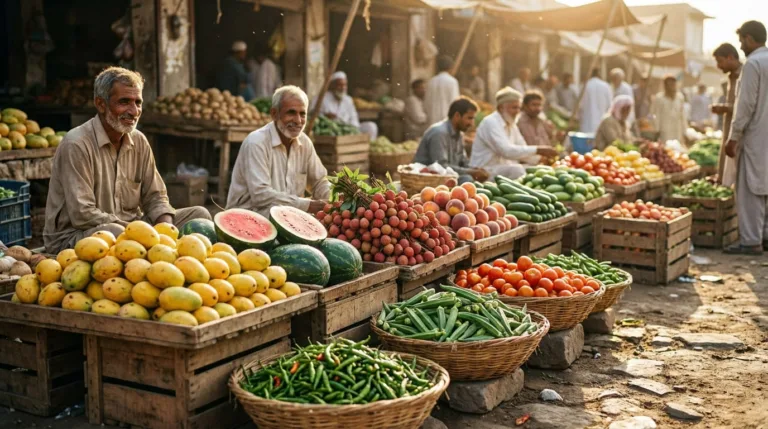
Let’s talk about the superstar of Pakistani summer produce, the mango. Multan is famous throughout the world for growing some of the most delicious mangoes you’ll ever taste. From June through August, mango season is in full swing, and these golden fruits hang from trees like precious jewels. What makes Pakistani mangoes special is their perfect balance of sweetness, flavor, and texture. When you bite into a ripe mango, the soft, juicy flesh just melts in your mouth. Beyond tasting incredible, mangoes are packed with vitamin C, which helps your body fight off sickness, and vitamin A, which is great for your eyesight. They also contain fiber, which keeps your digestive system healthy. The interesting thing about mangoes is that they’re known as the king of fruits in Pakistan and many other parts of the world, and once you taste a really good mango, you’ll understand why everyone calls them that.
Cool and Refreshing Melons for Hot Summer Days
When the summer heat feels unbearable, what you really want is something cool, refreshing, and juicy. That’s where melons come in. Pakistan grows several types of melons during summer, including watermelons and muskmelons, and they’re basically nature’s way of helping us stay hydrated during the hottest months. A watermelon is about 92 percent water, which means it’s almost like eating water that tastes amazing. But it’s not just water, watermelons also contain lycopene, a substance that gives them their red color and provides important health benefits. Muskmelons, with their orange flesh and sweet taste, are rich in potassium, a mineral that helps your muscles work properly and keeps your heart healthy. The best part about eating these melons in summer is that they’re naturally cooling, so when you eat them on a hot day, you’re not just satisfying your hunger, you’re actually helping your body regulate its temperature, kind of like having an internal air conditioner.
Vegetables That Love Pakistan’s Hot Climate
Summer isn’t just about fruits, there are also amazing vegetables that absolutely thrive in Pakistan’s heat. Tomatoes are probably the most important summer vegetable in Pakistan, used in almost every meal. In summer, tomatoes reach their peak ripeness and become juicy, flavorful, and bright red. Cucumbers are another favorite, refreshing and low in calories but full of water and nutrients. Then there are vegetables like okra, also called lady fingers, which is unique because it gets slimier the longer you cook it, but it’s packed with important vitamins. Peppers, both sweet and hot varieties, grow wonderfully in summer and add both flavor and nutrition to meals. Eggplants are another summer classic that are versatile and delicious when cooked properly. What’s remarkable about all these summer vegetables is that they’re like an edible pharmacy, each one providing different vitamins, minerals, and nutrients that your body specifically needs to stay healthy and energetic during the hot season.
The Nutritional Powerhouses Hidden in Summer Produce
Have you ever wondered why doctors and health experts always tell us to eat more fruits and vegetables? It’s because summer produce is loaded with nutrients that keep us healthy and strong. Most summer fruits and vegetables are naturally low in calories but high in vitamins, minerals, fiber, and antioxidants, which are substances that protect our cells from damage. During summer, when we tend to sweat more and lose fluids, fruits and vegetables with high water content become absolutely essential. The combination of nutrients in summer produce also boosts our immune system, which is our body’s defense against getting sick. Think of your body as a car, and nutrients as the fuel and maintenance that keeps it running smoothly. Without proper nutrition, your car starts breaking down, but with the right fuel and care, it can run perfectly for a long time. Summer fruits and vegetables are basically the premium fuel your body needs.
How to Choose and Enjoy Fresh Summer Produce
If you want to get the most out of summer fruits and vegetables, knowing how to pick them is important. When selecting mangoes, give them a gentle squeeze, they should give slightly but not be too soft. For watermelons, look for a yellow spot on the bottom, which means it sat on the ground long enough to ripen properly. Fresh tomatoes should be bright red and slightly soft when gently squeezed. The key is buying produce during its actual season, which is when it’s grown locally in Pakistan. This means the produce doesn’t have to travel far, so it gets to your table fresher and more nutritious. Local, seasonal produce also supports farmers in your own community, which is pretty cool when you think about it. You can eat these fruits and vegetables fresh, add them to salads, blend them into smoothies, or cook them into delicious meals. The possibilities are honestly endless.
Making Summer Produce a Part of Your Daily Life
The best part about summer fruits and vegetables is how easy it is to include them in what you eat every day. You can start your morning with a smoothie made from mango and yogurt, snack on watermelon throughout the day, add fresh tomatoes and cucumbers to your lunch, and enjoy vegetable dishes at dinner. During summer, these foods are at their cheapest and most available, so it’s the perfect time to eat them. Plus, when you eat produce that’s grown locally and in season, you’re eating food at its absolute peak of freshness and nutrition. It’s also a fun way to connect with the seasons and understand where your food comes from. Many people in cities don’t realize how much amazing produce grows right around them in Pakistan, particularly in agricultural regions like Multan.
Embrace the Gift of Summer’s Harvest
Summer in Pakistan brings an incredible variety of fruits and vegetables that are not only delicious but also perfectly designed to keep your body healthy and happy during the hottest months. From the sweet mangoes that Pakistan is famous for to the refreshing watermelons and crisp vegetables that fill local markets, there’s something special about eating food that’s been grown in the right place at the right time. These aren’t just foods that fill your stomach, they’re nutritional powerhouses that support your growth, energy, and overall health. So the next time you’re at a market during summer, fill your basket with these amazing natural gifts. Your body will thank you, and you’ll be supporting the hardworking farmers who grow these crops. Isn’t it wonderful that the season when we need cooling, hydrating, and nutritious food is exactly when nature provides it in abundance?