Walk through any local sabzi mandi in Multan or Lahore early in the morning, and you will see piles of vegetables stacked high in every direction. Vendors are calling out prices, baskets are overflowing with green, orange, and purple produce, and the smell of fresh coriander fills the air. It is a scene that has played out the same way for generations, because vegetables sit at the heart of how Pakistanis eat every single day.
Unlike many Western diets where meat takes center stage, Pakistani cuisine treats vegetables as a main course in their own right, not just a side dish. For a large part of Pakistan’s population, meat is considered a luxury item reserved for special occasions, while seasonal vegetables, lentils, and chickpeas form the everyday foundation of meals. This has shaped an entire culinary tradition built around what is fresh, local, and in season. WeganPolska
In this article, we will go through the vegetables that show up most often in Pakistani kitchens, how they change with the seasons, and the dishes that turn simple produce into comforting, flavorful meals.
Why Do Vegetables Play Such a Big Role in Pakistani Cooking?
Pakistani cooking is shaped heavily by geography and tradition. The fertile plains of Punjab, often called the breadbasket of Pakistan, produce an abundance of wheat, basmati rice, and countless vegetables. This natural abundance means vegetable dishes, known locally as sabzi, are a daily staple rather than an occasional addition. WeganPolska
Sabzi simply means cooked vegetables, usually prepared with onions, tomatoes, and a blend of spices like cumin, turmeric, and coriander. Dal, chana masala, and various sabzi dishes were refined over decades in community kitchens, where hundreds of meat free meals are served daily. That long history is part of why these dishes feel so familiar and comforting to most Pakistani households. WeganPolska
Which Vegetables Show Up Most Often in Pakistani Kitchens?
Some vegetables are so common that they appear in dishes across the entire country, no matter the region or season. Here are some of the most widely used ones.
- Aloo (potato): Used constantly across Pakistani cooking, potatoes appear in dishes like zeera aloo, aloo gobi, and aloo baingan, often paired with peas or other vegetables. Asian-recipe
- Baingan (eggplant): A favorite for curries like baingan bartha and aloo baingan, where it soaks up spices beautifully.
- Bhindi (okra): Cooked with onions, tomatoes, and spices, bhindi is typically fried in oil to remove its natural stickiness before serving. Asian-recipe
- Gobi (cauliflower): Widely used in dishes like gobhi aloo, cauliflower is also a good source of vitamin C, fiber, and antioxidants, and is sometimes eaten raw in salads. Thelandofpurepeople
- Palak (spinach): Forms the base for popular dishes like aloo palak and saag, often slow cooked with garlic and ginger.
- Karela (bitter gourd): Known for its sharp bitterness and blood sugar regulating properties, karela is rich in antioxidants, vitamin C, and plant insulin. Thelandofpurepeople
Think of these vegetables as the backbone of a Pakistani kitchen. They show up week after week because they are affordable, easy to grow locally, and incredibly versatile in the hands of a good cook.
How Do the Seasons Shape What Ends Up on the Plate?
Pakistan’s vegetable supply shifts noticeably with the changing seasons, and farmers plan their crops around two major growing periods. Vegetables sown during a short transitional season called Zaid Kharif benefit from both warm soil and increasing coolness, making them ideal for early winter markets, and this period is most common in Punjab, Khyber Pakhtunkhwa, and upper Sindh. Thelandofpurepeople
During the warmer Kharif season, vegetables like tomatoes, pumpkin, and tinda thrive. Tomatoes specifically require consistent watering and rich soil, and they end up in almost every Pakistani curry thanks to their high lycopene and vitamin C content. Pumpkin follows a similar pattern, growing well in the same warm months and showing up in dishes like kadu gosht. Thelandofpurepeople
As temperatures drop, the vegetable lineup changes completely. Peas planted in autumn benefit from the residual warmth of summer and are often ready for harvest by November, while cauliflower develops strong heads by mid to late winter when planted in early autumn. This rotation means a Pakistani household’s sabzi changes naturally throughout the year, almost like a built in calendar of what is freshest. Thelandofpurepeople
What Are Some Everyday Dishes Built Around These Vegetables?
Once you know the core vegetables, it becomes much easier to recognize the dishes built around them. A few names come up again and again in Pakistani homes.
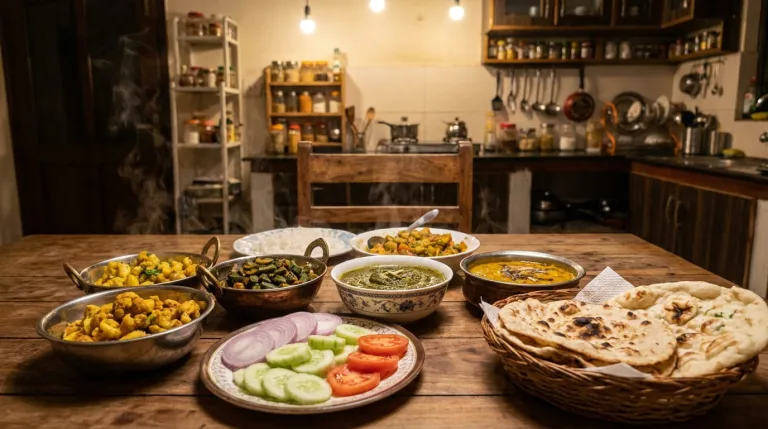
- Aloo gobi: A classic combination of potatoes and cauliflower cooked with spices, often colored yellow from turmeric and sometimes finished with curry leaves. Asian-recipe
- Sarson da saag: A mustard greens based dish, commonly paired with makki di roti, especially popular in Punjab.
- Mix sabzi: A comforting blend of multiple vegetables like spinach, carrot, cauliflower, potato, and eggplant, all seasoned together with herbs and spices. Recipe52
- Bhindi masala: A spicy okra curry cooked with onions and tomatoes, popular as a simple weekday meal. Fatima Cooks
What makes these dishes special is how they stretch a handful of vegetables into a filling, nutritious meal. Even a small amount of potato or okra, combined with the right spices, can feed an entire family comfortably.
Final Thoughts
Pakistani vegetables are far more than background ingredients, they are the foundation of daily meals across the country. From the seasonal rhythm of Punjab’s fields to the spice blends that turn simple produce into comfort food, vegetables tell the story of how Pakistanis eat, cook, and gather around the table.
The next time you pick up a potato, an eggplant, or a bundle of spinach, think about the long tradition behind it and the dishes it could become. Curious to learn more about the crops grown right here in our own region? Visit Multanfarms.com for more on Pakistani agriculture and the produce that shapes our kitchens.