Imagine waiting all year for your favorite fruit, and then suddenly, the markets explode with golden, juicy mangoes everywhere you look. That’s exactly what happens in Pakistan every summer! If you’ve ever wondered why mangoes seem to appear and disappear like magic, or why your family stocks up on dozens of them during certain months, you’re about to discover the secrets of Pakistan’s amazing mango season.
Pakistan isn’t just any mango-growing country, it’s actually one of the world’s top mango producers! The country grows over 1,000 different varieties of mangoes, and they’re so delicious that people around the globe pay premium prices to taste Pakistani mangoes. But here’s the catch: you can’t just walk into a market and buy fresh, ripe mangoes any day of the year. These golden treasures have their own special schedule.
In this article, you’ll learn exactly when mango season happens in Pakistan, why different varieties ripen at different times, which months offer the best mangoes, and how farmers manage to keep the mango party going for several months. Get ready to become a mango season expert!
The Grand Mango Calendar: When Does It All Begin?
Pakistan’s mango season typically kicks off in May and continues through September, giving mango lovers about five glorious months to enjoy fresh fruit. But here’s where it gets interesting: not all mangoes arrive at once. It’s kind of like how different flowers bloom at different times in spring, mango varieties have their own schedules too.
The season usually starts slowly in early May with some early varieties, builds up to a massive peak in June and July (when markets are absolutely flooded with mangoes), and then gradually winds down through August and September. Think of it like a concert that has an opening act, a main performance, and then an encore. Each phase brings different varieties with their own unique flavors and characteristics.
The exact timing can shift a bit from year to year depending on weather conditions. A particularly hot spring might push the season earlier, while unusual rains could delay it. This unpredictability keeps farmers on their toes and makes each mango season slightly different from the last.
Early Season Champions: May’s First Arrivals
May is when mango enthusiasts start getting excited because the first varieties begin appearing in markets. These early birds aren’t necessarily the most famous varieties, but they’re super important because they satisfy everyone’s mango cravings after months of waiting.
Some early varieties you might see include Desi mangoes and certain types of Sindhri. These mangoes are like the brave pioneers, they ripen when conditions are still getting perfect for mangoes. Early season mangoes tend to be a bit tangier and less sweet than their mid-season cousins, but they’re still delicious and mark the official start of mango madness.
Farmers love these early varieties because they can charge higher prices when mangoes are still rare in the market. It’s simple supply and demand: when fewer mangoes are available, people are willing to pay more for them. Smart shoppers sometimes wait for the peak season to get better prices, but impatient mango lovers happily pay premium rates for these first arrivals.
Peak Season Perfection: June and July’s Golden Weeks
If you want to experience Pakistani mangoes at their absolute best, June and July are your golden months. This is when the most famous varieties reach perfect ripeness, and markets become mango wonderlands with varieties piled high in every shop.
Chaunsa, often called the king of Pakistani mangoes, typically hits its peak in late June and July. This variety is incredibly sweet, has minimal fiber, and melts in your mouth like mango-flavored butter. When Chaunsa season arrives, you’ll see people buying entire crates to share with family and friends.
Anwar Ratol, another superstar variety, also peaks during these months. This smaller mango packs an intense sweetness that’s almost unbelievable. Eating an Anwar Ratol is like tasting concentrated sunshine! Meanwhile, Langra mangoes, with their greenish skin and exceptional flavor, become widely available during this period too.
During peak season, prices drop significantly because there’s so much supply. It’s the best time for families to stock up, make mango desserts, blend mango smoothies, or just eat mangoes for breakfast, lunch, and dinner. Some families even preserve mangoes by making pickles or jam to enjoy the taste later in the year.
Late Season Stars: August and September’s Grand Finale
Just when you think mango season is winding down, August and September arrive with their own special varieties. These late-season mangoes are like the encore performance at a concert, maybe not as flashy as the main act, but still totally worth experiencing.
Sindhri mangoes are particularly popular during August. These large, fiber-free mangoes have a unique aroma and sweetness that makes them perfect for making mango shakes and desserts. They’re also excellent for export because they have a longer shelf life than some earlier varieties.
Fajri is another late-season variety that extends the mango enjoyment into September. While quantities decrease and prices might rise again as the season ends, these varieties give mango lovers a few more precious weeks to enjoy fresh fruit before having to wait until next year.
The late season is actually great for people who missed the earlier rush or want to enjoy mangoes when the initial frenzy has calmed down. Markets are less crowded, and you can take your time selecting the perfect mangoes without fighting through massive crowds.
Why Different Varieties Ripen at Different Times
You might be wondering: why don’t all mangoes just ripen at the same time? The answer involves some cool plant science! Different mango varieties have different genetic programming that tells them when to flower and when to ripen fruit. It’s similar to how different people in your class might have birthdays spread throughout the year, mango varieties each have their own “ripening birthday.”
This staggered ripening actually benefits everyone. Farmers can spread out their harvest work instead of having to pick everything at once. Sellers can keep their shops stocked with fresh mangoes for months instead of weeks. And consumers get to enjoy different flavors throughout the season instead of eating the same variety over and over.
Climate also plays a huge role. Mangoes need specific temperature patterns to develop properly. They require warm weather to grow and ripen, but different varieties have adapted to slightly different conditions. Some varieties thrive in the early summer heat, while others prefer the intense temperatures of mid-summer or the gradually cooling weather of late summer.
Regional Differences Across Pakistan
Here’s something fascinating: mango season doesn’t happen exactly the same way all across Pakistan! The country’s different regions have slightly different timing based on their climates and which varieties they grow.
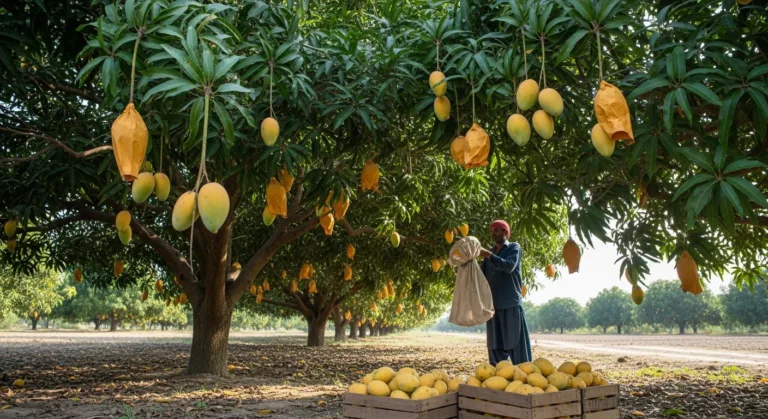
Multan and South Punjab, often considered Pakistan’s mango heartland, typically see their peak season in June and July. The region’s hot, dry climate is absolutely perfect for growing exceptional mangoes. Cities like Rahim Yar Khan and Muzaffargarh are famous for producing massive quantities of premium mangoes during these months.
Sindh province, particularly areas around Mirpur Khas and Hyderabad, also produces fantastic mangoes with a season that often extends a bit later into August and September. Sindhri mangoes, named after the Sindh region, are particularly famous here.
Even Khyber Pakhtunkhwa grows mangoes in some areas, though their season might start a bit later and produce different varieties suited to that region’s specific climate. It’s like how different parts of your country might have different growing seasons for crops, Pakistan’s diverse geography creates mango microclimates.
Making the Most of Mango Season
Knowing when mango season happens is one thing, but smart mango lovers know how to maximize their enjoyment during these precious months. Here are some ways people make the most of the season.
Many families practice what you might call “mango hoarding” during peak season. They buy large quantities when prices are lowest, typically in late June or early July, and share them with extended family or preserve them for later. Some make mango pickles (aam ka achaar), which can last for months or even years. Others freeze mango pulp to use in smoothies and desserts throughout the year.
Farmers’ markets and roadside stands often offer better prices and fresher mangoes than big supermarkets. During peak season, you’ll see mango vendors everywhere, each claiming their mangoes are the sweetest and best. Shopping around and building relationships with good vendors can help you get the best fruit at great prices.
The Sweet Science of Perfect Timing
Understanding Pakistan’s mango season isn’t just about knowing which months to shop, it’s about appreciating the natural rhythms that bring these incredible fruits to your table. From May’s early arrivals through September’s final offerings, each phase of the season offers something special.
The five-month mango marathon from May through September represents months of careful farming, perfect weather conditions, and nature’s amazing ability to create delicious fruit. Whether you prefer the intense sweetness of Chaunsa in July or the aromatic Sindhri of August, there’s a perfect mango moment for everyone during Pakistan’s generous mango season.
So next time someone asks you when they can get the best mangoes in Pakistan, you’ll know the answer isn’t just one month, it’s a whole delicious journey from May to September. And here’s a question to think about: which would you choose, getting the first mangoes of the season in May even if they’re more expensive, or waiting for the peak season abundance in June and July when prices drop and variety explodes? Whatever you choose, you’re in for a sweet, juicy treat!