Imagine walking into a grocery store in December and finding perfectly ripe, juicy mangos from a tropical paradise thousands of miles away. Or picture this: while you’re enjoying sweet Pakistani mangos in July, someone in Australia is just starting their mango season! It’s like a delicious relay race happening around our planet, where different countries pass the “mango baton” throughout the year.
Mangos don’t grow everywhere, and they definitely don’t grow all year round in any single place. These tropical fruits need specific weather conditions to thrive, which means mango season happens at different times depending on where you are in the world. This natural timing creates an amazing global pattern that keeps mango lovers supplied with fresh fruit for most of the year.
In this article, we’re going to take a trip around the world to discover when and where mangos ripen. You’ll learn why Pakistan’s mango season is different from Mexico’s, how geography affects when mangos are ready to eat, and how this knowledge helps farms like Multanfarms.com plan their harvest. Get ready for a fruity adventure across continents!
Understanding Why Mango Seasons Vary
Before we hop around the globe, let’s understand why mango seasons aren’t the same everywhere. Think of mango trees like students with different school schedules, they all go to school, but some have morning classes while others have afternoon sessions!
Mango trees need specific conditions to produce fruit. They require a warm climate with temperatures between 24-30°C (75-86°F) during the growing season. But here’s the interesting part: they also need a cooler, drier period to trigger flowering. This cool period tells the tree, “Hey, it’s time to start making flowers that will become mangos!” Without this signal, mango trees might just keep growing leaves without producing much fruit.
The Earth’s position relative to the sun creates different seasons in different parts of the world. When it’s summer in Pakistan (June-July), it’s winter in Australia (June-July), even though it’s the same months! This is because of how our planet tilts on its axis as it orbits the sun. Countries north of the equator experience opposite seasons from countries south of the equator.
This geographical quirk is actually awesome for mango lovers! It means that as one region’s mango season ends, another region’s season is just beginning. It’s nature’s way of making sure there are always fresh mangos available somewhere on Earth.
Mango Season in South Asia
Let’s start our journey in South Asia, home to some of the world’s most famous mangos! This region includes countries like Pakistan, India, and Bangladesh, where mangos aren’t just fruit, they’re a cultural treasure.
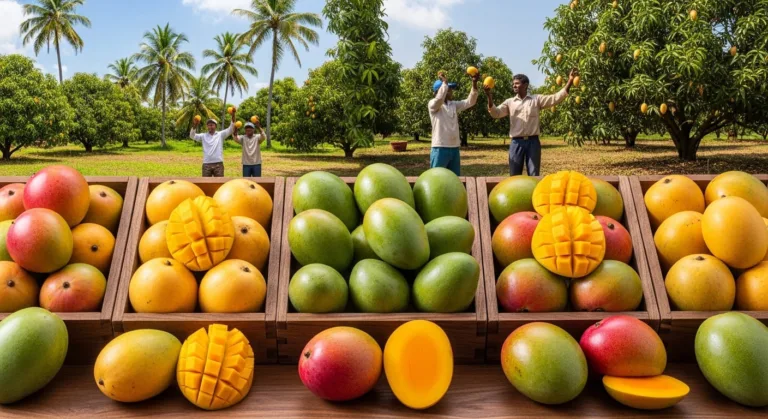
Pakistan’s mango season typically runs from May through September, with peak season happening in June, July, and August. In regions like Multan and southern Punjab, where Multanfarms.com grows their mangos, the season starts when temperatures rise and the monsoon rains arrive. Different varieties ripen at different times, which is pretty clever! Early varieties like Sindhri show up in May, followed by the beloved Chaunsa in July, and late varieties extend the season into September.
The timing makes perfect sense when you think about Pakistan’s weather. Winter provides the cool period (December-February) that triggers flowering. Then, as spring arrives (March-April), the trees produce flowers that develop into tiny mangos. By the time the intense summer heat arrives (May-August), those mangos are swelling up and getting sweeter. The hot sun acts like nature’s candy-maker, converting starches into sugars and creating that amazing mango flavor we all love.
India, Pakistan’s neighbor, follows a similar pattern with mango season lasting from March to August. With over 1,000 mango varieties, India has perfected the art of extending the season. Some regions in southern India start their harvest as early as March, while northern regions peak in June and July.
Bangladesh enjoys mangos from May through August, with varieties like Fazli and Langra being local favorites. The country’s climate, influenced by the Bay of Bengal, creates perfect conditions for growing sweet, aromatic mangos.
Mango Madness in Southeast Asia
Now let’s travel east to Southeast Asia, where countries like Thailand, the Philippines, and Vietnam are mango powerhouses! This region has a slightly different rhythm to its mango seasons.
Thailand is interesting because it actually has two mango seasons! The main season runs from March to June, but there’s also a smaller second season from October to December in some regions. Thai farmers have become experts at managing their orchards to produce fruit at different times. Varieties like Nam Dok Mai and Maha Chanok are famous worldwide for their sweet, fiberless flesh.
The Philippines celebrates mango season from March to June. Filipino mangos, especially the Carabao variety, are so good that Guinness World Records once recognized them as the sweetest mangos in the world! Can you imagine having your fruit in a record book? The Philippines’ tropical climate, with distinct wet and dry seasons, creates ideal conditions for producing exceptionally sweet mangos.
Vietnam harvests mangos mainly from February to May. Vietnamese farmers grow various types, from the crunchy green mangos used in salads to super-sweet yellow mangos perfect for eating fresh. The country’s long coastline and diverse climate zones allow different regions to harvest at slightly different times.
Mango Season in the Americas
Let’s hop across the Pacific Ocean to explore mango seasons in North, Central, and South America! This region supplies a huge portion of the mangos you might find in North American and European supermarkets.
Mexico is the world’s largest mango exporter, and its season runs from February through September. That’s a really long season! How do they manage it? Mexico’s secret is geography. Different states have different climates, so mangos ripen at different times across the country. Coastal regions start early (February-March), while inland areas harvest later (June-September). Popular varieties like Ataulfo, Tommy Atkins, and Kent keep the supply flowing for months.
Brazil in South America has its mango season from September through March. Notice something interesting? Because Brazil is in the Southern Hemisphere, its seasons are opposite to those in the Northern Hemisphere. When it’s winter in Pakistan (December-January), it’s summer in Brazil, and mangos are ripening! Brazilian mangos, especially varieties like Tommy Atkins and Palmer, are exported worldwide.
Florida in the United States grows mangos from June through September. Florida’s subtropical climate is just right for mangos, though occasional cold snaps in winter can challenge farmers. Varieties like Kent, Keitt, and Haden thrive in the Florida sunshine and provide Americans with locally grown tropical fruit.
Australia’s Unique Mango Calendar
Let’s fly down under to Australia, where everything is upside down, including the mango season! Australian mangos are ready from September through March, peaking during their summer months of December and January.
Imagine celebrating Christmas in Australia with fresh, ripe mangos, that’s their reality! While people in Pakistan are bundled up in winter clothes, Australians are enjoying mango season at the beach. The main growing regions are in tropical northern Australia, particularly in the Northern Territory and Queensland, where the warm, humid climate mimics the conditions mangos love.
Kensington Pride (also called Bowen) is Australia’s most famous variety, known for its perfect balance of sweetness and tang. Australian farmers have become incredibly sophisticated, using technology to monitor tree health, predict harvest dates, and ensure consistent quality.
Australia’s mango season is especially valuable for global trade because it happens when most Northern Hemisphere countries are experiencing winter. This means Australian mangos can be exported to markets in Asia, the Middle East, and beyond when local mangos aren’t available.
Why This Global Mango Calendar Matters
You might be thinking, “This is cool, but why should I care when mangos ripen in different countries?” Great question! Understanding the global mango calendar affects more than you might realize.
For consumers like you and your family, this knowledge explains why mangos are available in stores almost year-round but at varying prices. When it’s mango season in nearby countries, mangos are cheaper and more abundant. When they’re imported from far away, prices go up. Knowing when your local season happens means you can enjoy the freshest, most affordable mangos at the right time.
For farmers and businesses like Multanfarms.com, understanding global seasons is crucial for business planning. Pakistani mango exporters know their peak season (June-August) competes with Indian mangos but provides fruit when Australian and Brazilian seasons have ended. This timing helps them find markets hungry for fresh mangos.
The global calendar also affects international trade and economics. Countries earn significant income by exporting mangos during their season. Pakistan exports mangos worth hundreds of millions of dollars each year, mostly during our peak season when other major producers aren’t harvesting.
Environmental factors are becoming increasingly important too. Climate change is affecting traditional mango seasons in various countries. Some regions are experiencing unpredictable weather patterns that shift harvest times. Understanding these changes helps farmers adapt and ensures we’ll continue enjoying mangos in the future.
The Future of Global Mango Seasons
As our world changes, so do mango seasons. Scientists and farmers are working together to address challenges and opportunities that will shape the future of mango production worldwide.
Climate adaptation is a big focus. As temperatures rise and rainfall patterns shift, farmers are experimenting with new varieties that can handle different conditions. Some research stations are developing mangos that need less water or can tolerate slightly cooler temperatures, potentially expanding where and when mangos can grow.
Technology is also playing a role. Modern farms use weather stations, soil sensors, and even drones to monitor orchards. This helps predict harvest dates more accurately and improve fruit quality. Imagine a farmer checking their mango trees’ health on a smartphone app!
New markets are opening up as transportation improves. Mangos from Pakistan can now reach distant markets in Europe, Japan, and beyond thanks to better cold storage and faster shipping. This means more people worldwide can taste mangos from different regions during their peak seasons.
From the sun-baked orchards of Multan to the tropical farms of Thailand, from Mexican plantations to Australian groves, mangos ripen in a beautiful pattern around our planet. This natural rhythm, shaped by geography, climate, and the Earth’s orbit, ensures that somewhere in the world, it’s always mango season.
Understanding when mangos ripen in different parts of the world helps us appreciate the complex global system that brings fresh fruit to our tables. It connects us to farmers working hard in distant lands and reminds us how interconnected our world really is. Next time you bite into a delicious mango, think about the journey it took and the perfect timing required to get it from tree to you.
So, which country’s mango season would you most like to experience, and what variety would you want to try first?