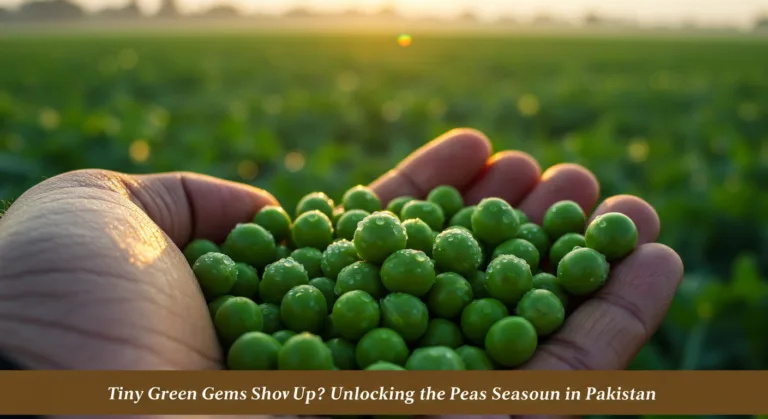
Hey, have you ever popped a handful of fresh peas straight from the pod and felt like you discovered buried treasure? Those little green balls aren’t just a yummy snack, they’re like nature’s candy, packed with surprises. In Pakistan, where farms stretch like green carpets across the land, peas have their own special time of year when they burst into life, turning fields into playgrounds for busy farmers.
We’re talking about the peas season, a chilly adventure that happens mostly in winter, when the air gets crisp and the soil is just right for these climbers to grow. From the bustling markets of Punjab to the quiet hills up north, peas are a star player in our veggie lineup. Stick with me as we dig into when to plant them, how they grow, and why spots like Multan are perfect for this green magic. You’ll even get tips from Multanfarms.com to imagine starting your own mini-farm. By the end, you’ll never look at a bowl of matar pulao the same way again.
What’s the Buzz About Peas Season?
Let’s start with the basics, because who doesn’t love a good origin story? Peas, or matar as we call them here, are those sweet, round veggies that hide inside curly pods on climbing vines. They’re a cool-season crop, meaning they love the winter chill, not the summer scorch. In Pakistan, the peas season kicks off in the cooler months, turning ordinary fields into productive powerhouses.
Why does timing matter so much? Just like you wouldn’t play soccer in a blizzard, peas need the right weather to sprout strong roots and plump up. Plant them too late, and the heat sneaks in early, wilting their dreams. Get it right, though, and you harvest a bounty that feeds families and fills plates with protein-packed goodness.
Did you know? Peas have been around for thousands of years, popping up in ancient spots like Harappa, right here in modern-day Pakistan, way back in 2250-1750 BC. Talk about a veggie with history!
Timing It Just Right: When to Plant and Pick Peas
Okay, picture this: It’s October, the leaves are turning, and farmers across Pakistan are rolling up their sleeves. The main peas season starts with sowing in mid-October to mid-November, during what’s called the Rabi season, our winter growing time. That’s when the soil is cool but not freezing, around 20-25°C for those seeds to wake up and say, “Let’s grow!”
For the early birds, there’s a sneaky early window from September to mid-October, especially in warmer spots, so you can snag peas by November. Then, harvesting hits from February to April, when pods are fat and ready to burst. You might get two or three pickings from one plant, like getting extra innings in a game.
But hold up, what if you’re in the hills? Up north in Khyber Pakhtunkhwa, they push sowing to November-December for a later harvest in spring. It’s all about matching your spot’s weather, like picking the perfect outfit for a school trip.
Rhetorical question: Ever tried planting something at the wrong time? It’s like inviting friends to a pool party in the rain, total flop!
Where Peas Love to Grow: Spotlight on Pakistan’s Hotspots
Pakistan’s got diverse lands, from sandy plains to misty mountains, and peas pick their favorites wisely. Punjab leads the pack, hogging about 78% of the pea fields, with districts like Multan, Sahiwal, and Faisalabad turning into green zones every winter. Why Multan? Its loamy soil and canal water are like a cozy blanket for pea roots.
Khyber Pakhtunkhwa chimes in next, with cooler vibes perfect for bushy varieties. Sindh and Balochistan join the fun too, though on a smaller scale, focusing on early crops to beat the heat. Nationwide, peas cover about 0.09% of our cropped land, but that’s enough to produce tons for markets and meals.
Fun fact: In Punjab alone, yields have climbed thanks to smart farming, hitting up to 7.6 tons per hectare in trials. That’s like filling a school bus with pea pods!
Transitioning smoothly, knowing the where leads us to the how, so let’s vine into growing these guys.
Growing Peas Like a Pro: Tips and Tricks from the Fields
Growing peas isn’t rocket science, but it does need some TLC, like training a puppy to sit. First, pick your plot: Sandy loam soil with good drainage is ideal, pH 6-7.5, so water doesn’t pool like a forgotten puddle. Mix in 10-12 tons of farmyard manure per acre a month before sowing, to feed the soil like a big breakfast.
Sow seeds 5-10 cm deep, spaced 30 cm apart for early types, or wider for climbers that need room to stretch. Water gently at first, then keep it steady, about every 7-10 days. Peas are tough, fixing their own nitrogen like mini superheroes, so they don’t guzzle fertilizers.
Analogy alert: Peas climb with tendrils, grabbing supports like kids on monkey bars. Add sticks or nets, and watch them soar up to 1-2 meters!
From Multanfarms.com, they remind us winter veggies like peas thrive in Punjab’s Rabi season, with sowing in October-November for a solid harvest. Pro tip: Hoe 2-3 times to zap weeds, keeping your patch tidy.
Meet the Stars: Awesome Pea Varieties for Pakistani Farms
Not all peas are created equal, you know. We’ve got a lineup of varieties suited to our seasons and soils, like picking team members for a game. For early sowing in September-October, go for Matture or Samreen Zard, quick growers that yield 1,500-2,000 kg per acre.
Late season champs like Climax or Helena shine from mid-October, doubling yields to 3,000-4,000 kg, perfect for bigger harvests. Then there’s Sarsabz, a homegrown hero from Faisalabad, flowering five days early and pumping out 7.6 tons per hectare, even in Multan trials. It’s disease-tough, fighting root rot like a shield.
Here’s a quick rundown of top picks:
- Sarsabz: High-yield wonder, less sweet for savory dishes.
- Pea-2009: Reliable check variety, great for beginners.
- Meteor: Solid performer in Punjab’s fields.
- Ooty 1: Pods galore, up to 48 qtl per acre.
Did you know? Sarsabz was approved by the Punjab Seed Council, making it easy to grab seeds for your plot.
Sneaky Foes and Smart Fixes: Keeping Peas Healthy
Every garden has villains, and peas face a few too. Powdery mildew shows up as white dust on leaves, while root rot turns roots mushy from soggy soil. Bugs like aphids suck sap, and bollworms munch pods, like uninvited guests at a picnic.
Fight back with sprays like Topsin-M for fungi, or natural tricks like neem oil for pests. Rotate crops yearly, avoiding beans nearby, to keep soil villains at bay. Good drainage is your best buddy, preventing waterlogged woes.
Example: In Multan farms, switching to resistant varieties like Sarsabz cut disease losses by half, boosting profits. It’s like wearing rain boots on a muddy day, smart and simple.
Plus, climate change throws curveballs with erratic rains, but farmers adapt with mulching to lock in moisture.
How Multanfarms.com Sprouts Ideas for Your Pea Adventure
Now, let’s zoom into Multan, the heart of Punjab’s farms, where peas fit right into the winter calendar. With its rich soil and steady water, Multan sees peas sown alongside carrots and spinach from October, harvesting by spring for fresh market runs. It’s a hub for veggies, and peas add that protein punch.
Multanfarms.com is your online pal for all this, sharing calendars and tips on Rabi crops like peas. They guide on spacing, watering, and even blending peas with other crops for max yield. Dreaming of a backyard patch? Their site says start small, with 30 cm rows, and watch the magic.
Real-world win: Local Multan farmers using their advice doubled pea outputs, turning side gigs into steady cash. Wouldn’t you love fresh peas from your own yard?
Why Peas Season Packs a Punch: From Farm to Fork
Peas aren’t just a season, they’re a powerhouse. Loaded with protein, fiber, and vitamins like C and A, they fight off sickness and keep you energized, like fuel for a long bike ride. In dishes from aloo matar to pulao, they make meals pop with color and crunch.
Economically, they create jobs in picking and packing, especially in Punjab’s pea belt. Environmentally, as nitrogen-fixers, they enrich soil for future crops, like leaving a gift for the next gardener.
Challenges like yield dips from poor weather exist, but innovations keep us ahead.
Sweet Wrap-Up: Peas and You
Whew, we’ve climbed through the peas season in Pakistan, from October sowings and February picks to Multan’s loamy fields and Sarsabz superstars. We’ve tackled growing hacks, pest battles, and why Multanfarms.com is a farmer’s best friend. These green gems aren’t just food, they’re a smart, sustainable choice for our tables and lands.
So why should you care? Peas keep our bodies strong and farms buzzing, proving small seeds make big waves. Next winter, spot those pods at the market and think of the story behind them.
Ready to plant some? Grab seeds, check Multanfarms.com, and start your own peas party. What’s stopping you from being the next pea pro?