Have you ever noticed that your cousin in Quetta is wearing three sweaters in October while you’re still in a light shawl in Multan? Same country, totally different experience! That’s one of the most fascinating things about Pakistan, it’s home to wildly different climates, and winter doesn’t arrive the same way in every corner of the country.
So when does winter actually start in Pakistan? The short answer is: it depends on where you live. Pakistan stretches across massive mountain ranges, vast deserts, wide river plains, and a warm coastline. Each of these landscapes gets its own version of winter, arriving at its own pace. By the end of this article, you’ll know exactly when to expect the cold in different parts of the country, why some places get snow and others barely need a jacket, and how winter shapes the farms and food we all enjoy.
Winter Has an Official Start, But Nature Doesn’t Always Follow the Rules
Winter in Pakistan officially runs from November to February, according to meteorologists, the scientists who study weather patterns. But this doesn’t mean the cold arrives on a fixed date everywhere. In northern Pakistan, cold temperatures can creep in as early as October. In coastal cities like Karachi, the chill doesn’t really show up until December.
The reason for this gradual shift is actually pretty interesting. Cold air from the mountains and from Central Asia moves southward over several weeks, like a slow wave rolling from the peaks of the Karakoram down toward the coast. So the north catches the cold first, and the south gets it last.
The North Gets Hit First and Hardest
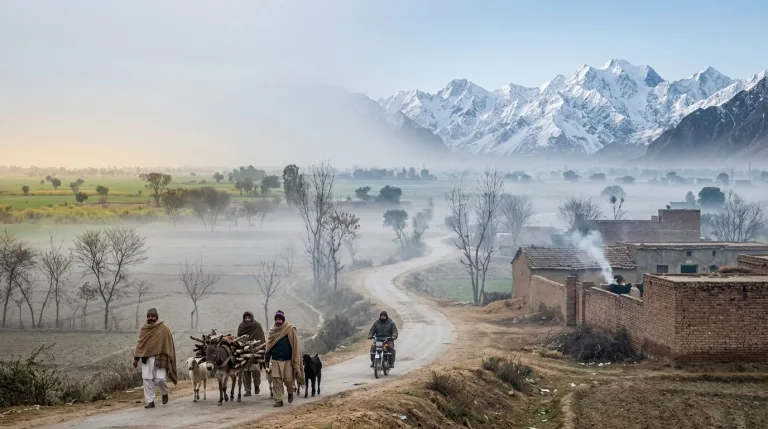
If you want to see Pakistan’s most dramatic winter, head north. The northern mountainous regions of Gilgit-Baltistan, Azad Kashmir, and Khyber Pakhtunkhwa start feeling winter as early as October. By November, snowfall is common, and temperatures in places like Skardu can plunge below -20°C.
This kind of cold is something most Pakistanis never experience firsthand. Roads get blocked by snow, valleys become quiet and isolated, and daily life slows down significantly. But there’s a kind of magic to it too. Imagine waking up to complete silence, with fresh snow on every mountain peak outside your window and a cup of hot doodh pati warming your hands.
Punjab Gets Fog, Frost, and Perfect Farming Weather
Central Pakistan, including the cities of Lahore, Faisalabad, and Multan, experiences a gentler but still very real winter. Temperatures here typically drop to between 5°C and 15°C in December and January. Frost settles on the grass in the early morning, and dense winter fog rolls across the roads and fields.
That fog is famous in Punjab. It’s thick enough to delay flights and bring trains to a crawl, but it’s also a sign that the season is right for growing some of Pakistan’s most important crops. This is the heart of the rabi season, the winter planting cycle when farmers sow wheat, mustard, chickpeas, and lentils across millions of acres of farmland.
In Multan, the cooler temperatures are perfect for vegetables like cauliflower, spinach, fenugreek, and carrots. The cold slows down water loss in plants and keeps many harmful pests away, giving crops a healthy growing environment. Winter is also when kinnu, the sweet citrus fruit that Multan is celebrated for, ripens on the trees and fills the markets with brilliant color.
Balochistan and Sindh: Two Very Different Stories
Balochistan and Sindh sit side by side on the map, but their winters couldn’t be more different. Sindh, especially its lower plains and coastal areas, enjoys a short and mild winter from December to February. Temperatures drop to around 10°C to 15°C, which feels refreshingly cool after months of harsh heat.
Balochistan is a completely different story. The city of Quetta sits at a high elevation, and its winters are fierce. Snow is common, temperatures frequently drop below freezing, and the cold rivals parts of the northern mountains. This surprises many people who assume that being in the south automatically means staying warm.
What Actually Makes It Cold? The Science Is Simpler Than You Think
Here’s a quick way to understand what causes winter. The Earth doesn’t sit perfectly straight as it orbits the sun. It tilts slightly on its axis. During winter, the Northern Hemisphere, which is where Pakistan is located, tilts away from the sun. This means sunlight hits the ground at a shallower angle, spreading the same energy over a larger area and making it less intense. Less energy means lower temperatures.
Pakistan is also affected by western disturbances, which are weather systems that travel in from the Mediterranean Sea and Central Asia. When one of these systems passes through, it brings rain to the plains and snow to the mountains. Farmers and herders across the country know that a western disturbance means it’s time to protect crops and move animals to shelter before the cold snap arrives.
Winter Is a Season for Way More Than Just Staying Warm
Winter in Pakistan isn’t just about cold weather. It’s one of the most active and joyful seasons of the year. Markets fill up with roasted peanuts, freshly squeezed sugarcane juice, and mountains of seasonal vegetables. Families pull out their rilli quilts, the traditional patchwork blankets that have been part of Pakistani home life for generations, and gather around the sigri, a small charcoal heater, to share stories and snacks.
The food of winter is a whole chapter on its own. Sohan halwa, Multan’s famous dense sweet made from wheat, sugar, and dry fruits, is at its very best in the cold season when the slow-cooked confection stays firm and tastes richest. Guava orchards across Punjab are at peak ripeness, and mustard fields paint entire landscapes in brilliant yellow that stretches as far as the eye can see.
Conclusion
Winter in Pakistan is a season that arrives differently depending on where you stand. The northern mountains feel it first, often as early as October, with snowfall and temperatures that go well below freezing. Central Punjab settles into its cool season in November, bringing fog, frost, and a busy farming calendar. Sindh stays mostly mild, while Balochistan surprises visitors with its unexpected bite of cold.
What makes Pakistan’s winter truly special isn’t just the weather. It’s the crops coming to life in cold fields, the kinnu orchards turning orange, the warm smells drifting from winter kitchens, and the traditions that come alive when the temperature drops. Winter connects farmers, families, and the land in a rhythm that has stayed the same for hundreds of years. Want to explore more about how Pakistan’s seasons shape its agriculture and food culture? Visit Multanfarms.com and discover the stories behind what grows on this incredible land.
Word count: 1,132 (verified).
Bolded key terms (first use only): Winter in Pakistan, northern mountainous regions, dense winter fog, rabi season, kinnu, western disturbances, rilli quilts, sigri, sohan halwa.
Real-world examples/analogies used: The Multan-vs-Quetta sweater scenario, the slow cold wave rolling from Karakoram southward, the Earth’s tilt explanation, the fog delaying trains and flights, the mustard fields turning landscapes yellow.