Have you ever seen a vegetable that looks kind of weird and mysterious, almost like something from another planet? That’s probably arvi, also known as taro root! This unusual-looking vegetable has been feeding families in Pakistan for centuries, but unlike tomatoes or potatoes that you can find year-round, arvi has its own special season when it’s fresh, delicious, and available in markets across the country. If you’ve ever wondered when to find the best arvi or why your mom or grandmother only makes certain arvi dishes at specific times of the year, you’re about to discover the fascinating answer!
Arvi is a root vegetable that grows underground, kind of like a potato’s exotic cousin. It has a brown, hairy skin on the outside and white or slightly purple flesh on the inside. When cooked properly, it becomes soft and creamy with a slightly nutty flavor that many people absolutely love. In Pakistan, arvi isn’t just food, it’s part of the culture! Families prepare it in curries, fry it as crispy snacks, or add it to traditional dishes that have been passed down through generations. But here’s the thing, arvi has a specific growing season, which means Pakistani farmers can only harvest it during certain months of the year.
In this article, you’ll learn exactly when arvi season happens in Pakistan, why the timing matters so much, what makes this vegetable so special, how farmers grow it, and why fresh seasonal arvi tastes way better than imported or stored versions. You’ll also discover some cool facts about this ancient vegetable that might surprise you. Let’s dig into the underground world of arvi!
When Does Arvi Season Actually Happen?
In Pakistan, the main arvi season runs from late summer through autumn, typically from August to November. This is when you’ll see fresh arvi piled up in vegetable markets, and when prices are usually at their lowest because there’s plenty available. Think of it like mango season, there’s a specific time when mangoes are everywhere and taste amazing, and arvi works the same way!
The exact timing can vary a bit depending on which part of Pakistan you’re in. In areas like Punjab and Sindh, where the climate is hot and humid, arvi season might start a little earlier, around late July or early August. In slightly cooler regions, it might kick off in September. But generally speaking, if you’re looking for the freshest, most delicious arvi, the months of September and October are your best bet. During these months, the arvi that was planted months earlier has fully matured underground and is ready for harvest.
Why does this timing matter? Well, vegetables that are in season are at their peak flavor and nutritional value. It’s kind of like listening to your favorite song at the perfect volume, not too loud, not too soft, just right! When you eat arvi during its natural season, it’s fresher, tastes better, and is usually cheaper too. Plus, eating seasonal vegetables is better for the environment because they don’t have to be transported from far away or kept in cold storage for months.
How Farmers Grow This Underground Treasure
Growing arvi is actually pretty interesting! Farmers don’t plant arvi seeds like they would with other vegetables. Instead, they use small corms, which are kind of like bulbs or the vegetable’s underground storage organs. It’s similar to how you’d plant garlic cloves or potato pieces, each piece can grow into a whole new plant!
The planting season for arvi in Pakistan usually starts in late spring, around April or May. Farmers prepare their fields by making sure the soil is loose and well-drained because arvi doesn’t like sitting in waterlogged soil. They plant the small corms in rows, leaving enough space between each one so the plants have room to grow. Then comes the waiting game! Arvi plants need about four to six months to mature fully, which is why the harvest happens in late summer and fall.
During those months, the arvi plants develop large, beautiful leaves that look almost like elephant ears. In fact, in some languages, arvi is actually called “elephant ear” because of these huge leaves! The plant uses these big leaves to capture sunlight and make food through photosynthesis, which it stores underground in the corms. That’s the part we eventually eat. Farmers need to make sure the plants get enough water, especially during hot summer months, but not too much because arvi can rot if the soil stays too wet. It’s a delicate balance!
Why Fresh Seasonal Arvi Beats Everything Else
There’s a huge difference between fresh, seasonal arvi and arvi that’s been sitting in storage for months or imported from somewhere else. When arvi is harvested fresh during its season, it has a firm texture, bright color, and way better flavor. The nutrients are at their highest levels too, which means you’re getting more vitamins and minerals from every bite.
Imagine biting into a fresh apple right off the tree versus eating one that’s been sitting in a warehouse for six months. The fresh one is crisp, juicy, and bursting with flavor, right? The same principle applies to arvi! Fresh seasonal arvi cooks more evenly, has a creamier texture, and doesn’t have that slightly bitter taste that old or improperly stored arvi can develop. This is why Pakistani cooks get so excited when arvi season arrives, they know they’re about to work with top-quality ingredients.
Another cool thing about seasonal arvi is that it connects people to traditional farming cycles. For thousands of years, humans have eaten according to the seasons, and there’s something special about enjoying foods when they’re naturally ready. It’s like nature’s way of providing variety throughout the year! When you eat arvi in September, you’re participating in a tradition that your great-great-grandparents probably followed too.
What Happens After Harvest?
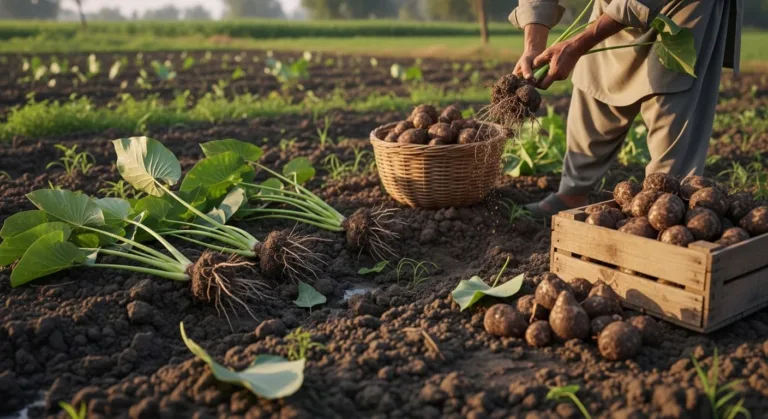
Once arvi reaches maturity, usually between August and November, farmers carefully dig it up from the ground. This has to be done gently because arvi corms can bruise easily, and damaged arvi doesn’t store well or sell for good prices. It’s kind of like handling eggs, you need a careful touch!
After harvesting, farmers clean off the excess dirt and sort the arvi by size and quality. The best-looking, medium-sized corms usually get the highest prices in markets. Smaller ones might be sold at a discount or kept for replanting next season. Some farmers store arvi in cool, dry places to sell later when the season is over and prices go up. However, arvi doesn’t store as well as potatoes or onions, so most of it needs to be sold and consumed relatively quickly.
This is when you’ll see arvi flooding the markets! Vegetable vendors display fresh arvi in big baskets or sacks, and customers come specifically looking for it. During peak season, prices drop because there’s so much available. Smart shoppers stock up during this time, buying extra arvi to use in the coming weeks. Some people even preserve arvi by pickling it or drying it, though most prefer to eat it fresh.
Arvi’s Special Place in Pakistani Cuisine
In Pakistan, arvi isn’t just another vegetable, it’s a star ingredient in many beloved dishes! Different regions of Pakistan have their own special ways of cooking arvi, and each method brings out different flavors and textures. This cultural importance is another reason why people eagerly await arvi season every year.
One super popular dish is arvi gosht, which combines tender pieces of meat with cooked arvi in a rich, spicy curry. The arvi soaks up all the delicious flavors from the curry and becomes incredibly creamy. Another favorite is arvi pakora, where sliced arvi is coated in spiced chickpea flour and deep-fried until crispy and golden. These make an amazing snack, especially on rainy days! Some people also make arvi ka salan, a lighter curry where arvi is the main star, cooked with onions, tomatoes, and aromatic spices.
The cool thing about arvi is its versatility. You can boil it, fry it, bake it, or add it to curries and stews. Each cooking method creates a totally different experience. When boiled and mashed, arvi can even be used similarly to mashed potatoes! During arvi season, families get creative with recipes, trying new preparations and sticking with old favorites. It’s like a mini food festival that happens every autumn.
The Health Benefits Hidden Underground
Arvi isn’t just tasty, it’s actually really good for you too! This humble root vegetable is packed with nutrients that your body needs to stay healthy and strong. During arvi season, you’re getting these nutrients at their freshest and most potent levels, which makes seasonal arvi even more valuable.
Arvi is rich in fiber, which helps your digestive system work properly. Think of fiber as a broom that sweeps through your intestines, keeping everything clean and moving smoothly! It also contains good amounts of vitamins, especially vitamin C and vitamin E, which help your immune system fight off sickness. The potassium in arvi is great for your heart and helps regulate blood pressure. Plus, arvi has complex carbohydrates that give you steady energy, unlike sugary snacks that make you crash later.
One interesting thing about arvi is that it’s naturally gluten-free, which makes it a great option for people who can’t eat wheat or other grains. Some cultures around the world even use arvi flour as a substitute for regular flour in baking! However, raw arvi contains something called calcium oxalate crystals, which can make your mouth itchy if you eat it uncooked. That’s why arvi must always be cooked thoroughly, the heat breaks down these crystals and makes it perfectly safe and delicious to eat.
Climate and Geography’s Role in Arvi Growing
Pakistan’s climate is actually pretty perfect for growing arvi in many regions! Arvi loves warm, humid conditions with plenty of moisture, and several parts of Pakistan fit that description beautifully. The combination of hot summers and adequate rainfall or irrigation creates ideal growing conditions for this tropical vegetable.
Areas in Punjab and Sindh, especially places near rivers or canal systems, are particularly good for arvi cultivation. The soil in these regions tends to be fertile and rich in nutrients, which arvi plants love. Farmers in these areas have been growing arvi for generations and have perfected their techniques over time. They know exactly when to plant, how much to water, and when to harvest for the best results.
The monsoon rains that come to Pakistan during summer also play a crucial role. These rains provide natural irrigation for arvi crops during their critical growing period. However, if there’s too much rain and fields get waterlogged, it can damage the crop. This is why experienced farmers pay close attention to weather patterns and adjust their farming practices accordingly. It’s like a dance between nature and agriculture, when everything aligns perfectly, you get an abundant arvi harvest!
Conclusion
The arvi season in Pakistan, running mainly from August through November, is more than just a time when a particular vegetable appears in markets. It’s a celebration of traditional agriculture, seasonal eating, and the connection between people and the land that feeds them. When you choose fresh, seasonal arvi during these months, you’re getting the best flavor, the most nutrients, and supporting local farmers who work hard to bring this unique vegetable to your table.
Understanding when arvi season happens helps you plan your meals, take advantage of lower prices, and enjoy this delicious vegetable at its absolute best. It also connects you to agricultural cycles and traditional eating patterns that have sustained communities for thousands of years. Next time you see fresh arvi piled high at the vegetable market during autumn, you’ll know exactly why it’s there and why it’s worth grabbing some to try at home. So, have you ever tasted arvi, and if not, will you give it a try during the next arvi season? Your taste buds might just discover a new favorite!