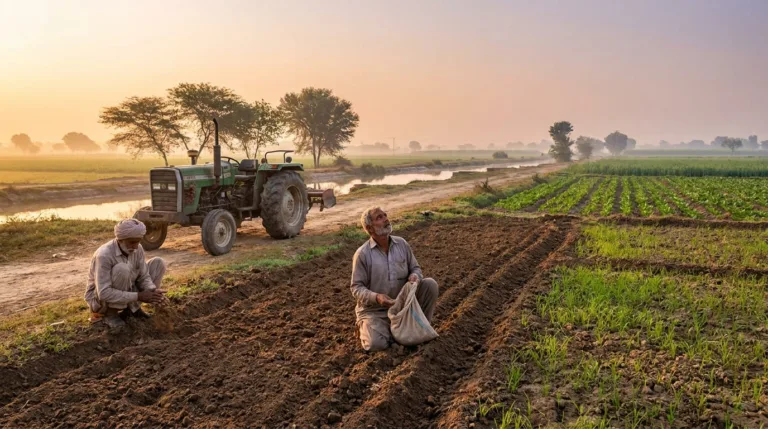
Have you ever planted a seed and watched it grow into a beautiful plant? It’s pretty amazing, right? But here’s something that might surprise you: if you plant that exact same seed at the wrong time of year, it might not grow at all, or it could grow really poorly. That’s because plants are super picky about when they want to be planted, and farmers in Pakistan have to be like detectives, figuring out the perfect timing for each crop.
Pakistan’s farmers don’t just randomly throw seeds into the ground whenever they feel like it. They follow specific sowing seasons that have been perfected over thousands of years. Get the timing right, and you’ll have fields bursting with healthy crops. Get it wrong, and you could lose your entire harvest. It’s like trying to bake a cake, if you put it in the oven at the wrong temperature or take it out too early, you’ll end up with a disaster instead of dessert!
In this article, we’re going to explore Pakistan’s sowing seasons, discover why timing is so crucial for different crops, and learn how farmers use weather patterns to decide when to plant. Whether you’re interested in farming, curious about where your food comes from, or just want to understand agriculture better, this guide will help you see farming in a whole new light. And if you want to dive deeper into agricultural practices, websites like Multanfarms.com offer tons of helpful information about farming in Pakistan.
Understanding Pakistan’s Two Main Growing Seasons
Pakistan basically has two major sowing seasons, and they have special names that you’ll hear farmers use all the time: Rabi and Kharif. These aren’t just random words, they’re Urdu terms that describe specific growing periods based on Pakistan’s climate and weather patterns.
The Rabi season runs from October to March, which means farmers plant their crops in the cooler months of autumn and harvest them in spring. Think of it as the “winter growing season.” During this time, Pakistan experiences cooler temperatures and less rainfall, which is perfect for certain types of crops. Wheat, chickpeas, lentils, and mustard all love the Rabi season because they don’t like extreme heat.
The Kharif season, on the other hand, is the opposite. It runs from April to September, covering the hot summer months and the monsoon period. Farmers plant Kharif crops when temperatures are rising and rain is more likely to fall. Rice, cotton, sugarcane, and corn are all Kharif crops because they actually need that heat and moisture to grow big and strong. It’s like how some kids love swimming in summer while others prefer building snowmen in winter, different crops have different preferences!
Understanding these two seasons is the foundation of Pakistani agriculture. Farmers plan their entire year around them, and getting the timing right can mean the difference between a bumper harvest that feeds millions and a failed crop that leaves families struggling.
The Rabi Season: Planting in the Cool Months
Let’s dive deeper into the Rabi season, which is super important for Pakistan’s food security. Most Pakistani families eat roti (flatbread) with almost every meal, and guess what? That roti is made from wheat, which is a Rabi crop! Without a successful Rabi season, Pakistan would face serious food shortages.
Farmers typically start sowing Rabi crops in October or November, right after the summer heat finally breaks and the monsoon rains have ended. The soil is still moist from the monsoons, and the weather is cooling down, creating perfect conditions for germination (that’s the fancy word for when a seed first starts to sprout). Wheat is usually planted first, between mid-October and mid-November, depending on which part of Pakistan you’re in.
In Punjab, which is Pakistan’s agricultural heartland, farmers are incredibly busy during October and November. They’re preparing their fields, testing soil quality, and carefully timing their wheat planting. Plant too early, and the lingering heat might stress the young plants. Plant too late, and the crop won’t have enough time to mature before the harsh heat of April and May arrives. It’s all about that sweet spot!
Other important Rabi crops include gram (chickpeas), barley, lentils, and various vegetables like carrots, radishes, and peas. These crops grow slowly throughout the winter months, taking advantage of the cool weather and occasional winter rains. By March or April, when temperatures start climbing again, farmers are ready to harvest their Rabi crops and prepare their fields for the next season.
The Kharif Season: Embracing the Heat and Rain
Now let’s talk about the Kharif season, which is all about working with heat and moisture. If Rabi is the cool, calm season, Kharif is the wild, intense one! This season kicks off in April or May, right when temperatures are skyrocketing and you’re probably thinking about how nice it would be to spend all day in an air-conditioned room.
Rice is the king of Kharif crops in Pakistan, especially in provinces like Punjab and Sindh where there’s plenty of water available for irrigation. Rice needs A LOT of water to grow, which is why farmers typically plant it in May or June, either right before the monsoon rains arrive or using irrigation water. Rice paddies (the flooded fields where rice grows) look like giant mirrors reflecting the sky, and they’re one of the most beautiful sights in Pakistani agriculture.
Cotton is another huge Kharif crop that’s vital to Pakistan’s economy. Pakistan is one of the world’s largest cotton producers, and all that cotton is planted during April and May. Cotton plants love heat, and they need a long growing season to produce those fluffy white bolls (the part of the plant that contains cotton fiber). Farmers in areas like Multan, Bahawalpur, and throughout Sindh are busy planting cotton during these months.
Sugarcane and corn (maize) are also major Kharif crops. Sugarcane is interesting because it’s actually planted in February or March in some areas, but it’s considered a Kharif crop because it grows throughout the summer and is harvested much later. Corn, on the other hand, is planted in May or June and loves the combination of heat and monsoon rains. At Multanfarms.com, you can find detailed guides about when to plant each of these crops in different regions of Pakistan.
Why Timing Is Everything in Farming
So why does all this timing matter so much? Can’t farmers just plant whenever and hope for the best? Well, not really! Plants are incredibly sensitive to environmental conditions, and planting at the wrong time can lead to disaster.
First, there’s the issue of temperature. Every crop has an ideal temperature range for germination and growth. Wheat seeds, for example, germinate best when soil temperatures are between 10 and 25 degrees Celsius. Plant them when it’s too hot, and they might not sprout at all. Plant them when it’s too cold, and they’ll germinate super slowly, giving weeds and pests more time to attack them.
Water availability is another huge factor. Rice needs consistent water throughout its growing season, which is why farmers plant it either when monsoon rains are about to start or in areas where irrigation is reliable. Trying to grow rice during the dry winter months would be nearly impossible without massive amounts of irrigation water, which would be incredibly expensive and wasteful.
Then there’s the issue of pests and diseases. Different pests are active during different seasons, and planting at the right time helps crops avoid the worst infestations. It’s like how flu season happens in winter, plant diseases and pests also have their “seasons,” and smart farmers time their planting to minimize these risks.
Finally, there’s market demand and price fluctuations to consider. Farmers want their crops to be ready for harvest when prices are highest. If everyone harvests at exactly the same time, prices drop because there’s too much supply. But if your timing is off and you’re late to market, you might miss the best prices entirely.
Regional Differences Across Pakistan
Here’s something really cool: Pakistan is a huge country with diverse climates, so sowing seasons actually vary quite a bit depending on where you are! What works in Gilgit-Baltistan in the north doesn’t necessarily work in Karachi down south. It’s like how clothing styles change based on weather, planting schedules change based on local climate.
In Punjab, which has a pretty moderate climate and fertile soil, farmers can follow the standard Rabi and Kharif seasons pretty closely. October to November for wheat, May to June for rice, it’s all fairly predictable. Punjab’s farmers have access to extensive canal irrigation systems, which gives them more flexibility in their planting schedules.
Sindh, particularly the southern parts, experiences more extreme heat and less predictable rainfall. Farmers there might plant their Kharif crops slightly earlier to take advantage of any early monsoon showers. Sindh is also Pakistan’s major rice-producing region, so rice cultivation dominates the Kharif season there.
Khyber Pakhtunkhwa and Balochistan have more mountainous terrain and different climate patterns. In the higher elevations, sowing seasons are delayed because cold weather lasts longer. Some areas might not start their Kharif season until June or even July! Meanwhile, in the fertile valleys, farming follows patterns more similar to Punjab.
The coastal areas near Karachi have year-round moderate temperatures, which means some crops can actually be grown in multiple seasons. Vegetable farming near cities takes advantage of this, with farmers producing fresh produce throughout the year to supply urban markets.
How Climate Change Is Affecting Sowing Seasons
Here’s something that’s becoming a big concern for Pakistani farmers: climate change is making traditional sowing seasons less predictable. The reliable patterns that farmers depended on for generations are starting to shift, and it’s causing real problems.
Monsoon rains, which used to arrive fairly predictably in July, are now sometimes delayed or more intense than usual. This throws off the planting schedules for Kharif crops that depend on monsoon water. Farmers are stuck in a difficult position, do they plant early and risk their crops dying if rains are late, or do they wait and potentially miss the optimal planting window?
Winter temperatures are also becoming more unpredictable. Some years, winters are warmer than they should be, which can stress Rabi crops that need cool weather. Other years, unexpected cold snaps can damage crops that have already been planted. It’s like nature is playing a guessing game, and farmers are the ones who lose when the guesses are wrong.
This is why resources like Multanfarms.com are becoming so important. They help farmers stay updated on weather forecasts, learn about new farming techniques that work with changing climate conditions, and connect with agricultural experts who can provide guidance. Farmers are learning to be more flexible and to use technology like weather apps and soil moisture sensors to make better planting decisions.
Conclusion
Pakistan’s sowing seasons, the Rabi and Kharif periods, are the backbone of the country’s agricultural system. These carefully timed planting schedules ensure that millions of people have food on their tables throughout the year. From the wheat fields of Punjab to the rice paddies of Sindh, from the cotton farms of Multan to the vegetable gardens near Karachi, timing is absolutely everything.
Understanding these sowing seasons helps us appreciate the incredible skill and knowledge that farmers use every single day. They’re not just throwing seeds in the ground and hoping for the best. They’re working with nature’s rhythms, respecting the needs of different crops, and adapting to changing conditions. Every roti you eat, every bowl of rice, every cotton t-shirt you wear, they all started with a farmer making the right decision about when to plant.
Next time you’re eating a meal or walking through a market seeing fresh produce, think about the sowing season that made it all possible. Think about the farmer who carefully timed the planting, nurtured the crop through its growing season, and finally brought it to harvest.
So here’s a question for you: if you were a farmer, would you prefer the calm, predictable Rabi season or the intense, exciting Kharif season?