Have you ever bitten into a juicy biryani or a spicy chicken karahi and wondered what makes it taste so incredibly delicious? Chances are, garlic played a starring role in that flavor explosion! This small but mighty bulb isn’t just a kitchen superhero, it’s also one of the most important crops grown right here in Pakistan. But here’s the thing: garlic is pretty picky about when it wants to be planted. Plant it at the wrong time, and you might end up with tiny, disappointing bulbs that won’t impress anyone.
So, when exactly should you sow garlic in Pakistan? The answer isn’t as simple as “plant it whenever,” because our country has different climate zones, and garlic responds differently depending on where you live and when you plant it. Whether you’re helping your family with farming, working on a school project, or just curious about where your food comes from, understanding garlic’s growing schedule is actually pretty fascinating. Let’s dig into the dirt and discover the perfect timing for growing this amazing crop!
Why Timing Matters So Much for Garlic
Think of garlic like a student preparing for exams. If you start studying too early, you might forget everything by test day. If you start too late, you won’t have enough time to learn. Garlic works the same way! It needs the right temperature conditions to develop properly, and those conditions only happen during specific months in Pakistan.
Garlic is what farmers call a “cool-season crop.” This means it loves cooler weather and doesn’t do well in extreme heat. When temperatures get too hot, garlic basically gives up and stops growing properly. Its bulbs won’t separate into nice, plump cloves, and instead, you’ll get these sad, small bulbs that look more like onions. Nobody wants that! On the flip side, if you plant too early during the hot months, the seeds might not even sprout, or worse, they could rot in the warm, moist soil.
The magic happens when you plant garlic during the cooler months because it gives the crop enough time to establish strong roots before the weather changes. Those roots are super important because they’re like the foundation of a building. Without a solid foundation, the whole structure becomes weak.
The Perfect Planting Window in Pakistan
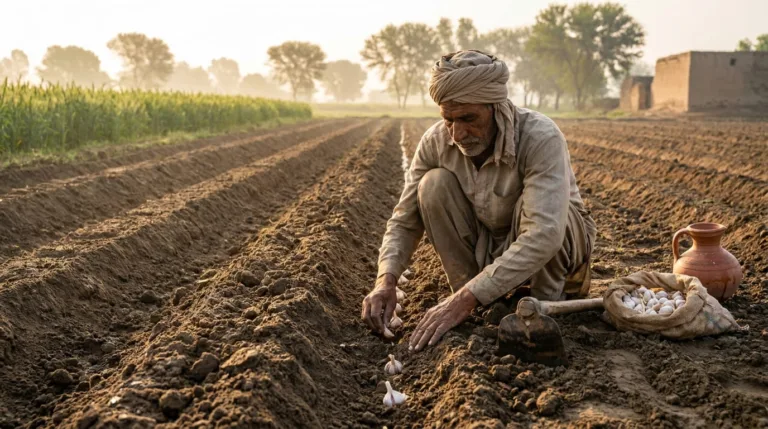
Here’s the golden rule for garlic farming in Pakistan: the best time to sow garlic is between mid-October and mid-November. Mark those dates on your calendar because this window gives your garlic the absolute best chance to thrive!
Why these specific months? Well, by October, Pakistan’s scorching summer heat has finally backed off, and the weather starts cooling down nicely. Temperatures during this period typically range between 15°C to 25°C, which is basically garlic paradise. The soil is still warm enough for the cloves to sprout quickly, but the air is cool enough that the plants won’t get stressed out.
Different regions in Pakistan might need slightly different timing, though. In northern areas like Gilgit-Baltistan or parts of Khyber Pakhtunkhwa, where it gets colder faster, you might want to plant slightly earlier, maybe around early October. In southern regions like Sindh, where it stays warmer longer, you could push your planting to late October or even early November. The key is to watch your local weather patterns.
What Happens If You Plant at the Wrong Time?
Let’s say you’re super excited about growing garlic and you plant it in July or August when it’s blazing hot outside. What happens? Unfortunately, nothing good! The extreme heat will either prevent the cloves from sprouting altogether, or if they do sprout, the young plants will struggle and become weak. It’s like trying to run a marathon in the desert, you’re not going to perform your best!
If you plant too late, say in December or January, you’ll face a different problem. Garlic needs about 120 to 150 days to fully mature, which is roughly four to five months. If you plant in December, your harvest will fall right in the middle of Pakistan’s hot summer months (April or May), when temperatures can climb above 40°C. That intense heat during the final growing stage can damage the bulbs and reduce your harvest significantly.
Some farmers have tried planting garlic in early September, thinking they’re getting a head start. But September still carries leftover summer heat in most parts of Pakistan, and the results are usually disappointing. The plants might survive, but they won’t produce the large, healthy bulbs you’re hoping for.
Regional Differences Across Pakistan
Pakistan is a big country with diverse climates, and what works in Multan might not work perfectly in Peshawar. Let’s break it down by region so you know exactly what to expect in your area!
Punjab (including cities like Multan, Lahore, and Faisalabad) has the ideal climate for garlic cultivation. The October to November window works perfectly here because winters are cool but not freezing, and there’s usually enough rainfall to keep the soil moist. Many farmers in Punjab, especially around Multan, have perfected garlic farming and produce some of the best quality garlic in the country.
Sindh tends to stay warmer longer, so farmers here often push their planting toward late October or early November. The winter season is shorter and milder, but it’s still cool enough for garlic to grow well. Areas around Hyderabad and Mirpur Khas have successful garlic farms that time their planting carefully.
Khyber Pakhtunkhwa and Balochistan experience colder winters, especially in the mountainous regions. Farmers in these areas might start planting in early October because winter arrives faster and can be quite harsh. The cooler climate actually benefits garlic because the crop loves chilly weather!
Tips for Successful Garlic Sowing
Beyond just knowing when to plant, there are some other tricks that can help you grow amazing garlic. First, always choose healthy, disease-free cloves for planting. It’s like choosing the right ingredients for cooking, if you start with poor quality, your results will be disappointing.
Make sure your soil is well-prepared before planting. Garlic likes loose, well-draining soil that’s rich in organic matter. Think of it like making a comfortable bed, you want it soft and cozy, not hard and lumpy! Adding compost or well-rotted manure can make a huge difference.
Water your garlic regularly, especially during the first few weeks after planting. The cloves need moisture to sprout and establish roots. However, don’t overwater! Garlic hates sitting in waterlogged soil, which can cause the cloves to rot. It’s all about finding that sweet spot.
Why Garlic Farming Matters in Pakistan
You might be wondering, “Why should I care so much about when garlic is planted?” Well, garlic is actually a pretty big deal for Pakistan’s economy and food security. We use garlic in almost every traditional dish, from qorma to dal to BBQ. Pakistani families consume tons of garlic every year!
When farmers plant garlic at the right time, they get better harvests. Better harvests mean more garlic available in the markets, which helps keep prices stable for families like yours. It also means farmers earn better incomes, which strengthens our agricultural economy. Plus, Pakistan exports garlic to other countries, bringing valuable foreign currency into the nation.
Wrapping It All Up
So, there you have it! The secret to successful garlic farming in Pakistan is all about timing. Plant between mid-October and mid-November, adjust slightly for your local climate, and give your garlic the cool weather it craves. Whether you’re a young farmer helping your family or just someone curious about agriculture, remember that this small timing detail can make the difference between a bumper harvest and a disappointing one.
Next time you enjoy a delicious, garlicky meal, you’ll know exactly what went into growing that flavor-packed ingredient. Who knows? Maybe you’ll even try growing some garlic yourself! Have you ever thought about starting your own small garden at home? It could be a fun experiment to put all this knowledge into action!